


The collaboration with FieldAI combines robotics, digital twins and NVIDIA technologies to improve safety, visibility and productivity across industrial operations
Labor shortages and productivity pressure are forcing heavy industry to rethink how jobsites and factories are managed. Caterpillar is now moving deeper into physical AI, teaming up with FieldAI to develop autonomy and robotics systems designed for the complex, constantly changing environments where construction, mining and manufacturing work actually happens.
The collaboration, announced in Irving, Texas, brings together Caterpillar’s engineering knowledge, operational data and heavy equipment experience with FieldAI’s AI-enabled robot foundation models. The goal is to turn real-time observations from machines, robots and industrial environments into practical insights that can help teams work more safely, make faster decisions and improve the performance of people and assets.
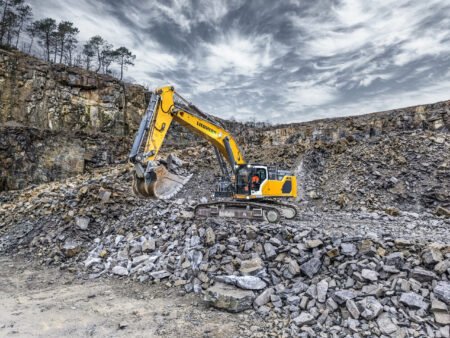
For contractors, fleet owners and industrial operators, that matters because automation in heavy industry has often been limited by the unpredictability of real-world sites. Mines, factories, quarries and large jobsites rarely offer the controlled conditions found in traditional automation settings. Equipment moves, terrain changes, workflows shift and safety risks can emerge quickly. Caterpillar’s latest move points to a broader industry push: using AI not only to automate machines, but also to understand entire operating environments.
“The future of our industries will be shaped by how effectively we combine human expertise with AI-powered machines. Collaborations like this help accelerate the journey. We’re focused on applying AI where it matters most, helping customers improve safety, increase productivity and get more value from every operation.”
Said Jaime Mineart, Caterpillar chief technology officer.
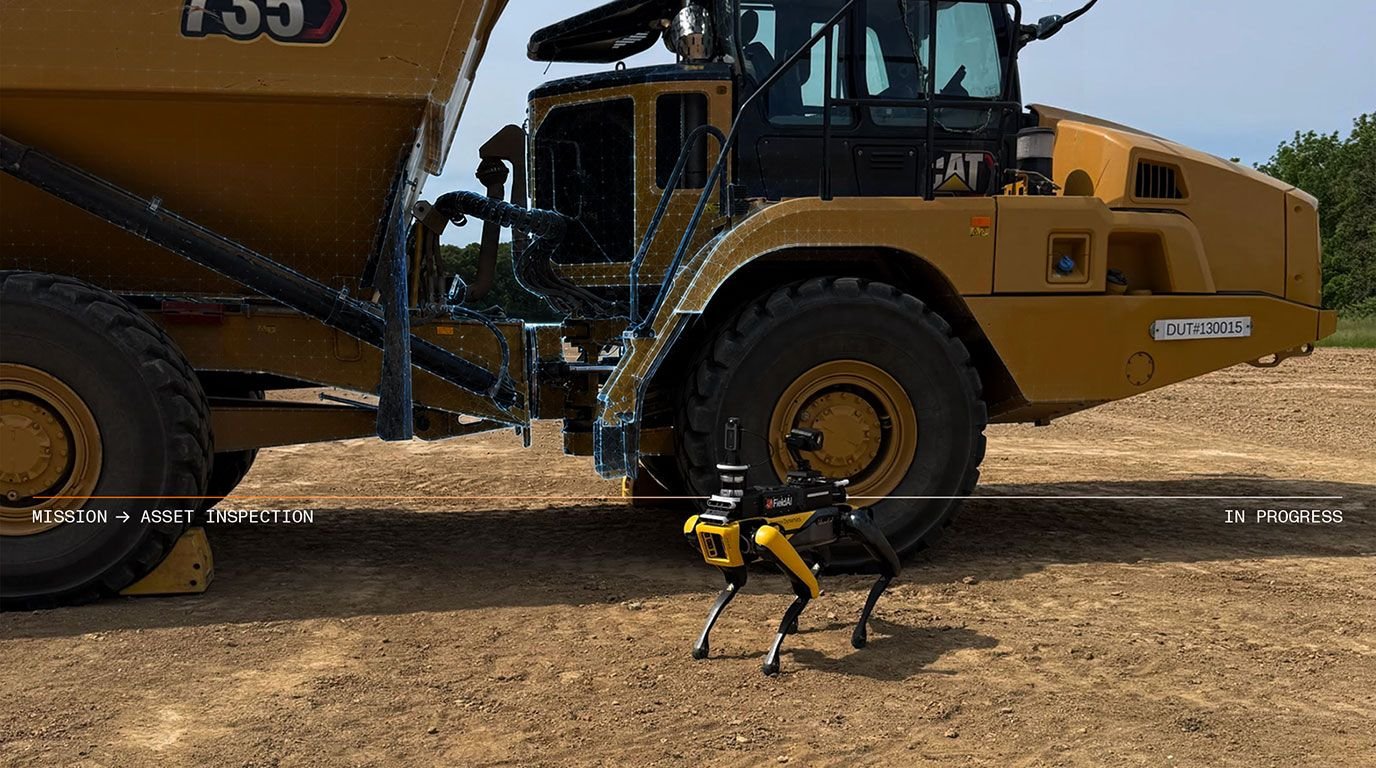
Earlier this year at CES, Caterpillar outlined its vision for the jobsite of the future: an operation built around intelligent machines, connected workflows and digital insights. The FieldAI collaboration appears to be a practical extension of that strategy, with early applications focused on autonomous inspections, jobsite and facility digital twins, enhanced situational awareness and operational optimization.
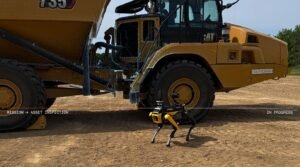
In practical terms, autonomous inspections could reduce the need for workers to enter higher-risk areas while giving managers better visibility of equipment, infrastructure and site conditions. Digital twins, built from operational data, can provide a live or near-live view of how a jobsite or facility is performing. Combined with simulation and AI-driven insights, those models can help teams identify bottlenecks, test workflow changes and respond faster when conditions shift.
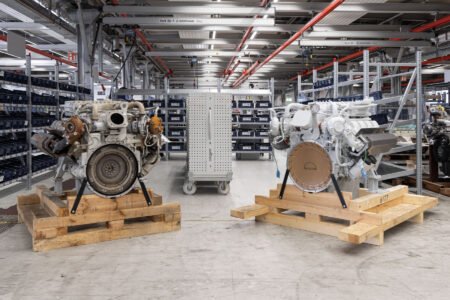
The manufacturing side is also central to the initiative. Caterpillar said the technologies will support modernization inside its own facilities, helping teams better understand production flow, safety conditions and operational performance.
“Modern manufacturing at Caterpillar is transforming how we work, from design to delivery, through advanced technology, digital innovation and a culture of continuous improvement. These technologies give our teams greater visibility into how our facilities operate and help us identify opportunities to improve safety, optimize flow and make more informed decisions. As our people embrace new ways of working, we are building manufacturing operations that respond faster to change and perform at their best.”
said John Tuntland, Caterpillar senior vice president of Integrated Components Division.
Caterpillar selected FieldAI for its experience deploying autonomy in dynamic industrial environments where conventional automation can struggle. FieldAI’s robot-agnostic approach is designed to work across different robotic platforms, while its foundation models can process large volumes of jobsite and operational data and convert them into usable intelligence.
“Caterpillar has shaped operations on jobsites and manufacturing facilities for over a century, and these are exactly the environments FieldAI excels in, with deployments spanning hundreds of sites worldwide. This collaboration brings leading physical AI capabilities to a leading manufacturer of construction and mining equipment. Together, we are shaping the next century of AI-enabled heavy industry.”
Said Ali Agha, founder and CEO of FieldAI.
The collaboration also leverages NVIDIA accelerated computing, NVIDIA Omniverse technologies and high-fidelity digital twins. For the heavy equipment sector, the significance goes beyond a single technology partnership. It reflects a shift toward connected industrial ecosystems where machines, facilities, workers and data streams are increasingly managed as one operating system.
Caterpillar has not detailed a commercial rollout timeline for the technologies, but the direction is clear: AI-powered autonomy is moving closer to the daily realities of construction, mining and manufacturing. Its real test will be whether these systems can deliver measurable gains in safety, productivity and decision-making on sites where conditions change by the hour.
Read the full article here