


In Cuyahoga County, Ohio, a $173 million rehabilitation project is replacing the existing pavement along I-90 from the Hilliard Road exit ramp bridge to West Boulevard in Rocky River, Lakewood and Cleveland. Construction includes bridge maintenance, median barrier and drainage work and upgraded lighting.
“The aging pavement and infrastructure along the corridor needed to be replaced to reduce maintenance effort and improve rideability,” Drake Brauer, Ohio Department of Transportation (ODOT) District 12 pavement engineer, told Construction Equipment Guide. “The pavement is reaching its service life and will require higher maintenance costs and effort if not replaced.”
Work began in late summer 2025 and is expected to be completed by October 2028. Brauer acknowledged that overseeing such a lengthy undertaking takes patience.
“Multi-year projects, especially ones of this size, have a lot of moving parts that need to be monitored and kept track of, to ensure the project stays on schedule,” he said. “It requires a detail-oriented mindset and organized approach.
“Timely responses are critical to keep things moving. Keeping good records is important, since some decisions are sometimes made years in the past, and it can be challenging to remember the reasons for those decisions.”
Brauer said first priorities have focused on pre-phase work to install crossovers and prepare the project limits for the construction of eastbound pavement. Replacing the drainage trunk line is a major part of the prephase, as well.
During construction, traffic will be maintained through a series of lane shifts, crossovers, lane closures and detours for the ramps (when under construction). One lane eastbound will be closed for a majority of the project life. The location of the lanes for each direction will change via Contraflow traffic pattern as the replacement work progresses.
“It’s very exciting to drive through the construction zone and see that the effort that was put in during design is amounting to something tangible in construction,” Brauer said.
According to Joe Simeone, ODOT District 12 construction project engineer, the biggest challenge on the project involves traffic maintenance.
“There are six phases, each with multiple sub phases, needed to maintain traffic and construct the project in a safe manner,” Simeone told Construction Equipment Guide. “Every ramp within the project limits is being replaced, which requires coordinating multiple closures and detours. There are also several local projects scheduled in the area, further complicating these detours. This requires an additional layer of coordination to keep traffic moving as smoothly as possible on the local system.”
In addition, there have been previous flooding events in the corridor. Replacement of the storm sewers in this project is intended to address the previous flooding events.
Drainage replacement is taking place, along with bridge demolition and median barrier and pavement removal. The entrance ramps to I-90 west at West Boulevard and Mckinley Avenue have been removed and replaced. Pavement replacement work remains, as well as barrier replacement, lighting replacement and bridge rehab.
Simeone acknowledged crews must make adjustments during construction, based on weather conditions.
“Asphalt paving has temperature requirements. Concrete can be poured in colder weather with certain protections. While favorable dry weather in September/October 2025 allowed some drainage tasks to be completed more efficiently, the cold spell in January hampered production.”
Simeone also explained that bridge maintenance work isn’t one size fits all.
“Each bridge has its own list of work items to be completed. They include patching abutments and columns, replacing deck overlays, replacing parapets and fence, expansion joint replacement and making structural steel repairs.”
Replacing median barrier and performing drainage work is carefully choreographed, as well.
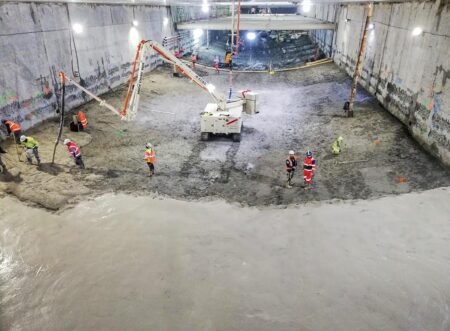
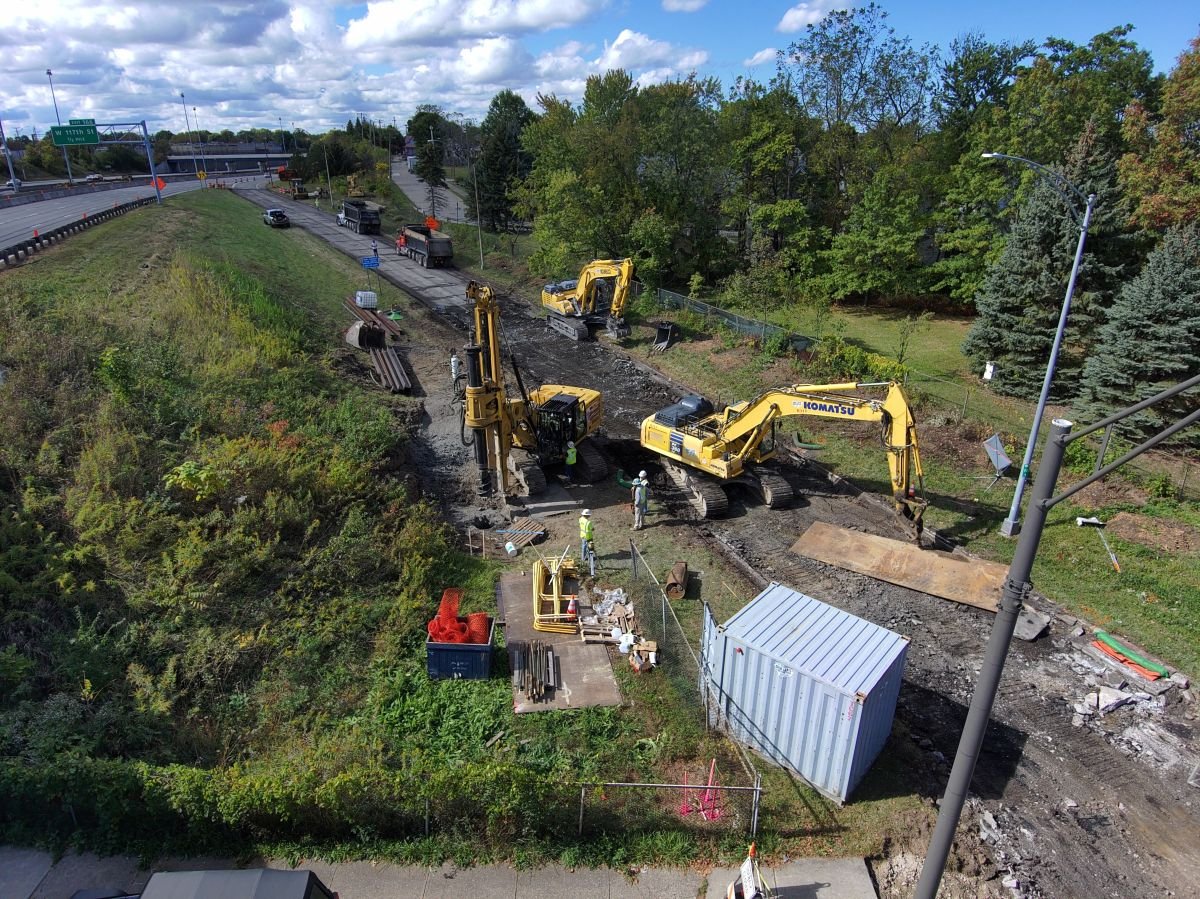
“Drainage runs are installed through trenching or boring,” said Simeone. “A 66-inch pipe is being bored under I-90 west by Riverside Drive. Drainage needs to be maintained while installing the new drainage. This is done by adding temporary connections and leaving existing drainage in place until the new drainage is functional.
“The median barrier was removed by using a hoe ram and hauling the concrete offsite. After installing the new pavement, the new median barrier will be slip formed.”
Early site work included project layout, MOT shifts, temporary crossovers and temporary lighting. Drainage installation, pavement removals and ramp replacements followed.
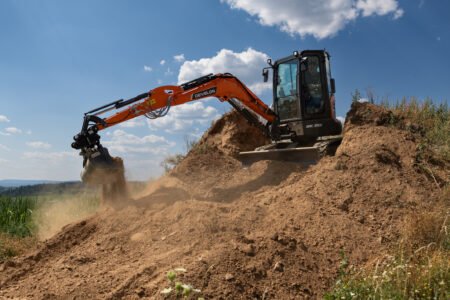
Excavation involves removing the median mounds and making profile adjustments, such as lowering pavement under structures for vertical clearance. Simeone said in order for crews to do so, additional material will be taken out. This will allow the new asphalt pavement to be placed at a lower elevation.
In total, roughly 305,000 cu. yds. of material will be removed during construction.
Crews typically work eight to 10 hours per day, five days a week. Drainage boring activities in the fall required both day and night work, six days a week. Some work must be completed at night and on weekends.
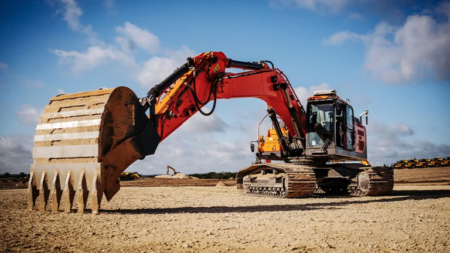
Main equipment being used on the project includes an excavator, loader, bore machine, crane, concrete paver, asphalt paver and roller. Construction materials include concrete, asphalt, aggregates, plastic, concrete and steel.
Although much work remains, Simeone said there’s already a sense of accomplishment on site.
“It’s exciting to be part of a project that will help improve an important corridor for so many people.” CEG
Read the full article here