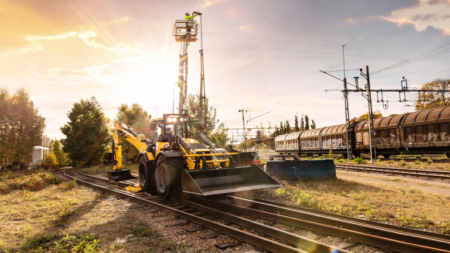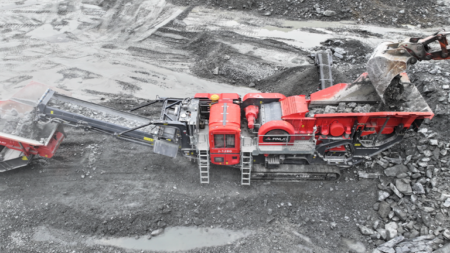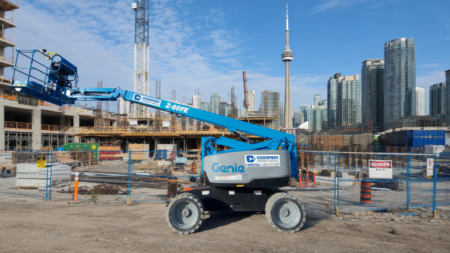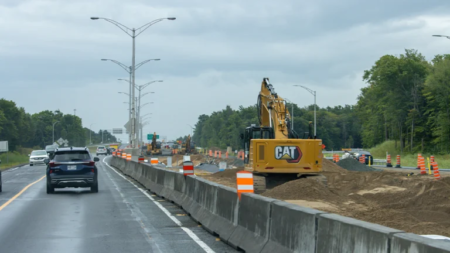




Today’s technology allows fleet managers to see individual machine performance, fuel consumption, and advance warnings of potential failures for their entire fleet.
Brandt
Proactive monitoring helps fleet managers get ahead of equipment failures
Technology also helps fleet managers identify potential problems before they become catastrophic. “We use telematics to identify when service is due, when a failure could occur, and for troubleshooting. We can monitor when service is coming up and notify the fleet manager, so they can plan service,” says Blades. “It’s like when the check engine light comes on in your car. We can visibly see it on our end, perform remote diagnostics, and help the fleet manager identify the failure in advance and get the machine up and running sooner.”
Blades pulls up a map on his computer screen with hundreds of dots on it, each representing a machine in a customer’s fleet. He clicks on one of the machines. “We can see a trail of where it’s been, how much time it’s been working, and how much time it has spent idling.” This is important data because when a machine idles, it burns fuel and puts on non-productive hours that use up some of the warranty. “Being able to understand that idling time helps fleet managers strategize how to reduce it, saving fuel and maximizing the warranty.”
The technology identifies diagnostic codes and can set up maintenance plans. Since it tracks machine hours, it is simple to tell when equipment is due for a service interval.
“Fleet managers aren’t on the job site all the time, and some of them are taking care of hundreds of machines. This is a great way to see what’s going on with the machines. Plus, it assigns colours to different diagnostic trouble codes and can also share predictive alerts,” says Blades. It also allows fleet managers to see the equipment’s location for security purposes. “You can put a curfew and geofence on the machine, so you know where it is at all times.”
Fleet management technology is available on most new machines and isn’t restricted to large fleets with hundreds of pieces of equipment. One machine is enough to make it worthwhile. “It depends on how you use it as a fleet manager. If you have one machine, there’s still information in there that you can use — what your fuel burn is, for example,” Blades explains. “And it’s infinite the number of machines in your fleet that you could utilize this with.”
A partnership approach to profitability
Fleet managers used to make educated guesses about maintenance needs and repair timelines, but now they have access to real-time data that helps them take informed action. The key to unlocking this capability relies on a strong relationship between contractors and their equipment dealers, in addition to the technology.
Whether it’s a guaranteed cost-per-hour maintenance contract that brings certainty to project bids, telematics that catch failing components before they cause catastrophic damage, or detailed performance analytics that identify fuel-wasting inefficiencies, these tools represent a fundamental shift in how equipment costs are managed. And, as Blades notes, benefits scale from a single machine to fleets of any size.
Fleet managers still relying on traditional reactive maintenance approaches need to ask how much money they’re leaving on the table by waiting to adopt preventive maintenance measures and telematics monitoring. In today’s competitive landscape, the difference between profitability and loss often comes down to the predictability and control that only a true dealer partnership can provide.
Sabrina Cataldo is a senior copywriter at Brandt.
This article originally appeared in the October 2026 issue of Heavy Equipment Guide.
Read the full article here