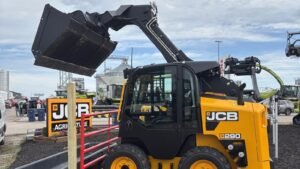



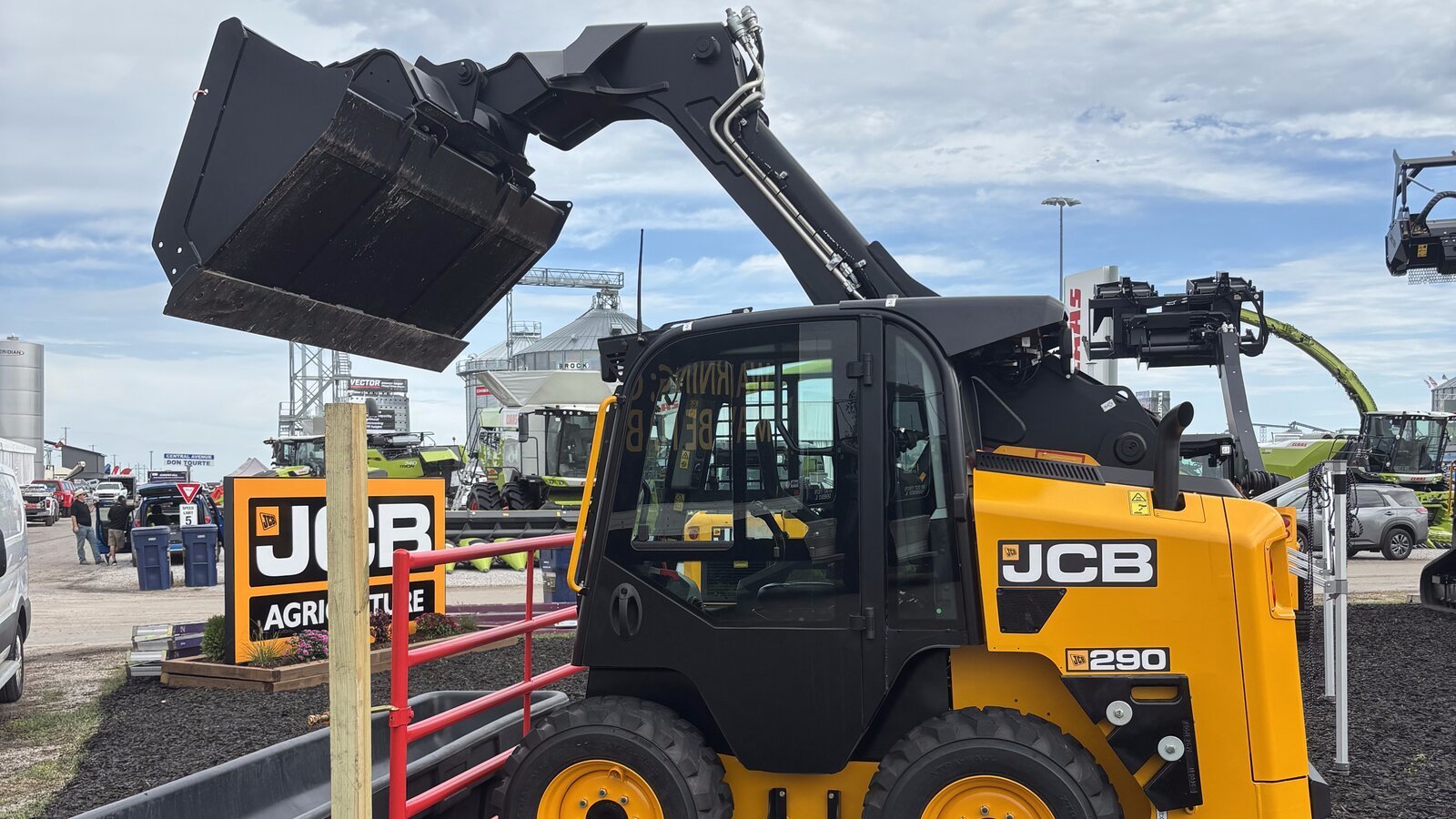
The new 250 and 290 skid steers put a single-arm boom and a side door into the most competitive size band in North American compact equipment
The skid steer loader is the most crowded product category in North American construction equipment, and the one where machines are hardest to tell apart. JCB has entered the mid-size band with two models, the 250 and the 290, that differ from the field in a way you notice before starting the engine: you walk in through a door on the side rather than climbing over the attachment.
Both are built in Savannah, Georgia, powered by a 74 hp engine, and positioned in a weight class that is new for JCB. Rated operating capacities are approximately 2,531 and 3,029 pounds, with hinge pin heights above 10 feet.
Why the side door matters
The single-arm boom is what makes the door possible. Conventional skid steers carry a boom on both sides of the cab, which leaves the front as the only way in. That means climbing over a bucket, a set of pallet forks or whatever else is mounted, several times an hour, in whatever the weather is doing.
“North American contractors continue to face labor shortages, making every employee and every piece of equipment more important than ever,” said Lee Tice, senior product manager for compact equipment at JCB North America. “Our industry-exclusive side-door entry eliminates the need to climb over buckets, pallet forks and other attachments every time operators enter or exit the machine. It’s a smarter design that improves productivity, enhances safety and helps operators keep work moving.”
Framing it against labour shortage is the right frame. When a crew is short-handed, the machine that a single operator can work efficiently all day is worth more than the one with a slightly better spec sheet. Falls from machines during entry and exit are also a persistent injury category in construction, and removing the climb removes the exposure rather than mitigating it.
What they are built to do
The 250 and 290 are aimed at everyday material handling: loading trucks, moving palletised materials, handling bulk aggregates, grading, site cleanup and placing supplies. High-flow hydraulic options and compatibility with the broad skid steer attachment market let a single machine cover most of that range.
Both keep a compact footprint, which is the point of the category. Residential jobsites, commercial developments and landscape projects rarely have room for anything larger, and the machine that fits is the machine that gets used.
The single-arm design also pays off in sightlines. Removing one boom removes a substantial blind spot on that side of the machine, which on a busy site with people moving around is worth as much as the capacity figure.
Where they sit in the lineup
The models expand a compact range that already runs from skid steers and compact track loaders to telehandlers, wheel loaders and the Teleskid, JCB’s telescopic-boom skid steer. JCB North America employs more than 1,000 people from its Savannah headquarters and has begun work on a $500 million factory in San Antonio, Texas, the largest investment in the company’s history.
That last figure is the context for a mid-size skid steer launch. A manufacturer building capacity on that scale in North America is not launching two machines to fill a catalogue gap.
JCB has not published pricing or availability dates for the 250 and 290.
Read the full article here