



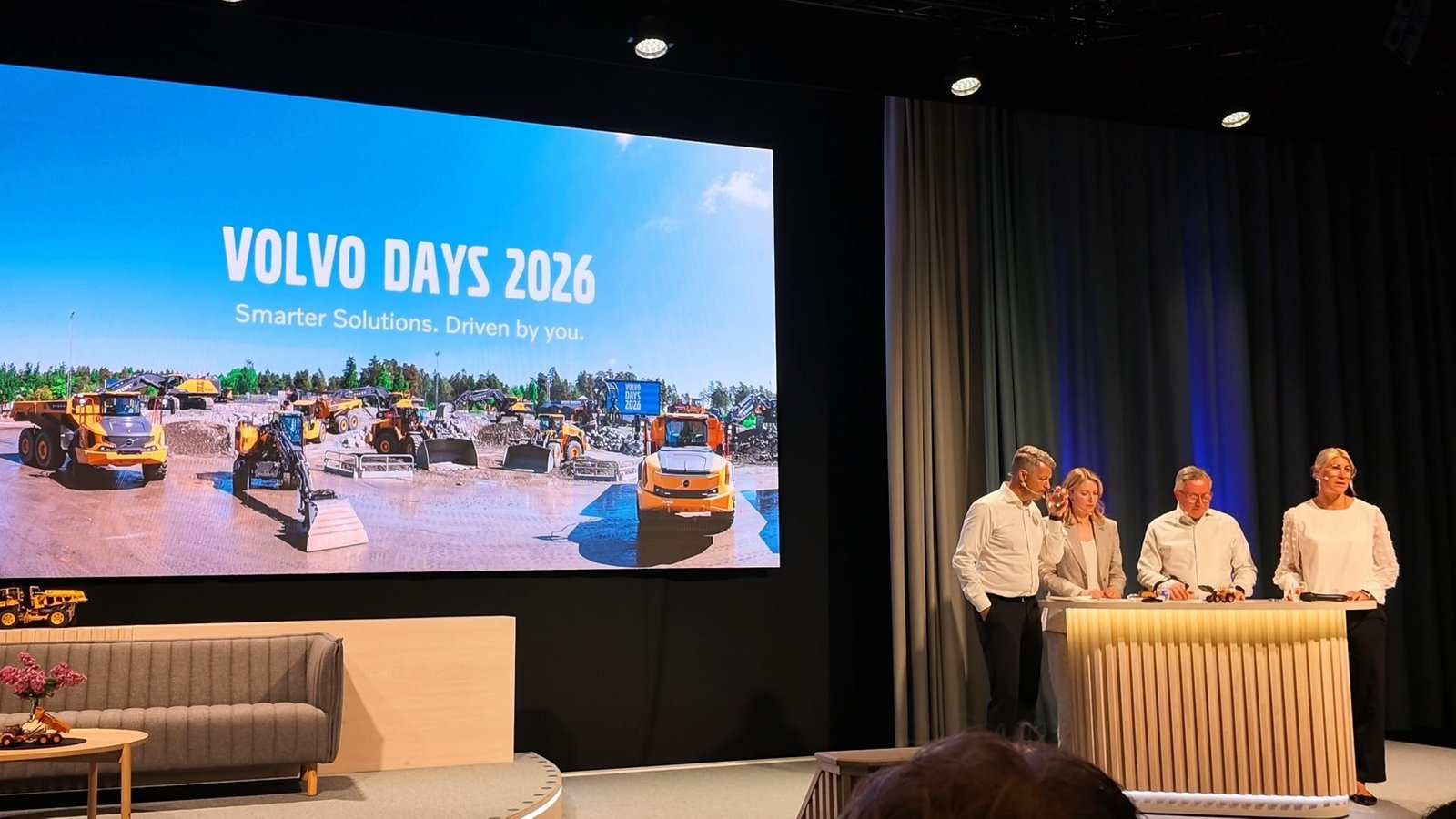
At its largest Volvo Days ever, Volvo CE connected major investments in products, electrification, Site Solutions and European manufacturing to a future-proof strategy, as US and Asian markets
Volvo Construction Equipment opened its Volvo Days 2026 press conference on a Tuesday morning in Eskilstuna, Sweden, with Melker Jernberg, President of Volvo CE, setting the tone from the outset. “Behind the scenes, best days ever,” he told the assembled media, customers, and partners, a phrase that captured the mood of an event the company has been building toward for months.
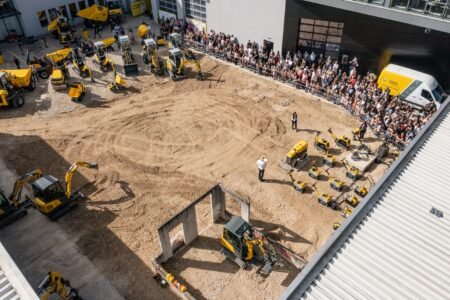
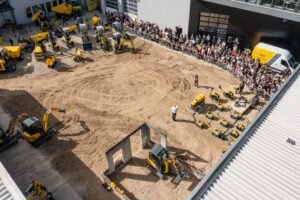
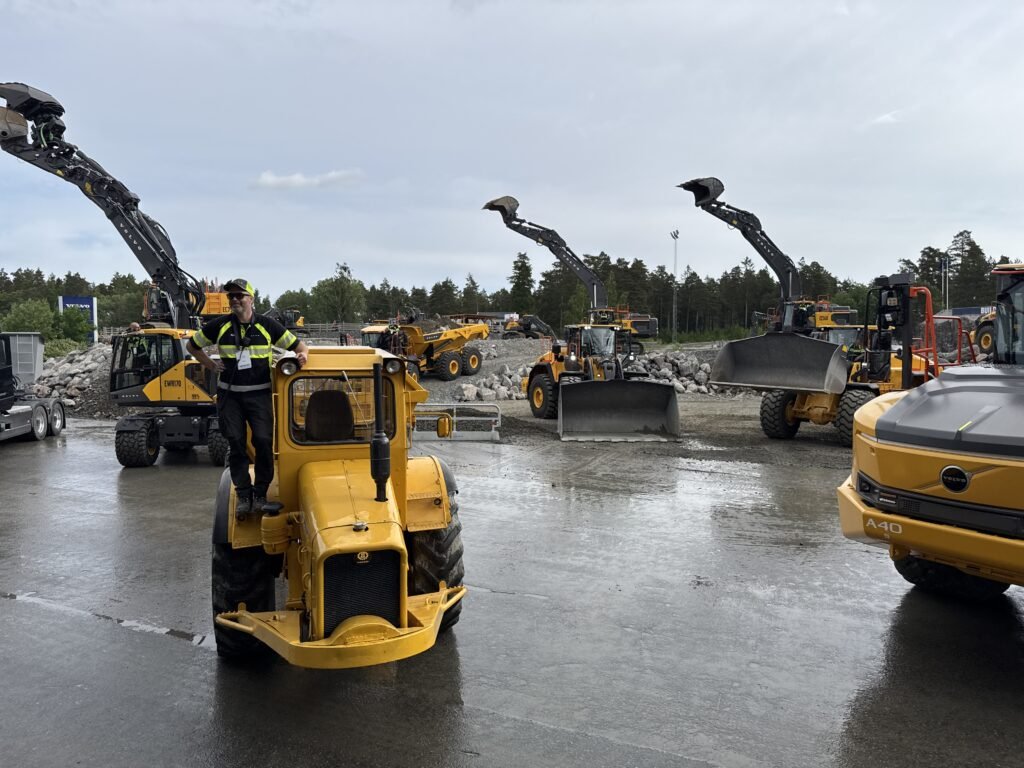
Volvo Days, which Volvo CE has been hosting since 1971, is now in its fifty-fifth year. This edition is the largest in the event’s history: four weeks in June, approximately 4,000 visitors spanning customers, retail partners, suppliers, employees, and media, more than 100 machines on the demo field, and over 600 Volvo ambassadors on hand to guide visitors through the showcase. The event’s official theme, “Smarter Solutions. Driven by you”, was introduced early and returned to throughout the day, framing Volvo CE’s offer not as a collection of machines but as a complete, customer-shaped solution combining products, digital services, financing, and local support.
Before handing over to the formal presentation, Jernberg introduced two new members of his management team. The first was Åsa Alström, the new Head of Brand Marketing and Communication, who has been with Volvo for twenty-three years. “I’m not new,” she said, “but I’m new to this position.” The second was Hanna Ihnatovich, the new Head of Region International, covering emerging economies and all geographies outside the core established regions. Hanna described Region International as “quite a diverse region, it’s a growth region geographically, it stretches far, and there are different market realities.” But, she added, “the fundamentals are the same. Customers are looking for reliable products.” Her priority: meeting customers and local partners directly and demonstrating that Volvo CE has a strong offer for businesses across those markets.
Carl Slotte, Head of Region Europe at Volvo CE, co-hosted the press conference alongside Jernberg, guiding the assembled media through the formal presentation. Slotte underscored the significance of Volvo Days 2026 as the first opportunity for European audiences to see many of the already globally announced new machines in action in Europe, with live demonstrations and direct access to Volvo CE experts across the demo field.
The World as It Is: Volatility as Opportunity
Before moving into product and strategy specifics, Jernberg addressed the external environment directly. The past several years have brought supply chain disruptions, geopolitical tensions, and macroeconomic uncertainty; “we can have a long list of this,” he acknowledged. But he was deliberate in framing these conditions from two angles simultaneously. “One is that it’s very problematic, hard to deal with. The other is that this is possibilities and opportunities. Whatever happens to us, we know that our customers will continue to dig, haul, and load. That will happen.” The question, he said, is not whether demand exists but how Volvo CE takes all the negative, puts it aside, and continues to perform and help customers find solutions. That orientation is the defining characteristic of the company’s culture and the foundation of its recent financial results.

Jernberg pointed to Volvo CE’s financial performance since the pandemic as a proof point of business quality. Without disclosing specific Q1 figures in detail, he described strong deliveries, good growth, and consistent results, attributing them to disciplined execution across products, services, and customer relationships. “If you take the financial performance and what the teams have been doing seriously since the pandemic, we have actually been showing extremely good resilience when it comes to the quality of the business and the results.”
Three Strategic Pillars: Data, Services, Strategic Investments
1. Volvo CE moves into the next era of construction, becoming the customer’s first choice as a solution provider, powered by data-driven solutions
2. Powering customer success through a stronger total offering, combining a renewed product portfolio with expanded services and financing
3. Strategic investments to strengthen both the retail and industrial footprint, ensuring the company is closer to its customers and more resilient to external shocks

Construction, Mining, and Quarry
Volvo will concentrate resources and product development around three core segments: construction, mining and minerals, and quarry and aggregates. While the company operates across most segments in the industry, Jernberg was explicit that these three are where Volvo CE is choosing to focus its energy.
The rationale is both market-driven and structural. Infrastructure investment, demand for minerals tied to the energy transition, and ongoing urbanization are all converging to drive sustained demand in these three areas. Volvo CE’s assessment is that on a global market level, these segments will grow at between 5 and 6 percent per year. “If you find a spot where you are able to focus, create products, services – real solutions into these segments – this will be great short and midterm for us,” Jernberg said, singling out quarry and mining in particular as areas of especially strong near-term opportunity.
Beyond the machines themselves, Jernberg emphasized that the way a site is organized, how efficiently it runs, how much uptime it achieves, how productively operators work, can deliver enormous value for customers in these segments. “Productivity, that’s their business. The output, how much output they create on a daily basis.” Combined with the right products, services, and financing, Volvo believes it can be a genuinely differentiated partner rather than simply a supplier of equipment.
Portfolio Renewal and the Total Offering
Over the past two years, Volvo has introduced 80 new and updated products, renewing approximately 50 percent of its product portfolio. In parallel, the company has grown its services portfolio by 50 percent. Jernberg described this dual renewal as the foundation of the total offering.
Excavators, wheel loaders, and haulers now represent the majority of total equipment market volume in their respective categories. “We are just in the center of where the market is moving,” Jernberg said, “and that is why we invested in these product lines.”
A customer testimonial from Vincent de Kock, fleet manager at a South African construction company, illustrated the A40 articulated hauler’s appeal in practice. “The reason we decided to take the A40 series is because it’s a durable machine. We can check the weights of loading capacity so we can work safely.” The A40 was available for visitors to test on the demo field throughout the day.
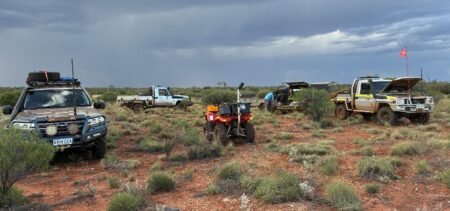
On services, Volvo presented a case study from Hallett Group, a construction and building materials company operating four quarry mining sites and one sand reclamation site in South Australia. A company representative described how Volvo’s telemetry system had transformed their operations: “We entered the telemetry system and its involvement has allowed us to track our stockpiles through the program rather than through traditional inventory management. We can track the productivity of our operators in real time.” Machine location data also improved worksite safety, giving operators visibility of other machines around them. “There’s no other tool like it in the world. If you want to sell a commodity machine that digs a hole and loads trucks, there are plenty of manufacturers. But that’s the benefit of the telemetry system.”
Volvo Financial Services finances approximately one third of all Volvo CE sales globally. In Region International specifically, 25 percent of business is financed through an internal trade finance team. Competitive financing is now a key enabler for customers in growth markets to continue investing in Volvo products.
Machines on Show: New and Updated Models
Volvo Days 2026 marks the first opportunity for European audiences to see many of the already globally announced new machines in action, with live demonstrations and direct access to Volvo CE experts.

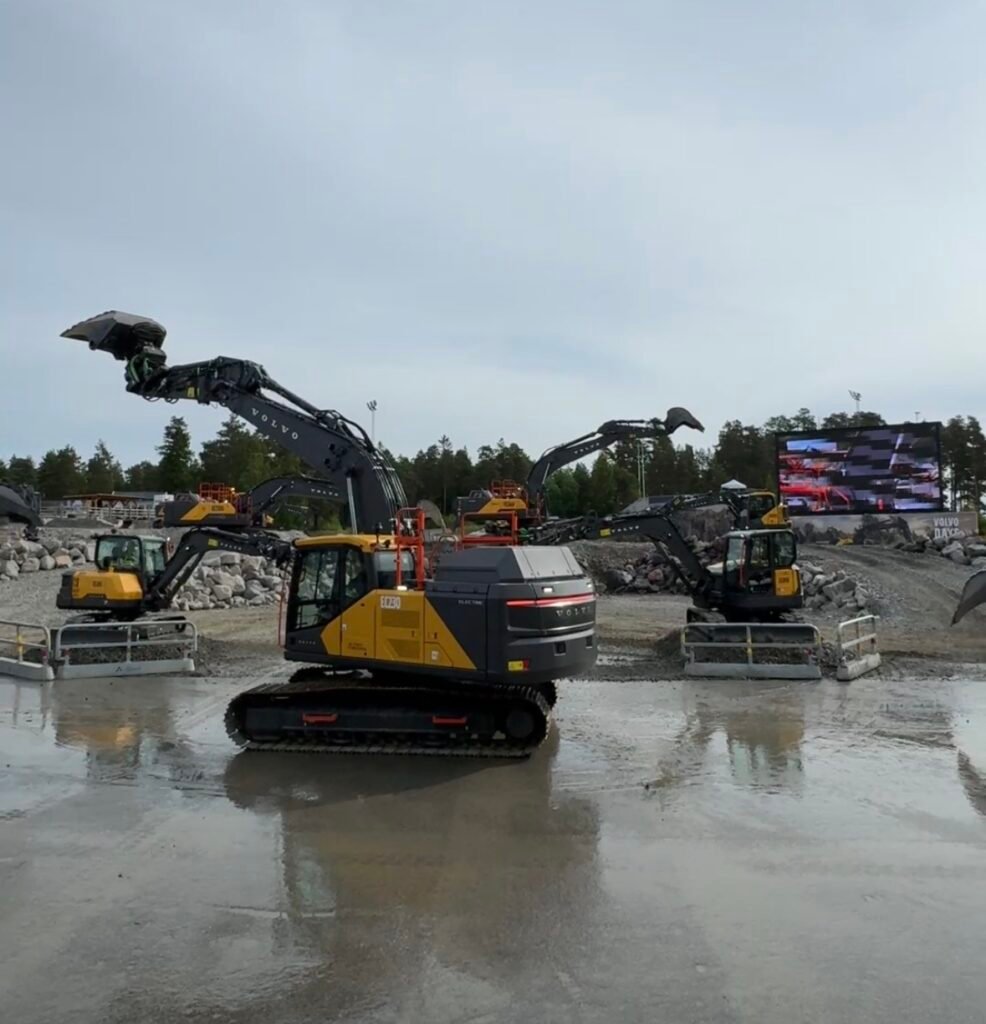
The machine line-up at Volvo Days reflects that technology shift. European debuts include the ECR255 and ECR355 short-swing crawler excavators, designed for confined and demanding worksites, along with the compact ECR90, EC65 and EW65 excavators. The EC560 crawler excavator targets heavier applications such as infrastructure, quarrying, aggregates and building work, while the L260 Heavy Duty Rehandler expands the offer for demanding material-handling environments.
More than 15 machines from Volvo CE’s Special Application Solutions range are on display at Volvo Days 2026, representing the breadth of purpose-built configurations available on top of the core product lines. Specific examples highlighted at the event include:
– Demolition excavators, configured for high-reach and selective demolition
– Waste handling machines, equipped for material processing and recycling site operations
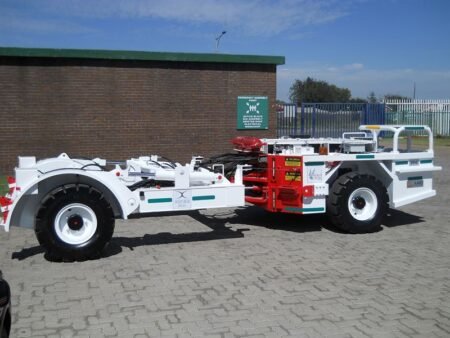
– Tunnel Excavator´s designed for various underground application with diesel/diesel electric or just electric, including A30 4×4 with turning wheel as well for tunnel application
– Rail Road Wheel Excavator EWR170F for Nordic countries
These machines are built on Volvo CE’s main product platforms but configured for specific customer needs and site conditions, extending the company’s reach into specialised segments without requiring entirely separate product lines.
Electrification: Honest About the Pace, Committed to the Direction
Electrification occupied a substantial portion of the press conference, and Volvo’s approach was notably candid. Jernberg acknowledged directly that the transition to electric machines is progressing more slowly than the company originally anticipated. “We believe in it, and it’s a bit slower than we thought. You have, of course, variances, different segments, different geographies.”
The company pointed to specific markets and segments where acceptance is higher. Norway, and Oslo City in particular, was cited as a leading example of what is possible when municipalities and governments take a strong position. Volvo CE machines are currently operating on emission-free construction sites across Norway, with a cumulative total of 125,000 operating hours logged on electric machines. The first emission-free deconstruction site in Germany was cited as another example of a segment (urban construction) where acceptance is notably active.
New electric product milestones announced by Volvo in the last two years:
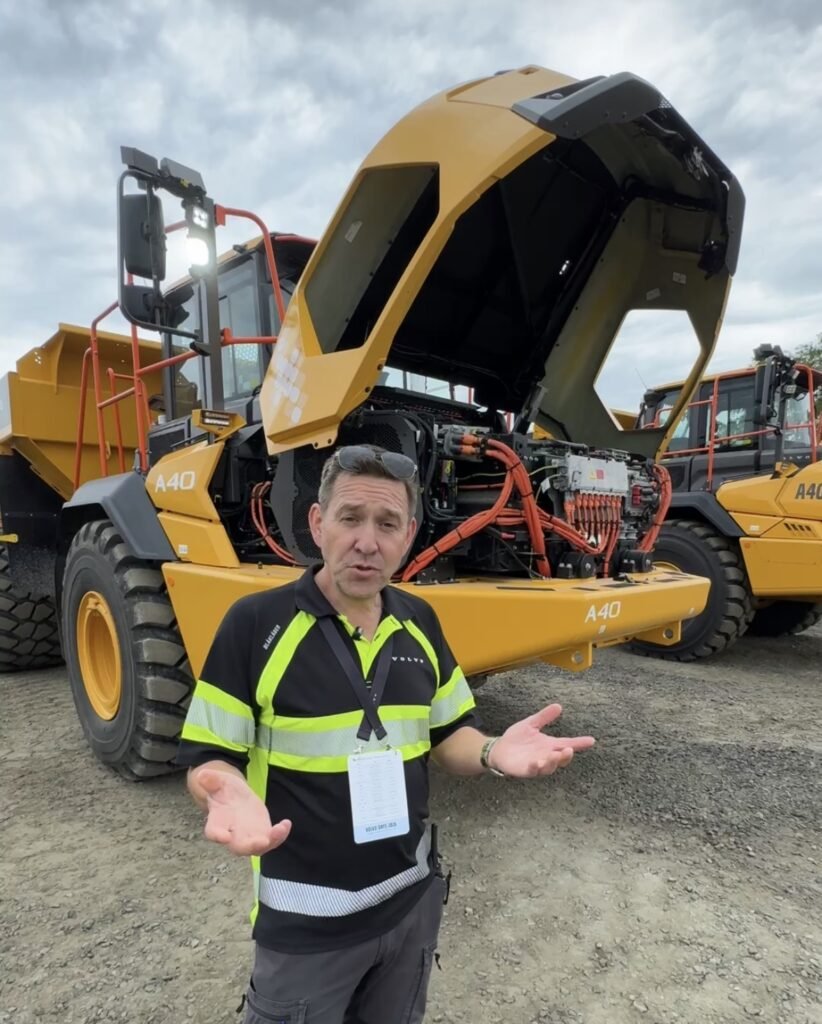
– A30 Electric and A40 Electric articulated haulers: on display and available for demonstration
– Electric wheel excavator (EWR150 Electric): now entering its delivery phase and available in Europe
– Updated L90 Electric wheel loader, featuring:
– Hill Assist for improved safety and control on gradients
– Waste Option package for material handling and recycling applications
– Runtime up to six hours in medium-duty applications
– DC fast charging from 20 to 80 percent in 55 minutes
On battery runtime more broadly, Volvo indicated that current electric machines deliver approximately 4 to 5 hours of operation per charge, with regenerative braking during downhill cycles able to meaningfully extend effective runtime in appropriate applications. Jernberg was careful not to overstate the figure, noting that the right solution depends entirely on the specific worksite cycle. Hydrogen was explicitly ruled out as a near-term path. Evolved battery technology is the company’s chosen direction for electrification, including for wheel loaders.
Perhaps the most strategically important element of Volvo’s electrification narrative was a deliberate reframing of the business case. Jernberg was explicit that the company has moved away from positioning electrification primarily as a climate or sustainability argument. “Our way of doing it is making it profitable for our customers.” The goal, he said, is to bring machines and services that are better for the bottom line and the business of customers. “And then we can — I mean, that is a win-win.”
To illustrate this, Jernberg presented a real-world comparison between a diesel L120 wheel loader and an electric L120 operating at a customer site in northern Sweden. The comparison covered approximately 1,100 hours of operation during winter conditions — a scenario relatively unfavourable for electric machines due to battery performance in cold temperatures. Despite this, the electric L120 delivered a 28 per cent lower total cost of ownership compared to the diesel equivalent. “This is not fake. This is one example – of course not the only one.” He was careful to note that TCO outcomes vary significantly by application, geography, shift length, energy prices, and depreciation assumptions. “Is that valued for everything, everywhere? Of course not. It’s different. But this means that this will help us. So we will continue to live, we will continue to invest, we will continue to believe. This will return.”
Jernberg also emphasised that the transition cannot be driven by manufacturers alone. “We believe that the whole ecosystem needs to move. It’s not us only as manufacturers. It’s the whole ecosystem where procurement is a key enabler for making this happen.” Municipalities, governments, and financing structures all need to move in parallel with machine technology.
Site Solutions: Connecting Machines, Data, and Outcomes
A dedicated stand of the Volvo Days showcase focused on Site Solutions — Volvo CE’s portfolio of digital and connected services designed to help customers manage their operations beyond the machine itself. Stefan Pettersson, presenting this section, framed the offer in terms of what customers are actually trying to achieve: “Customer is not only looking for a machine. Customer wants to reduce downtime, reduce idling time, control efficiency costs, increase productivity, safety, sustainability. So customer is looking for the total offer.”
According to Pettersson “By combining products, services, financing, and local support — which is super important, you know, local support with the service to the customer — that makes a lot of work. That is why we are the first choice.”
SDLG Divestment and the China Strategy
Volvo CE divested its 70 percent ownership stake in SDLG, ending an 18-year joint venture with the Chinese manufacturer. “There came a point where we chose not to continue the collaboration, while still valuing each other and the relationship we had built.” The partnership had delivered significant value over nearly two decades, including development both in China and in export markets. But the post-pandemic environment and the evolution of the Chinese market had changed the calculus. The SDLG contribution to Volvo CE’s profit and loss had become more of a drain than a benefit, and the divestment was described as a responsible exit following multiple years of effort to make the model work.
Going forward, Volvo CE’s China strategy is focused entirely on the Volvo brand. The Shanghai plant, which Jernberg noted “ten years ago was not on top of our KPIs in the company,” has been transformed into a strong manufacturing asset. It now produces excavators, wheel loaders, compact machines, and axles, and houses sales and other functions. “We have a fantastic footprint in China,” Jernberg said, describing the plant as a key part of both the China market strategy and Volvo CE’s global supply system.
Rokbak Closure
Volvo CE confirmed the closure of Rokbak, its ATD brand, formerly Terex Trucks. Jernberg stated that the company had fought hard to make the business work over many years, navigating tariff challenges and other headwinds. “We fight quite hard and we try everything we can for many years.” Ultimately, the conclusion was that it was not responsible to continue. The competencies developed within Rokbak, particularly in articulated hauler technology with the plant in Motherwell, Scotland, are being retained within Volvo CE’s broader technology teams and are considered a valuable part of the company’s ongoing hauler development capability.
Industrial Investments: New Excavator Plants and Expanded Capacity
A major announcement at the press conference was the construction of a new excavator manufacturing plant in Eskilstuna, Sweden. The project represents an investment of approximately 65 million euros (roughly 700 million SEK), and will have a production capacity of approximately 30,000 units per year at full ramp-up. Project leader Daniel Edström confirmed that groundwork has begun and the project is actively gearing up. “We are really getting there. Gearing up now and getting ready.”
This Eskilstuna plant is part of a broader excavator capacity expansion across three sites: South Korea, Sweden, and North America. The first EXC rollout at the new US plant was completed just weeks before the press conference. Jernberg framed the European investment specifically as a statement of long-term commitment to the Volvo brand and to European manufacturing. “Our head office and our roots are from Sweden. Investment in Europe is really important for the company.” He added that the investment sends a strong signal to customers about Volvo CE’s long-term intentions: “That of course gives our customers a lot of confidence of the long-term intention to stay very competitive on the market and stay close to the customers.”
The company also described a broader strategic shift in its industrial footprint toward greater regional resilience, referencing geopolitical pressures and the risks of over-concentration in any single supply region. Volvo CE is investing in both its own manufacturing sites and its supplier network to reduce lead time volatility and improve its ability to respond to demand fluctuations.
Retail Strategy: Acquiring Swecon and Owning the Customer Interface
One of the most strategically significant announcements of the press conference was Volvo CE’s acquisition of Swecon, described as the largest retail partner in Europe. Swecon currently operates in two key markets: Sweden, Volvo’s home market, and partly in Germany, one of the most important European markets for construction equipment and as well in Estonia, Latvia and Lithuania.

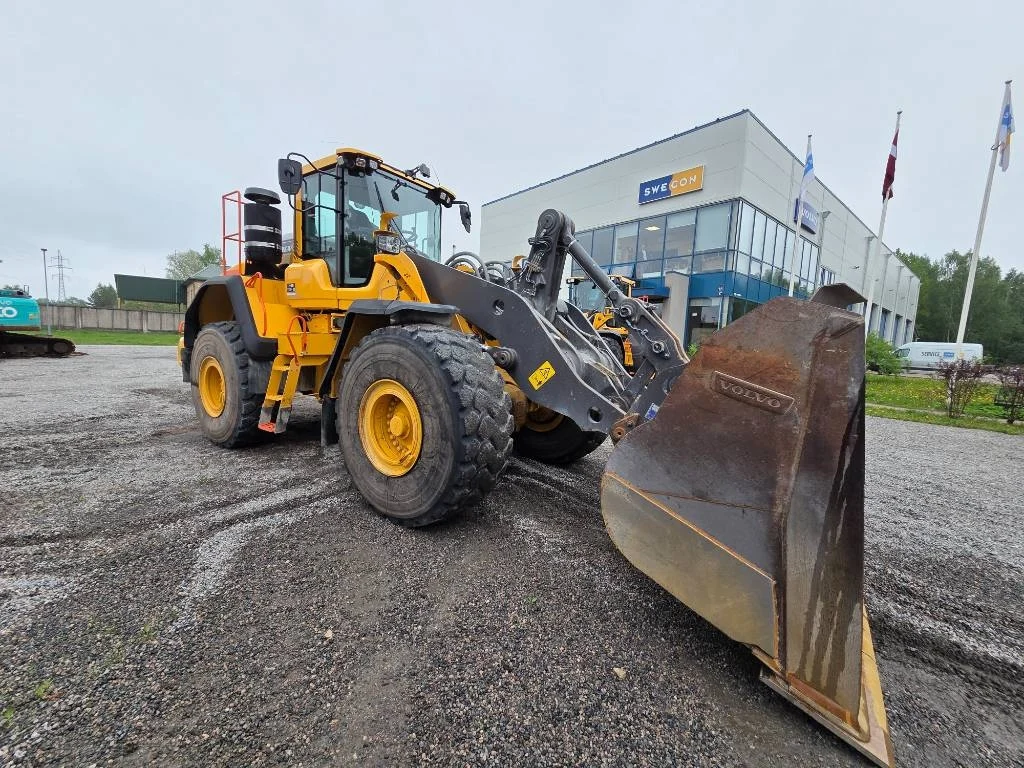
The rationale for the acquisition was explained on two levels. First, Swecon is a well-run company with strong existing operations. Second, and more fundamentally, Volvo CE believes that the technology shift underway in the industry requires OEM-level presence at the customer interface. “New technologies are coming out to the market, there are new business models evolving, there are different requirements coming from the customer side that we need to respond to. If Volvo as an industrial company brings technology closer to the market, and the market closer to the technology — that is actually creating value.”
Prior to this acquisition, approximately 30 percent of Volvo CE’s European business was handled through retail entities it owned or controlled. Post-acquisition, combined with existing owned retail companies, Volvo CE will manage the majority of European markets directly — approximately 65 percent retail ownership in Europe.
Carl Slotte was direct on the strategic imperative: “The shift is happening in the customer interface. We need to be in the customer interface to make the shift and stay competitive. That is the rationale.”
Jernberg and his team were explicit that this does not signal an intention to eliminate independent dealer relationships. “We have a lot of good dealer partners. They are doing a great job for us, and that is of course going to be continued.” In the US, Volvo CE has reduced its dealer count from 48 to 32 over the past eight years while improving performance. The Swecon acquisition was driven by future strategic positioning, particularly the need to stay competitive against new market entrants in Europe, not by dissatisfaction with dealer performance.
AI: Delivering Outcomes, Not Headlines
In response to a HeavyQuip Magazine press question,
Jernberg acknowledged with some amusement that Volvo CE had not used the term “AI” once during the formal presentation. “Obviously I should have,” he said, noting that many other companies are leading with AI as a primary message. He confirmed that Volvo CE is actively working with AI across three areas: internal process efficiency, where a large ongoing project is underway; commercial and customer interface applications; and machine development and onboard services. But the company’s philosophy is to let AI deliver tangible outcomes rather than to brand it as a feature. “Our approach is more to let’s see that as a great thing, to bring good things to our customers quicker and better. It will not be AI. It will be something – if it comes to safety or productivity or uptime or whatever, it is that.” He suggested that “AI” as a label will eventually be replaced by the specific capabilities it enables, and that Volvo CE prefers to work toward those capabilities without making a headline out of the method.
Jernberg closed the Conference by returning to the theme of performance as the foundation of everything else. “If you don’t perform, you cannot invest, you cannot decide on the future. Right now, we feel that we are taking decisions.” He expressed his hope that the assembled media and partners would leave the day not only trusting what had been said in the press conference, but, more importantly, getting a feeling for how Volvo CE treats, behaves with, and works alongside its customers. “That’s the most important.”
Read the full article here