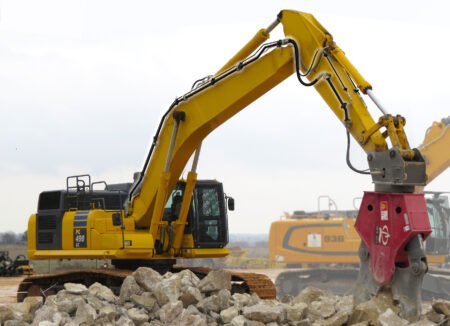



Heavy equipment runs on welded steel. Booms, buckets, frames, undercarriages, and attachments all depend on structural welds holding up under repeated, unpredictable loads. When one of those welds fails in the field, it’s rarely a quick fix, and it’s almost never just about the crack itself.
Fleet managers track uptime obsessively. Telematics dashboards flag engine hours, fuel burn, and idle time down to the minute. But the metallurgical step that decides whether a repaired weld actually survives its next duty cycle gets far less attention. That gap is starting to show up in repair bills and repeat failures across the industry.
Why Weld Failures Still Ground Heavy Equipment
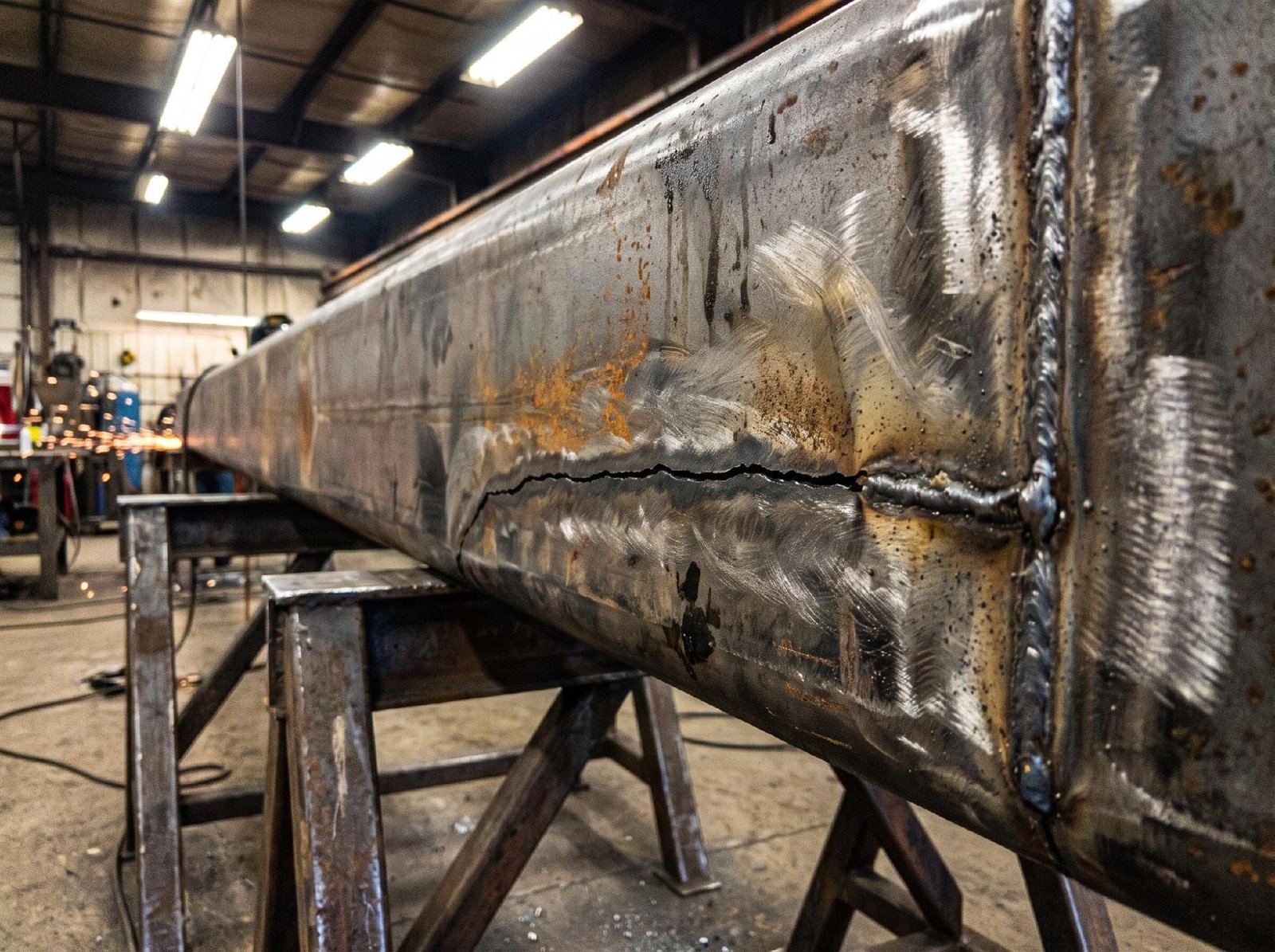
Every weld leaves behind residual stress. When a torch heats steel and then lets it cool unevenly, the metal near the weld, known as the heat-affected zone, ends up with internal stresses baked in. Under the cyclic loading a boom or bucket sees every shift, those stresses concentrate at the weld toe and grow into cracks. It’s a slow process until, suddenly, it isn’t.
The pressure on repair quality is only getting worse. The US is short roughly 400,000 welders, with more than 157,000 approaching retirement age and about 320,500 new welders needed by 2029 just to replace who’s leaving, according to Gitnux’s 2026 welding industry data. Fewer experienced hands means more field repairs get done under time pressure, often by whoever’s available rather than whoever’s most qualified. That raises the stakes for getting the metallurgy right the first time.
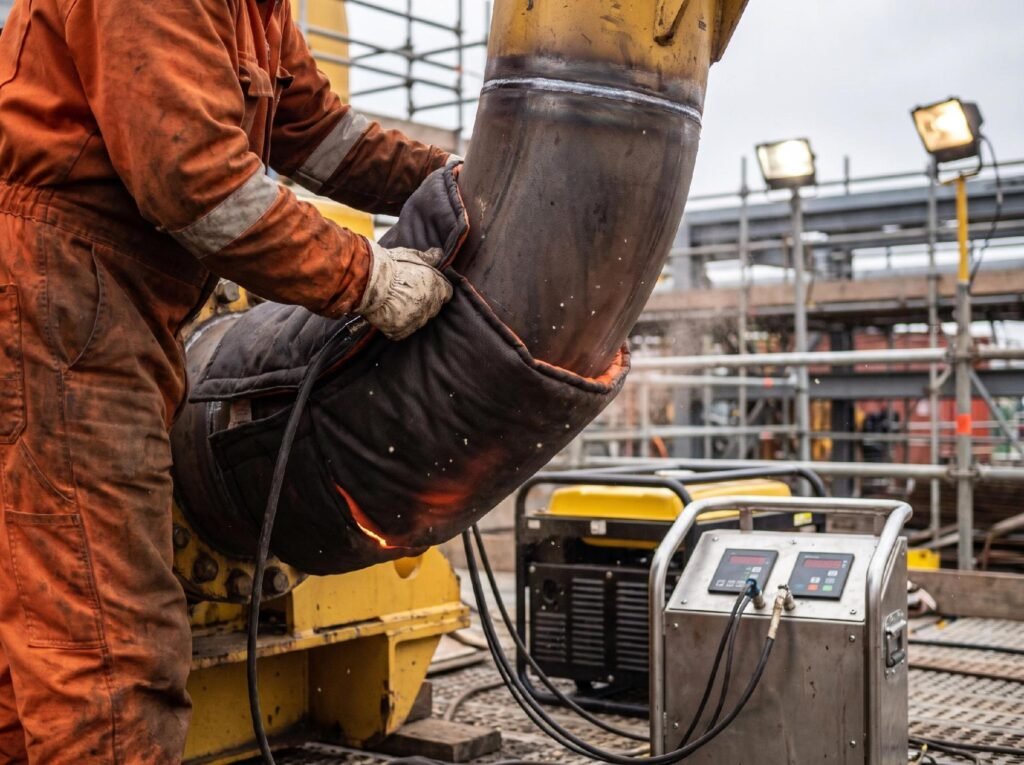
This is where industrial heat treatment services come into the picture. Pre-heating a joint before welding, applying post-weld heat treatment (PWHT) afterward, and running stress-relief or bake-out cycles on thick structural sections all work to release that trapped stress before it turns into a crack. On a component like an excavator boom or a loader frame, skipping this step doesn’t save much time up front, but it often means the same weld fails again within months, sometimes in a worse spot than the original.
The Codes Behind Every Structural Weld
Structural welds on heavy equipment aren’t exempt from code just because the machine isn’t a bridge or a pipeline. The American Welding Society’s D1.1 Structural Welding Code – Steel governs how structural steel welds are qualified, inspected, and repaired, and its 23rd edition landed in 2025 on the society’s regular five-year revision cycle.
Material thickness is what usually decides whether PWHT is mandatory or exempt. ASME’s engineering commentary on B31.3 PWHT thresholds lays out the rationale: thicker sections trap more residual stress and carry a higher risk of hydrogen-induced cracking, so the code sets firmer treatment requirements as wall thickness climbs. For a shop doing structural rebuilds on heavy equipment, that distinction matters for liability and warranty as much as for safety. A repair that skips a code-required PWHT step isn’t just riskier, it can void a warranty or complicate an insurance claim if the component fails again.
The True Cost of Skipping It

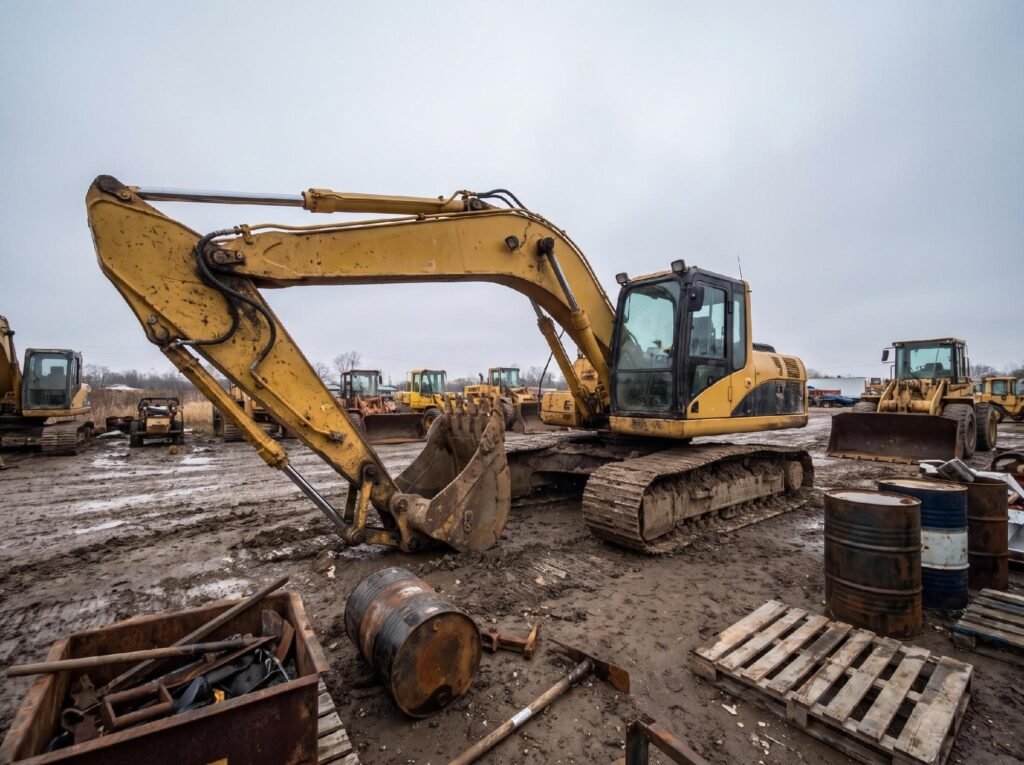
Unplanned downtime on a heavy equipment fleet costs between $3,200 and $8,700 per machine per day once you add up idle crew wages, emergency repair premiums, rental replacements, and project delay penalties, according to 2026 data from MapTrack. In 2025, the average fleet lost 14% of its annual operating hours to breakdown repairs, a chunk of time that shows up directly in missed milestones and shrinking margins.
Reactive repairs, the kind triggered by a weld cracking in the field, cost 3 to 9 times more than the same work done as scheduled preventive maintenance, according to FleetRabbit’s construction management research. A weld that fails again because it wasn’t properly heat treated the first time isn’t a one-time cost. It’s a repeat cost, often at the worst possible moment in a project schedule.
Catching problems before a weld fails outright helps too. Real-time telematics, the kind we covered in our piece on haul-track telematics, can flag stress patterns and abnormal vibration that hint at a developing crack. It’s a complementary strategy, not a substitute for doing the repair right in the first place.
Field Repair vs. Shop Rebuild – How Heat Treatment Fits Either Way
Not every weld repair happens in a controlled shop. A cracked bucket weld on a job site often gets a portable induction or resistance heating setup wrapped around the joint, monitored in real time so the crew can hold the right temperature range without hauling the whole machine back to base. It’s slower than skipping the step, but it’s a fraction of the time a full component replacement would take.
Shop rebuilds are a different story. A frame or undercarriage getting a full structural rebuild goes through controlled furnace or blanket heat treatment, with tighter tolerances than a field crew can realistically hold outdoors. The structural steel fabrication market is projected to grow from $179.04 billion in 2025 to $195.5 billion in 2026, a 9.2% jump driven partly by infrastructure spending and reshoring, according to Research and Markets. More of that fabrication and rebuild work is happening domestically, which is also pushing more shops to build in-house capacity rather than farm it out. That’s part of why acquisitions like Epiroc’s recent purchase of Eventspec’s aftermarket fabrication business are worth watching. Fleets that once shipped major welds out are increasingly keeping that work close.
Building Heat Treatment Into Maintenance Planning
The fix here isn’t complicated, but it does take discipline. Repair contracts and welding procedure specifications should spell out exactly when PWHT or preheat is required, not leave it to whoever’s holding the torch that day. Crews need training to recognize which repairs genuinely need heat treatment versus which ones can get by with a simple preheat, because treating every repair the same way wastes time and money in both directions.
Safety compliance matters here too. OSHA’s welding, cutting, and brazing standards cover the jobsite risks that come with heat treatment operations, from fire hazards to fume exposure, and folding those requirements into repair planning avoids scrambling to catch up after an incident. Pairing that with the kind of scheduled upkeep approach recognized in Kennards Hire’s sustained excellence award turns heat treatment from an afterthought into a standard line item in the maintenance plan.
Conclusion
Fleets are aging, the welder shortage isn’t closing anytime soon, and repair volume keeps climbing. Heat treatment used to be treated as a specialty step reserved for pipelines and pressure vessels. On heavy equipment, it’s the difference between a weld that holds for the rest of the machine’s service life and one that cracks again in six months, usually at a worse time than the first failure.
Fleet managers who write heat treatment into their repair contracts and rebuild specs aren’t adding red tape. They’re protecting uptime and the total cost of owning the machine, one weld at a time.
Read the full article here