


AI-Link is on more than 100,000 machines worldwide. It is not on the ones sold in Europe or North America, and that is the detail worth reading twice
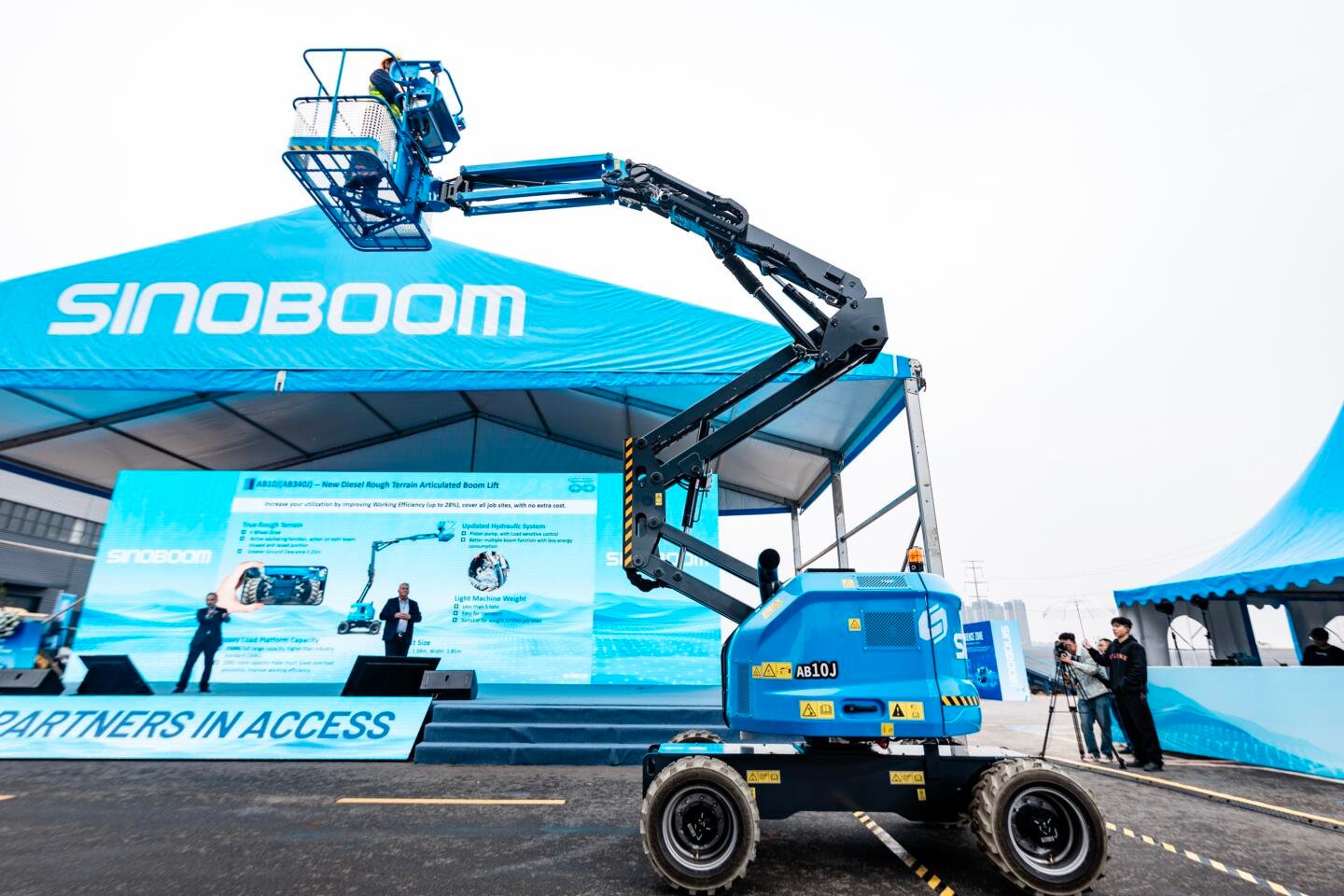
Sinoboom has replaced its i-Link telematics with AI-Link, a platform built to pull OEM-level data off its machines and act on it remotely. The headline capability is straightforward and consequential: firmware can be updated over the air, and advanced diagnostics can be run without dispatching a technician.
For anyone running access platforms, the second part is where the money is. A MEWP that faults on a jobsite is not just an idle machine, it is a stalled work front and a service van committed to a round trip that may end in a five-minute fix. Remote diagnostics turn some proportion of those trips into a phone call.
What is in it
Sinoboom describes AI-Link across six capabilities. Data acquisition pulls a more complete set of OEM machine data from controllers and key components, supporting diagnostics and condition monitoring. Connectivity runs on industrial-grade e-SIM technology across multiple regions. Remote updates cover FOTA for firmware and DOTA for advanced remote diagnostics. Security is handled through identity authentication, role-based permissions and audit trails governing who can access and operate a machine. An open API allows integration with a customer’s existing business systems and other telematics platforms. And an AI layer converts machine data into recommended actions for service and maintenance.
The open API deserves attention. Mixed fleets are the norm in rental, and a telematics platform that will not talk to the systems already in place becomes another login nobody opens. An API is not a guarantee of good integration, but its absence is a guarantee of bad integration.
Beyond location and operating status, the platform reports productivity and utilisation rates and flags unplanned downtime. Data from engines, batteries and controllers is intended to give fleet managers earlier visibility of anomalies and help assess faults before they become failures.
The scale, and the gap
“AI-Link has already been rolled out to over 100,000 machines globally, with overwhelmingly positive feedback received,” said Ben Xie, Head of the Sinoboom Intelligent Research Institute and Global CIO.
A hundred thousand connected machines is a serious installed base, and it is the number that separates a telematics announcement from a telematics product. But the release carries a second sentence that matters just as much: products sold in North America and Europe are not yet configured with AI-Link, which Sinoboom attributes to the specific requirements and market needs of those regions.
So the platform most likely to interest a European rental company is the one that European rental companies cannot currently get. Data residency, connectivity certification and regional regulatory requirements are the usual reasons a connected-machine platform stops at a border, and the release does not say which apply here or when that changes.
What to watch
Sinoboom was founded in 2008 and builds mobile elevating work platforms from a global headquarters in Changsha. Its push into telematics follows the same path the larger access manufacturers have taken, with the difference that Sinoboom is deploying at scale in markets where the regulatory overhead is lighter, and holding back in the two where it is heaviest.
For fleet owners in Europe and North America, the question to put to the company is not what AI-Link does. It is when a machine bought here will have it, and what the platform will look like once it has been through European data and connectivity requirements.
Read the full article here