



By James Gill, Product Manager – Backhoe Loaders, Compaction and Site Dumpers, JCB
Roadbuilding rarely happens under ideal conditions. Whether it’s a major highway project or a municipal repair, tight timelines, constrained work zones and the need to keep traffic moving all add complexity to even routine work.
In Canada, those challenges are compounded by short construction seasons and jobsites that can shift quickly from urban streets to rural or remote locations. Every decision on-site has to support productivity.
That often leads to more equipment being brought in to keep work moving. More machines, more operators and more coordination. But that approach doesn’t always lead to greater efficiency. What if the solution is already on-site?
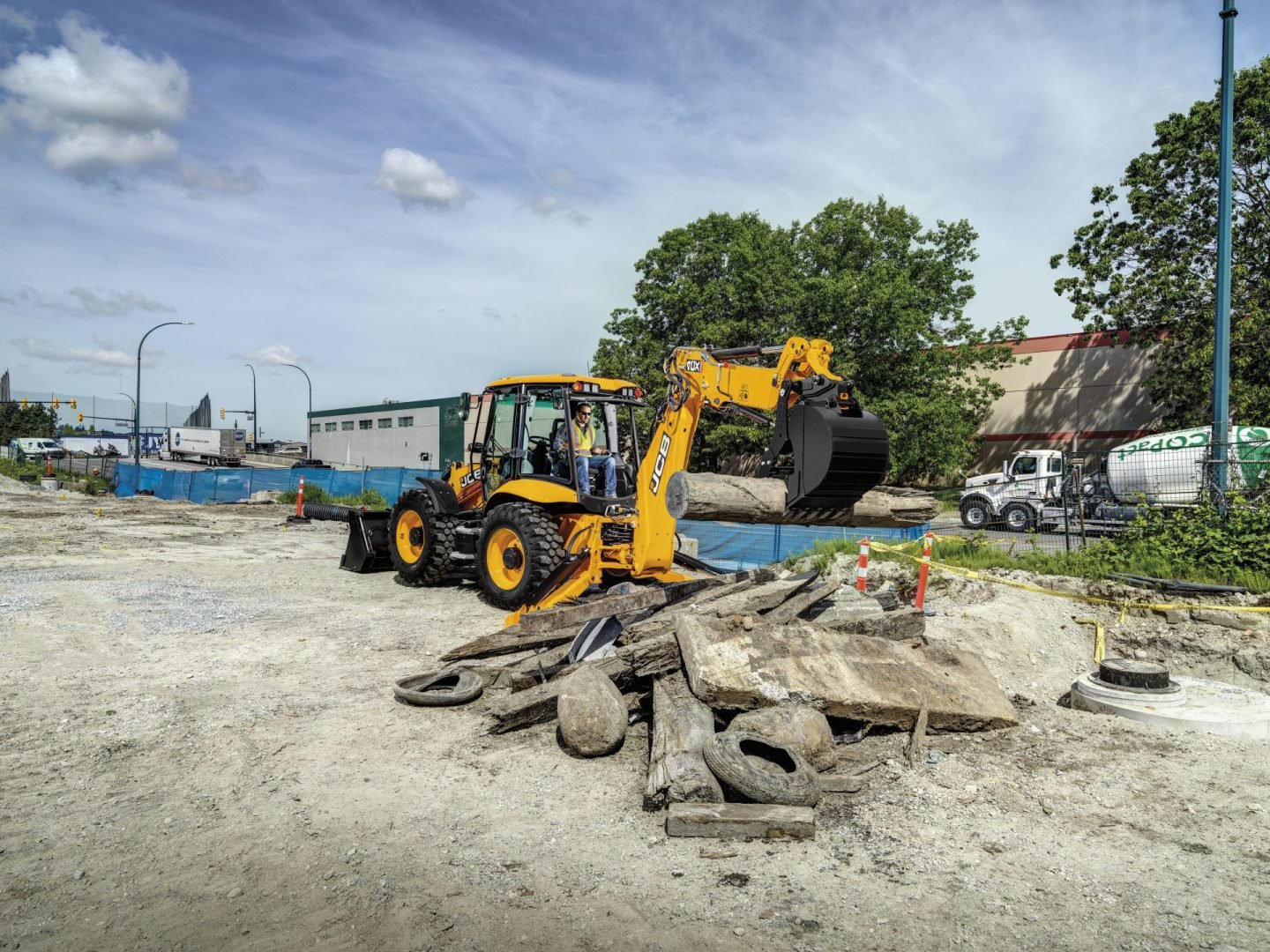
Backhoe loaders are a familiar presence on roadwork jobs, yet they’re often underutilized and treated as support equipment rather than a strategic asset. In the right situations, a single backhoe can take on multiple roles across a project, from excavation and material handling to site prep and cleanup.
The result is a simple, more efficient way to work. Fewer machines to manage, fewer operators to coordinate, and less time lost moving equipment. For road crews looking to maximize productivity, the opportunity isn’t to bring more machines to the jobsite. It’s to get more out of what’s already there.
Filling the gaps on large highway projects

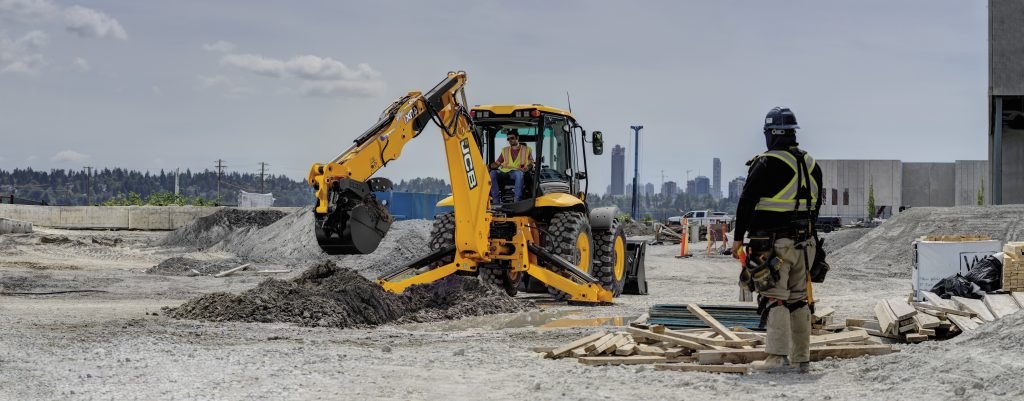
On large-scale highway projects, equipment fleets are built for volume and precision. Excavators, dozers and wheel loaders handle the bulk of the work, moving material efficiently and delivering the accuracy these projects demand. But even on well-resourced jobsites, there are always gaps.
Not every task justifies bringing in a larger machine.
It might be a short trench that needs reopening after utilities are adjusted, a pile of material that needs moving to keep traffic flowing or a shoulder that needs to be cleaned up and regraded before the next phase begins. These are routine tasks, but pulling a large machine back into position can slow the job down. This is where a backhoe loader proves its value.
Check out our contractor guides and resources here
Instead of waiting on another machine, a backhoe can handle these tasks as they arise. It can dig out a localized area, load material into a truck and move straight into site cleanup without missing a step. That ability to switch functions keeps crews working and reduces downtime.
Mobility also plays a role. On a long highway project, work zones shift throughout the day. A backhoe can travel along the site without additional transport, making it easier to respond quickly as needs change. If a section needs attention further down the line, the machine can be there without delay.
In these situations, the backhoe isn’t replacing primary equipment. It’s supporting it in a way that keeps the operation running smoothly. By handling smaller, often overlooked tasks, it allows larger machines to stay focused on high-volume work.
The result is a more consistent workflow, with fewer interruptions and better use of the equipment already on-site.
Taking the lead on smaller road construction jobs

While backhoes play a supporting role on larger projects, their value becomes even more apparent on smaller jobs.
Municipal and regional projects often operate with tighter budgets, smaller crews and fewer machines on-site. There’s less room for dedicated equipment and less tolerance for downtime. Every machine needs to contribute across multiple stages of the job.
This is where a backhoe loader can take the lead.
On a typical small road project, the same machine can handle excavation, material movement and light grading. Instead of coordinating multiple machines and operators, crews can keep work moving with one versatile unit.
More news from JCB:
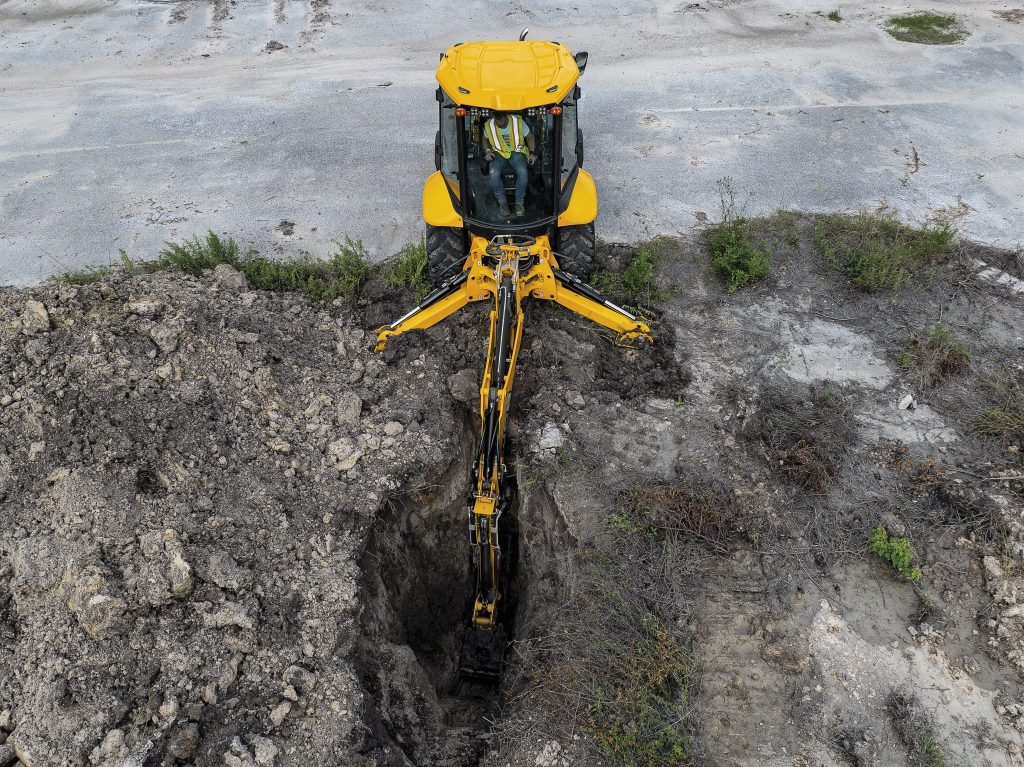
For example, a municipal crew working on a short road extension might start the day trenching for drainage. Once complete, the same backhoe can load out excess material, bring in aggregate and begin shaping the base. There’s no waiting for another machine and no lost time between phases.
That continuity has a direct impact on productivity. Fewer machines mean less congestion, simpler coordination and lower operating costs. It also reduces the need for additional operators, which is an increasing challenge for many crews.
Attachments and configuration play a role here as well. A multi-purpose loader bucket, often called a 6-in-1, allows operators to strip, grade and handle material more efficiently in a single pass. On the back end, attachments such as breakers and planers can break out or remove road surfaces, while thumbs and grapples improve material handling around utilities or debris. With the right setup, a backhoe can take on tasks that would otherwise require multiple machines.
In these environments, the backhoe isn’t just filling gaps. It’s driving the workflow.
The go-to machine for road repair and maintenance
If there’s one area where backhoe loaders consistently prove their value, it’s road repair and maintenance.
Unlike new construction, repair jobs are often unpredictable. Crews work in active traffic, confined spaces and changing conditions, often moving between multiple sites in a single day. The work can vary just as quickly, from breaking out pavement to excavating around utilities and restoring the surface.
In these situations, versatility isn’t just an advantage, it’s essential.
A backhoe can handle the full repair cycle without additional machines. It can break out damaged sections, excavate, load and remove debris, then move straight into backfilling and reinstatement. That ability to move from one task to the next keeps crews working and reduces downtime.
Roadability is a key differentiator. A backhoe can travel between jobsites without a trailer, reducing transport time and cost. For crews managing multiple repairs across a wide area, that means faster response times and less coordination.
Manoeuvrability also plays a role. Road repairs often take place in single-lane closures or tight urban environments. A backhoe’s compact footprint makes it easier to work around traffic, pedestrians and existing infrastructure.
Sideshift configurations add capability in confined spaces. Operators can dig closer to curbs, barriers or traffic lanes while keeping the machine in a compact position. This is especially useful in single-lane closures where space is limited.
There’s sometimes a perception that sideshift machines are less stable than centre-mount designs. In practice, they still rely on outriggers. The difference is those stabilizers deploy vertically rather than extending outward, allowing operators to maintain stability while working in tighter spaces.
In these conditions, the backhoe becomes the machine that keeps the job moving.
Efficiency comes from versatility
Roadwork doesn’t need a complete rethink to become more efficient. The machines are already there. The opportunity is in how they’re used.
For contractors and municipalities, the next step is straightforward. Take a closer look at how backhoe loaders are being used. Are they limited to one task, or set up to handle multiple phases? Are the right attachments in place? Are they being used where mobility and versatility matter most?
In many cases, improving efficiency isn’t about adding more equipment. It’s about making better use of what’s already on site and putting it to work where it delivers the most value.
Read the full article here