



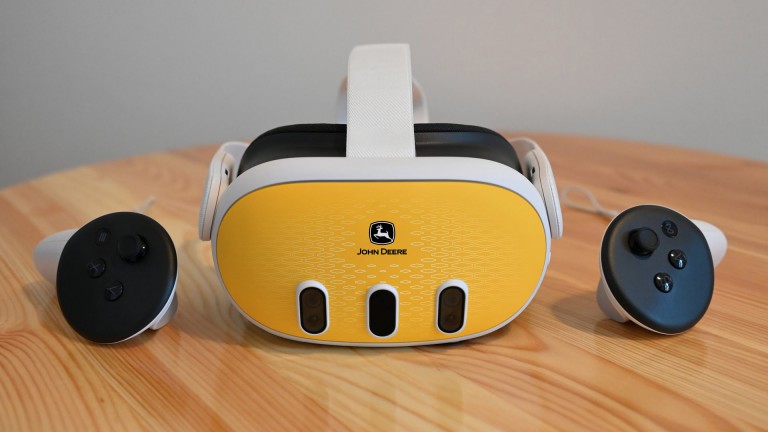
John Deere has officially unveiled its latest operator training technology with the John Deere Extended Reality (XR) Training System. This immersive, headset-based solution, launched at CONEXPO-CON/AGG 2026, is designed to transform how operators, dealers, and customers learn about their machines. The system uses a combination of virtual reality and augmented reality experiences, delivered through a dedicated headset, to create an engaging and interactive learning environment.
Virtual training allows anyone to be completely immersed in real machines
Designed to be completely portable, the XR system enables training to take place at dealerships, job sites, classrooms, and events, replacing the need for stationary, seated operator simulations. In addition, the system supports operator training, machine walkarounds, and high-level sales and technical learning, all within a cohesive platform through a configured Meta Quest 3 or Pico 4 Ultra Enterprise headset.
The first release, available to both John Deere customers and dealers, will focus on two machines: the 650 P-Tier Dozer and the 210 P-Tier Excavator. It will feature operator-focused virtual reality lessons, including daily maintenance walkarounds, controls familiarization, and direct interaction modules such as trenching and spreading.
In addition to structured lessons, the system includes a sandbox mode, modelled after the John Deere Coal Valley training site, allowing users to freely explore and operate machines in a simulated environment without guided instruction. This mode supports familiarization, education, and customized instruction. A challenge mode featuring timed and gamified operation features will also be available.
“This technology represents a major step forward in how we prepare our customers and operators to be successful from any location,” said Curtis LeConte, project manager for next-generation training, John Deere. “By making our training more portable and accessible, we’re delivering a powerful new way to train users in machine operations, maintenance, as well as key features, without the limitations of traditional training simulators.”
Read the full article here