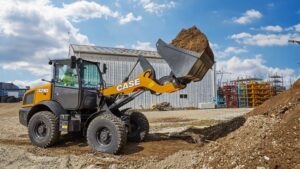


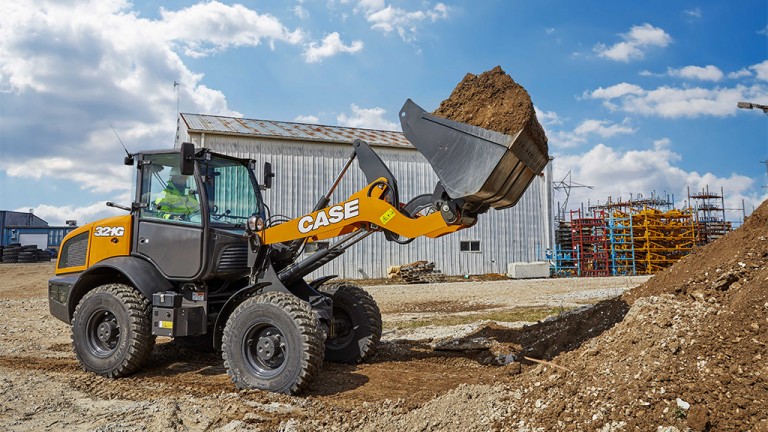
CASE Construction Equipment is focusing on comfort and efficiency with the new 221G and 321G compact wheel loaders. Joining the CASE 421G compact wheel loader, these new G Series models are made for teams who need comfortable, versatile machines with the muscle to move dirt, clear snow, and load trucks, making them ideal for tight construction and landscaping job sites.
An operator-first design emphasizes comfort during long work days
The 221G and 321G cabs were upgraded from the previous CASE F Series models using the same spacious design as the larger 421G. The cab includes control upgrades, an ergonomic seat-mounted joystick for added stability and comfort, and new intuitive instrumentation buttons.
In addition, a customizable colour display with encoder and in-display rear-view, as well as a USB port and phone holder enhance the operator experience. There’s also a new right-hand sliding window for better ventilation and easier jobsite communication, along with a right-side emergency exit.
Both models offer easy serviceability with ground-level access to key service points for faster daily checks.
A previous advancement from CASE include an electric compact wheel loader introduced at bauma 2025.
These compact machines deliver ample performance
Performance specs align with the previous F Series. The operating weight of the 221G is 12,547 lbs. (5,691 kg), with a hinge pin height of 129.5 inches and the operating weight of the 321G is 13,633 lbs. (6,184 kg), with a hinge pin height of 133.7 inches. Both models feature a 74-horsepower engine for clean, efficient performance with no regen or DEF required. The 25 mph roading speed allows operators to move quickly between jobs.
Advanced hydraulics deliver smooth, precise operation through flow sharing and load sensing capabilities for adjustable hydraulic flow while improving efficiency and overall fuel consumption. Crews also benefit from improved control across a wide range of attachments, including buckets, forks, snowblowers, and auxiliary attachments.
Read the full article here