


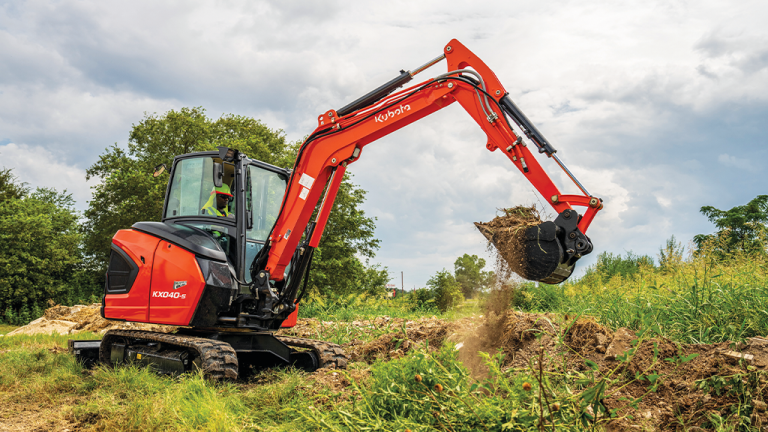
Organizations are investing in core equipment designed to remain active across seasons, reducing idle time and capital tied up in underutilized machines.
Kubota Canada
A curated fleet improves operator competancy and efficiency
Beyond cost and flexibility, a curated fleet also delivers meaningful benefits at the operator level.
When crews work with fewer machine types, they develop a deeper familiarity with equipment. This leads to more efficient operation, as less time is spent learning controls or adjusting to different platforms, allowing operators to focus on the task at hand, improving both speed and accuracy.
“From what we see in the field, operator competency increases significantly when they’re working with fewer machines,” Gardner explains. “They understand maintenance requirements better, they catch issues early, and they work faster. That familiarity translates directly to reliability and reduced downtime.”
From a maintenance perspective, fewer machine types simplify inventory management. Crews can standardize parts, such as filters and fluids, making it easier to manage supplies and perform servicing efficiently.
Balance ownership, attachment variety, and rental
While versatility is a key advantage, building a curated fleet still requires thoughtful decision-making.
Fleet managers must determine when to rely on attachments, when to invest in additional equipment, and when renting makes the most sense. The answer depends largely on frequency of use.
“The key is being honest about how often you really need something,” Gardner advises. “If a specific capability is needed regularly and your existing equipment can’t keep pace, adding another machine is justified. But for tasks that occur only once or twice a year, renting is almost always the smarter move. Attachments, meanwhile, remain a constant investment. They’re how your core equipment stays productive across different applications.”
Smart fleet curation simplifies operations and reduces costs
Ultimately, the move toward curated fleets reflects a broader shift in how organizations think about equipment.
Leading contractors and municipalities now measure fleet success by how well equipment aligns with real-world demands and actual workload patterns. By identifying core, year-round tasks, selecting machines that can handle multiple applications, and using attachments strategically, they are creating fleets that are both more efficient and more adaptable.
This approach supports stronger margins, simplifies operations, and helps ensure consistent service delivery, even in unpredictable conditions.
In an environment where timing, reliability, and cost control are critical, the logic is clear: less equipment, when chosen wisely, can deliver far greater flexibility.
This article originally appeared in the July/August 2026 issue of Heavy Equipment Guide.
Read the full article here