


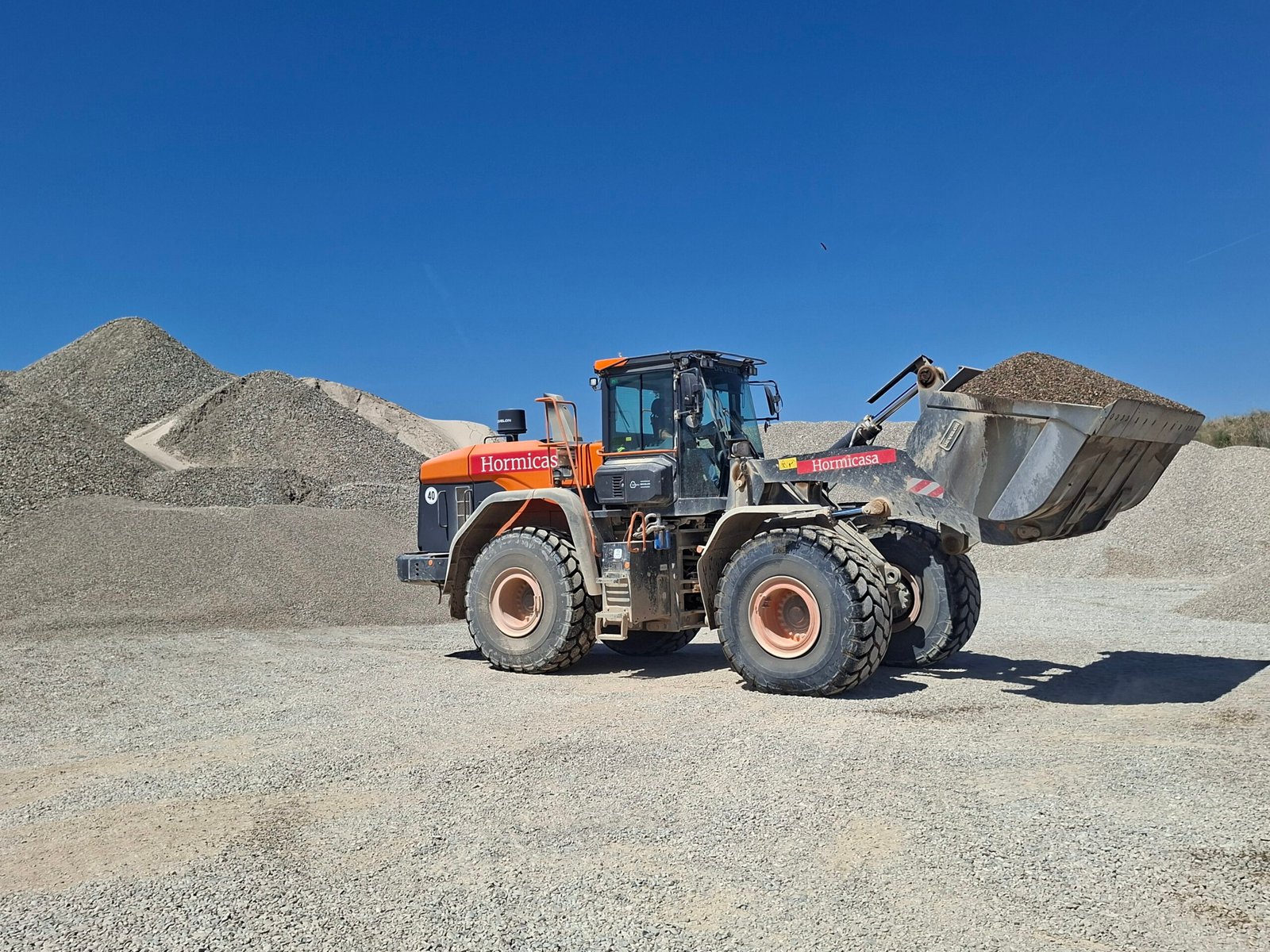
Spanish Hormicasa Canteras added a second Develon to its Mendavia gravel pit. The productivity gain is real, but the number the operator quotes is fuel
Ask a quarry manager why they repeated a machine purchase and you rarely get an answer about breakout force. At Hormicasa Canteras, a family firm now in its third generation working the Loar gravel pit in Mendavia, Navarre, the answer is a fuel figure: between 1.5 and 2 litres per hour less than the loader it sits alongside, roughly 10 per cent.
That matters because of how the machine is used. Wheel loaders at Mendavia feed the washing plant and load the trucks that take material out to customers, which means near-continuous work across a full shift. A saving quoted per hour compounds into something visible on the annual fuel bill in a way a headline productivity percentage often does not.
Why a second machine
Hormicasa extracts and processes aggregates for concrete, asphalt mixes and construction sub-bases. Material is pre-screened, then washed and sorted by grain size. The company bought a DL420-5 five years ago and, as daily volumes rose, one loader stopped being enough.
“We acquired the first DL420-5 because we needed a loader capable of supplying material to the plant and loading trucks continuously. With the increase in daily workload, a single machine was no longer sufficient,” says Jorge López, manager of Hormicasa Canteras.
Satisfaction with the first unit decided the second. López also credits the relationship with Reyvena, Develon’s distributor in the area, and importer Centrocar, which is the part of a repeat purchase that rarely makes the spec sheet.
The machine
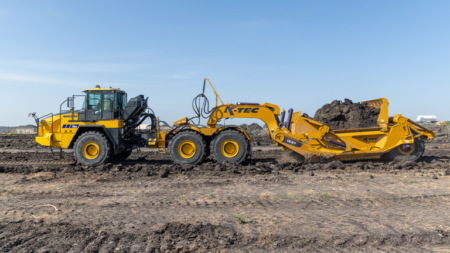
The DL420-7 carries a standard 4.5 m³ bucket, among the largest in its class, and Develon quotes a productivity increase of up to 7 per cent over the previous generation. A five-speed automatic Powershift transmission, heavy-duty axles and a high-capacity hydraulic system are aimed at sustained loading rather than peak figures.
On fuel, the Scania DC13 engine meets Stage V and combines high-pressure injection with electronic management. Situation Awareness Technology 2 reads what the loader is actually doing and trims engine output to match, with three operating modes, AT, Normal and Power, plus automatic idling and shutdown.
What it means for aggregate producers
For contractors and aggregate operations weighing a replacement, the useful comparison here is not against a competitor’s spec sheet. It is against the machine already in the yard, doing the same duty cycle, with the same operators and material. Hormicasa’s numbers come from exactly that comparison, which is what gives them weight, and also what limits them: they describe one site, one material and one duty cycle.
The cab is the other change López singles out, with better visibility and comfort than the previous generation. On a machine expected to run long hours daily, operator fatigue is a productivity input too.
Read the full article here