

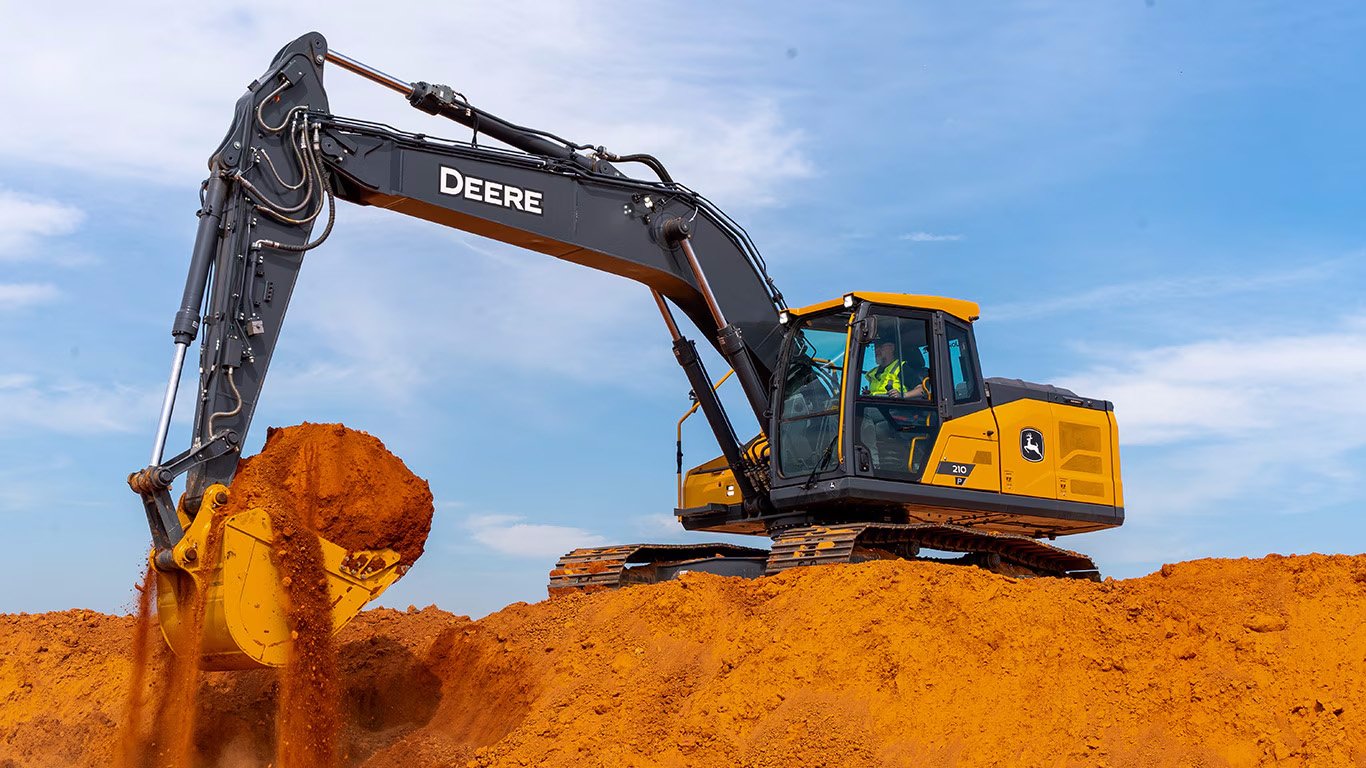
Developed with John Deere engineering and manufactured in Brazil, the 210P, 230P and 260P models bring SmartGrade, SmartWeigh and connected support to construction and mining customers in Latin America.
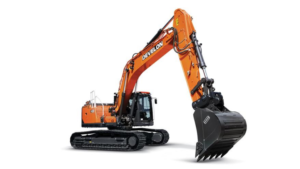
John Deere has introduced a new generation of DEX excavators, marking the first excavator line in the company’s history developed with its own technology. The new range, made up of the 210P, 230P and 260P models, brings automation, connectivity and more intuitive operation to construction and mining jobsites across Latin America.
Manufactured in Indaiatuba, in the state of São Paulo, Brazil, the machines will be available to the Latin American market starting in September. For John Deere, the launch is also a milestone for its Brazilian construction equipment operation. Just over a decade after opening two factories in Indaiatuba through a US$180 million investment, the company is now bringing to market excavators produced in Brazil with John Deere technology and developed by its global engineering team.
“The new generation of excavators represents a watershed moment for John Deere in the segment. More than just a portfolio renewal, we are bringing to market machines that carry the technology, engineering, and ecosystem of the brand, expanding our ability to offer integrated solutions to customers. This is an important step in the evolution of our construction business and in the development of new products and technologies aligned with the current needs of the market.”
Said Thomas Spana, Marketing Manager of John Deere’s Construction division for Latin America.
Before the launch, the DEX excavators were validated in different countries and applications, accumulating more than 165,000 hours of testing globally. That development work focused on severe applications, with the aim of preparing the machines for demanding construction, infrastructure and mining environments.
At the heart of the new line is a set of embedded technologies designed to improve precision, productivity and safety. The machines can leave the factory equipped with SmartGrade 2D, an intelligent grading system that uses digital terrain references to assist the operator automatically during excavation movements. The objective is to reduce rework, material waste and execution time while helping operators maintain greater accuracy.
The DEX excavators also introduce SmartWeigh™, an intelligent weighing system that measures the weight of the material being moved in real time. For contractors and fleet managers, this gives clearer control over transported volumes and operational productivity, supporting better jobsite management during loading, digging and material handling tasks.
Safety and risk reduction are also central to the new platform. The Intelligent Control system assists the automatic movements of the arm, boom and bucket to increase operating precision. The Virtual Fence system creates virtual operating boundaries, helping avoid contact with structures, obstacles or restricted areas.
Operator awareness is supported by panoramic vision and obstacle detection systems, designed to make work easier in environments where people, machines and site structures are operating close together. The excavators are also connected to the John Deere Operations Center™, the company’s digital platform for remote monitoring, operational data analysis, diagnostics and remote technical support.
“More than incorporating advanced technologies, the new generation of excavators was designed to simplify operation on the construction site. The solutions are intuitive, easy to use, and help any operator gain precision, safety, and productivity from day one,”
Spana said.
Inside the cab, John Deere has redesigned the operator environment around comfort, ergonomics and control. The cab is more spacious and includes 10-inch or 12-inch G5 touchscreen displays, along with CommandArm™, an integrated side support that places the main operating controls within easy reach.
Fully programmable electro-hydraulic joysticks allow operators to customize controls according to preference and application. The electro-hydraulic system is designed to deliver faster and smoother responses to machine commands, while also enabling customized flow and pressure adjustments directly from the cab. This increases flexibility when working with different implements and jobsite requirements.
Comfort features include premium seats with multiple adjustments, heating and cooling, more efficient air conditioning, Bluetooth radio and a keyless start button with an individual password for additional operational security.
The machines also include remote support technologies. Remote Display Access allows technicians to access the machine’s screen remotely, monitor operation, guide adjustments and perform software updates. Remote Display Control offers a similar function, allowing display information to be configured from outside the cab with operator authorization. An optional four-camera configuration is also available.
Visibility has been improved through LED work lighting systems, designed to provide near-daylight conditions during night operations, and integrated cameras that help reduce blind spots around the machine.
The new DEX excavators have also been designed for durability in harsh operating conditions. The chassis and front structures use high-strength structural steel, while a new pin and bushing system can extend component life by up to five times, reducing wear and the need for maintenance interventions.
The undercarriage, which includes the tracks, rollers and other components responsible for machine movement, has had its durability increased by 20%. The buckets have also been redesigned with more wear-resistant materials, extending their service life by up to 12%.
These updates are intended to reduce maintenance needs, lower total cost of ownership and increase machine availability. In performance terms, the line offers increased digging force, lifting capacity and digging depth, together with gains in operational efficiency and fuel consumption.
The DEX excavators can also be configured with hydraulic quick couplers and several auxiliary lines, expanding compatibility with specialized implements and increasing versatility across applications.
To support the new machines, John Deere points to its construction distribution network in Brazil, which includes more than 140 service points across the country. Ten distributor groups will be responsible for customer service, technical delivery, training and after-sales support.
The operation is backed by the company’s manufacturing plants in Indaiatuba, which serve the Brazilian market and more than 55 countries, as well as the Parts Distribution Center in Campinas, responsible for component logistics in Brazil. Across the distributor network, Connected Solutions Centers provide remote monitoring and operational data analysis to support diagnostics and predictive maintenance, helping increase availability and reduce costs across the machine lifecycle.
Read the full article here