



John Deere says Australian growers cut herbicide use by an average of 74 per cent. That number, not the technology, is the story
Australian farmers have now treated more than 10 million acres with John Deere’s See & Spray Select, and across that area the company reports an average herbicide saving of 74 per cent. For a technology that spent years being demonstrated at field days, that is the moment the argument shifts from what targeted spraying could do to what it has already done.
That matters because the economics of weed control have changed underneath growers. Input costs have stayed high, herbicide resistance keeps narrowing the range of chemistry that still works, and labour is harder to find for every pass across a paddock. Anything that reduces the volume applied without reducing control goes straight to the bottom line.
How the system works
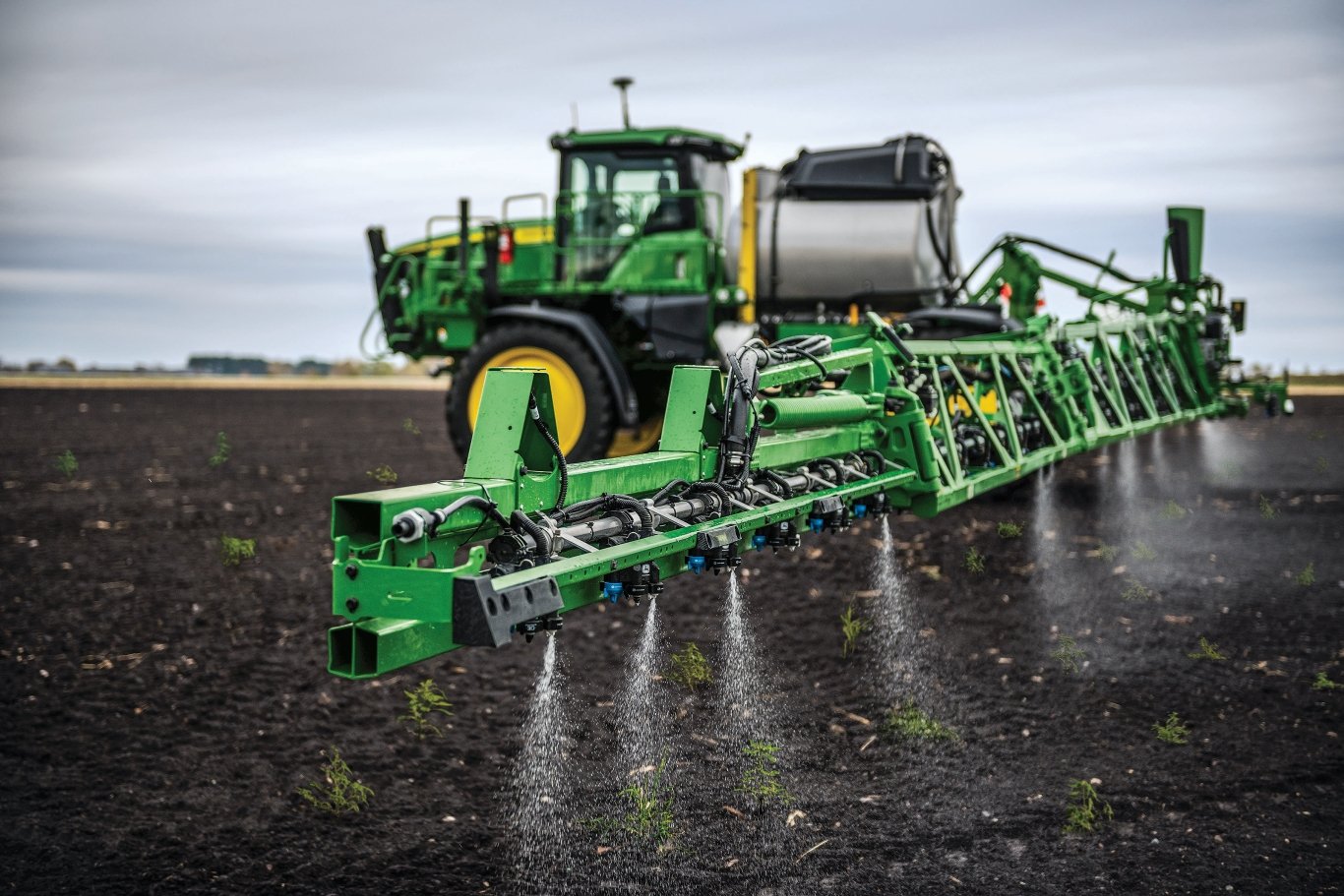
See & Spray Select was developed in Australia and launched in 2021. It uses camera-based green-on-brown detection to find living plant matter in fallow paddocks and opens the nozzle only over the weed, leaving bare ground untreated. The system makes thousands of decisions in real time as the boom moves, rather than applying a uniform rate across the whole area.
The principle is simple. The consequence is not. Every litre not applied is a litre that does not have to be bought, freighted, stored or handled, which removes cost and handling risk at the same time.
What changes for the grower
For broadacre operations, a 74 per cent average saving reframes the payback question. The decision stops being about the price of the technology in isolation and starts being about chemical spend per hectare across a season, and about how far a shrinking set of effective actives can be stretched before resistance forces a change.
Australian conditions are part of why the figure carries weight. Broadacre systems there are among the most demanding anywhere, and the volume treated locally has given the technology a proving ground at a scale few markets can offer.
The next step is already in the field. See & Spray Gen 2, launched earlier this year on MY27 400 and 600 Series Sprayers, adds green-on-green capability: the ability to distinguish weeds from an established crop rather than from bare soil. That extends targeted spraying beyond fallow into wheat, barley and canola, as well as cotton, corn and soybeans.
Green-on-green is a harder problem than green-on-brown, and it is where the practical test of the second generation will sit. Detecting a weed against dirt is one thing. Detecting it against a crop of similar colour, at working speed, is another.
Precision application is becoming the default rather than the exception. For growers weighing the investment, the useful figure is not the acreage. It is the 74 per cent, and whether it holds in their own paddocks, on their own weed spectrum, once the crop is standing.
Read the full article here