


Operational pressures, caused by a mix of global uncertainty, political battles, environmental changes and regulation plus other issues, are a management constant for heavy industries. What was maybe a panic issue every few years is now a monthly part of contingency planning as fresh pressures emerge.
This volatility is visible in rising machinery costs and fuel prices, and across the business through workforce issues, greater regulation and supply chain problems.
The practical effects for those in heavy industry environments are demands to run machinery for longer, extend maintenance periods, creating increasing maintenance risks and costs, plus the challenge of unplanned downtime.
Instability in energy prices and labor shortages also impact operations, creating challenges across the financial planning and HR side of any organization.
Improving Digital Business, Security and Legacy Technologies
A key pressure point (both a source of pressure during installation or integration, but a relief when operational) on heavy industry users is the need to adopt digital business technology and methods across the company.
This extends from joining-up siloed or discrete applications into a Software as a Service (SaaS) application that provides a single view of the business to wholesales changes to companies that still run on a spreadsheet and paper.
Tools like Enterprise Resource Planning (ERP), the adoption of construction software, and other vertical- or market-specific applications deliver increased clarity into operations and allow for smarter, faster decision making.
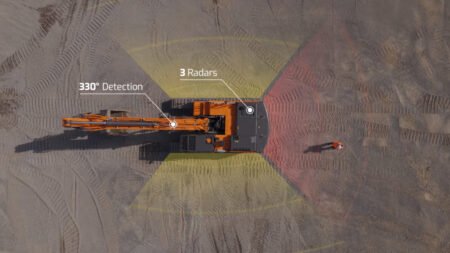
Another aspect where heavy industries are catching up with factories and warehouses is in security technology, using physical security systems and applications to maintain a close insight across extensive heavy industry footprints, mixing in-cab cameras, perimeter video surveillance and smart chemical or leak sensors to protect the workforce.
The arrival of AI in video camera control rooms means large numbers of cameras can be monitored 24/7 for safe operations, environmental changes as well as unusual or suspicious behavior. This frees up more security agent time to maintain a higher profile across the premises and react faster to alerts triggered by the AI.
Integrated with access control technologies, physical security systems can protect the workplace, track and ensure safer operations, while keeping criminals after high-value machinery at bay, and provide high-quality evidence trails for crimes or incidents across the facility.
Leaders need to be aware of the network and cyber risks when putting their faith in data, with issues like sovereign data, geofencing and hacking threats, but when suitably protected, a modern digital heavy industry business will run at a competitive advantage compared to more traditional rivals.
The 24/7 Digital Heavy Industry for Humans
All the technology in the world won’t make a company better if there is no buy-in from leaders down to end users. All roles need to see how the technology benefits them, from health and safety perspectives, to improving overall business performance.
Unified oversight helps management understand different practices across multi-site locations that might cause confusion or impact performance. While worker needs for training, upskilling and data literacy can help those in physical roles gain a stronger perspective of their role in the business. All while supporting future moves to remote operations, AI-powered systems and other changes that will affect heavy industries in the decade to come.
The sum benefits of these approaches will reduce the need for stretching out operational lifetimes and maintenance, improve emissions reporting to meet environmental monitoring legislation, and support further investment in technology to improve business performance.
The Roadmap to Technology Success in Meeting Operational Pressures
For leaders, they must prioritize the lagging areas of the heavy industry to adopt new capabilities and technologies, focused on a joined-up roadmap that makes the organization work as a single outfit, and not a disparate collection of departments.
At each point, success must be measured and tracked at the operational level to identify improvements, and where weaknesses are holding back performance benefits. Sharing results and opening up the floor to discussion on how to improve in weak areas make the business change something for the whole workforce, and can support acceptance of new technologies.
At each step, analysis and insights from physical and digital security can keep the company data, networks and workers safe, and should always be top of mind, even as the next buzzword heavy industry or IT technology comes to play at the security gates.
Read the full article here