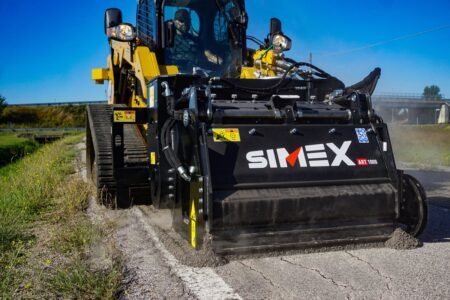


DEVELON DTL35 compact track loader.
DEVELON
3. Choose a CTL that suits your operators
Good operators are in short supply. Selecting a machine that elevates your operators’ comfort, confidence, and efficiency will help you retain them and maximize their productivity.
Operators who spend a lot of time in a CTL need to be comfortable, both in terms of ergonomics and operation, says Nathan Ryan, product line manager for earthmoving at Manitou. Before buying, assess cab design for ease of entry and exit, ensure that the seat is comfortable, and test the controls for easy reach and adjustment. If possible, test the CTL in a job site setting.
Air-ride seats, climate-controlled cabs, intuitive joystick controls, touchscreen displays, and good visibility all reduce operator fatigue and improve their performance throughout the day, says Emily Pagura, product marketing manager at John Deere. She adds, “While comfort features can seem optional during the buying process, they often contribute to better operator retention, increased efficiency, and fewer mistakes over the life of the machine.”
Modern CTLs can be tailored to the operator’s preference, says Freeman from Takeuchi. Adjustable control patterns, creep mode, and customizable hydraulic settings will improve precision and efficiency. Freeman recommends you look for a machine with intuitive controls and straightforward display layouts that make adjustments easy to access and understand.
When crews have a wide mix of experience levels, machines that are intuitive and adaptable will help them work more efficiently with less ramp-up time, says Randi Bakalar, corporate communication manager from Bobcat. The less experienced operators will benefit from straightforward controls, good visibility, and simplified technology. Experienced operators will prioritize consistent response and familiar control patterns across machines.
And, once you have the machine, make sure your operators understand the different control settings, says Pagura from John Deere. “One of the best operation tips I can give, especially when working with a brand-new machine, is to work through those settings to get the machine set up in the most efficient way.”
4. Consider technology that improves productivity, safety, and fleet management
Built-in technology features can help operators work more efficiently and confidently, and telematics systems can give owners deeper insight into their fleet.
“Features such as return-to-dig, bucket or auxiliary shake, and auto self-levelling help simplify repetitive tasks while improving precision and productivity,” says DEVELON Product Manager Andy Jeong.
Self-levelling helps maintain load position as the loader arms move. But, Ovrebo from Yanmar cautions, not all systems work the same. “Single-direction self-levelling, typically hydraulically controlled, keeps loads level as the arms raise but offers no levelling control on the way down. Dual-direction self-levelling uses electronic angle sensors to maintain level in both directions.”
Ovrebo recommends dual-direction control if the loader will regularly be used to handle material that shifts easily, such as full buckets or palletized loads.
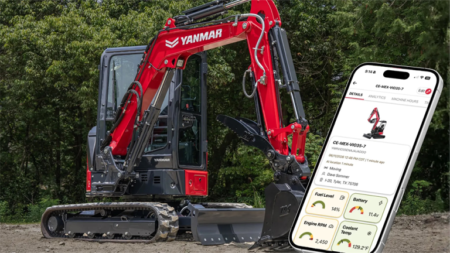
“Look for manufacturers that include telematics as standard equipment rather than an added-cost option, as connected machine data is quickly becoming an essential part of equipment ownership,” says Kakareka from New Holland.
A telematics system can help you remotely monitor machine location, fuel usage, idle time, service intervals, and fault codes via a desktop computer or mobile app. “This visibility can help reduce downtime, improve maintenance planning, and identify opportunities to lower operating costs,” he adds.
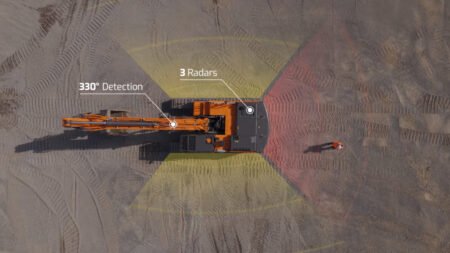
Technology can deliver safety benefits as well. Rear-view cameras, all-around-view camera systems, and ultrasonic proximity sensors can all increase safety around the machine, says Jeong from DEVELON.
5. Factor in the total cost of ownership
Evaluating maintenance access, service intervals, dealer support, and transportation logistics before purchasing can help you keep your total cost of ownership in check.
“The up-front purchase price is only part of the equation. Long-term ownership costs, including maintenance, downtime, fuel usage, and serviceability, often have a much bigger impact on overall value over the life of the machine,” says Tice from JCB.
“For example, a contractor that relies on one CTL for grading in spring, landscaping in summer, and snow removal in winter may place a higher value on fast parts support and a payment structure that aligns with seasonal revenue,” says Boufford from CASE.
According to Hicks from Kioti, maintenance requirements can vary significantly between CTLs. Some machines are designed with easier access to components, while others may require more time-consuming processes or more frequent service.
Look for swing-out cooling systems, tilting cabs, and simplified maintenance layouts, recommends Gardner from Kubota. They will improve accessibility for technicians.
DEVELON’s Jeong recommends considering the day-to-day impact of the machine’s emission system. Machines that require diesel exhaust fluid (DEF) need extra maintenance, have additional operating costs, and necessitate different storage considerations, particularly in extreme weather. CTLs with engines under 74 hp don’t need an SCR system or DEF, simplifying maintenance.
Also consider the build of the machine. Taylor from Hyundai says that a CTL engineered for durability should be assembled with high-grade steel components sourced from reputable suppliers and should be built to withstand rugged environments and heavy-duty applications.
Be sure to evaluate the undercarriage, including track design, roller protection, track tensioning system, and overall serviceability, especially if you will be working in abrasive or muddy conditions, says Kakareka from New Holland. Ask the dealer about expected undercarriage life, its replacement cost, and maintenance intervals.
Your truck and trailer must also be able to tow the CTL safely, says Ryan from Manitou.
Buckets, forks, trenchers, augers, grapples, and other tools all add weight and take up trailer space, which can impact your hauling requirements and efficiency, adds Tice from JCB. “A compact loader that delivers strong performance while maintaining a manageable operating weight gives crews more flexibility when transporting both the machine and the attachments needed for the day’s work.”
This article originally appeared in the July/August 2026 issue of Heavy Equipment Guide.
Read the full article here