

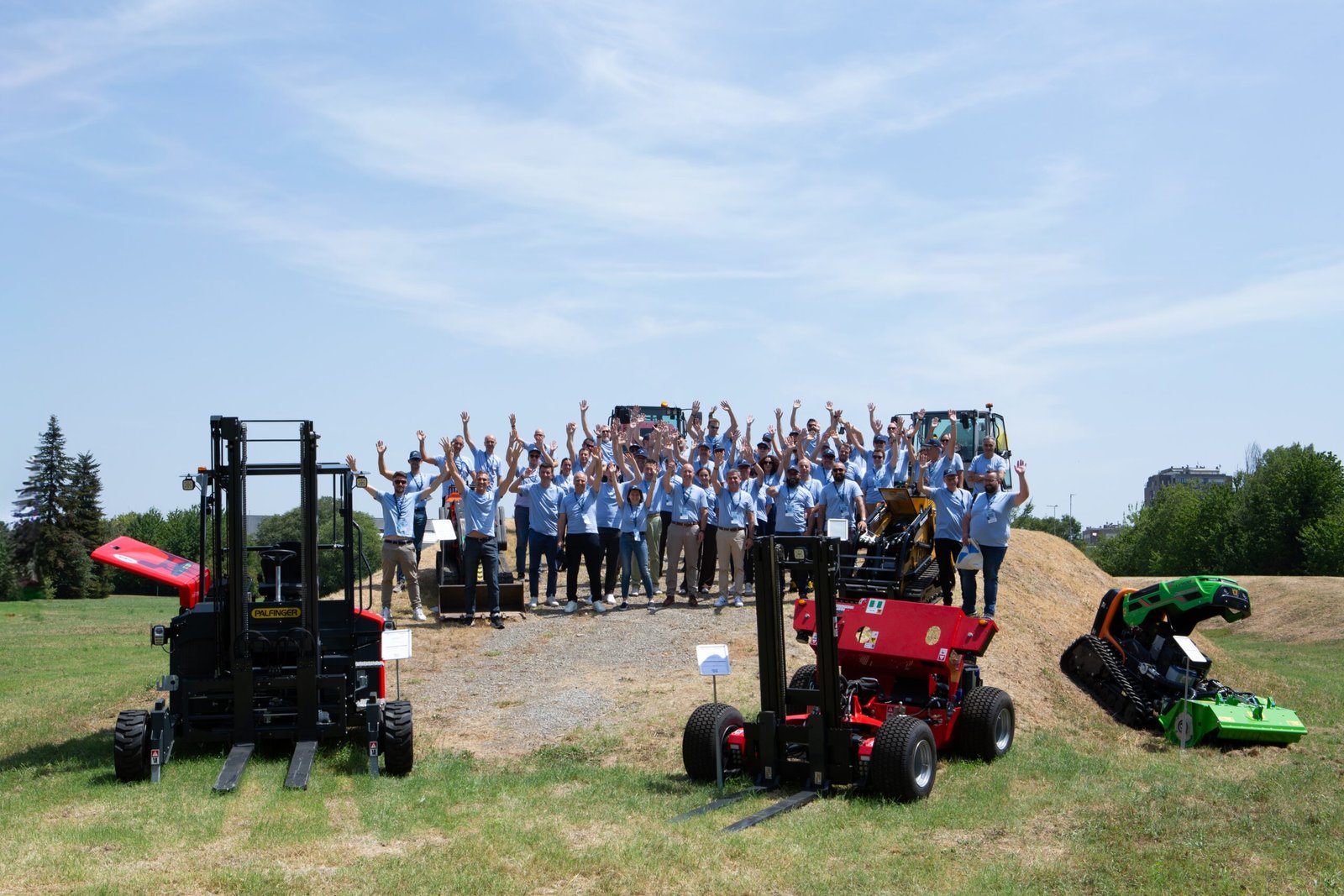
Rehlko Demo Days 2026 took place in Reggio Emilia, Italy, where the company brought together six OEM partners and nine machines to show how its engines perform in real working conditions.
Held July 13–14 at the company’s Reggio Emilia headquarters, the fourth edition of Demo Days brought six OEM partners – Cormidi, MDB, Palfinger, Vermeer, Wacker Neuson and Weidemann – together to show nine machines running Rehlko engines, and gave European trade press the chance to evaluate that performance under real operating conditions rather than off a spec sheet
“The best way to understand an engine isn’t to read about it, it’s to experience the machine it powers. Demo Days reflects the way we work with our OEM partners every day. We engineer engines as part of a complete machine, helping our customers deliver greater productivity, reliability and value to the people who depend on their equipment.”
Said Eric Fontaine, President of Rehlko Engines, in the company’s official release.
The headline product was the KDI1903 TCR HP (High Power), the newest member of the KDI diesel family, delivering up to 50 kW (67 hp) and 250 Nm of torque – fully Stage V compliant, running on 100% HVO-compatible fuel, and built to extend productivity without giving up the compact footprint that has made KDI a benchmark in off-highway applications. But the more interesting story sitting underneath that launch is strategic: how Rehlko is choosing to compete in a non-road engine market that, according to the independent analysis presented at the event, is growing steadily but not transforming as fast as the headlines suggest.
The market Rehlko is betting into
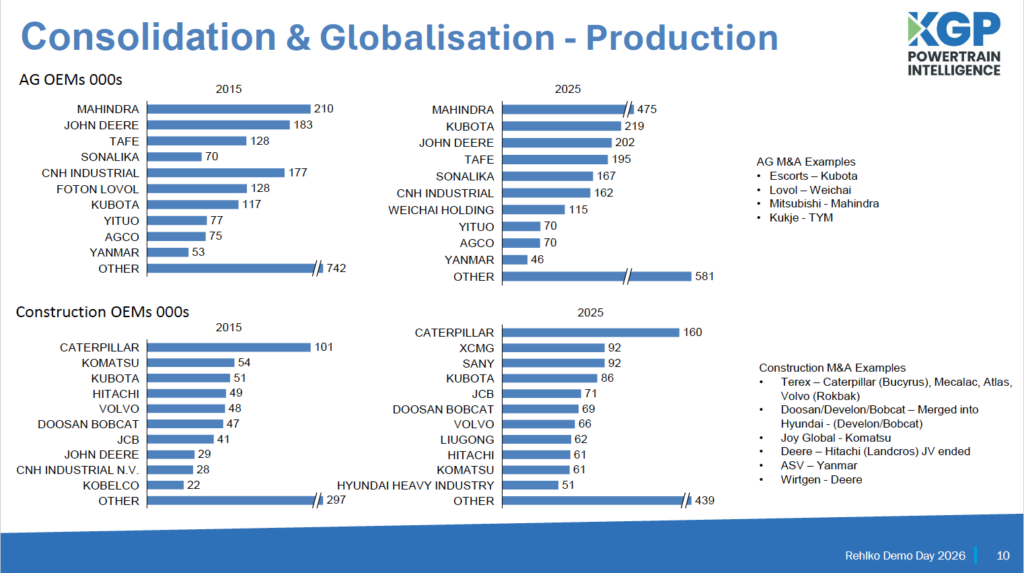
The day opened with a market presentation by Alex Woodrow of KGP Company on the state of diesel and gasoline engines for non-road machinery – twenty years of data tracking the global market from a 2005 baseline to the present. The picture: the global non-road diesel machine market has grown from 1.74 million units in 2005 to 5.1 million in 2025, with the number of OEMs tracked expanding from 60 to 122 and now 252, spread across 35 countries. Developed markets – Europe, North America, Japan, Korea – have essentially plateaued around 1.8 million units, while the growth has come from China (1.1 million to 1.7 million units) and India (600,000 to 1.3 million, with Indian tractor output alone now exceeding a million units a year). The competitive map has shifted just as sharply: in 2015 there was no Chinese OEM in the global top ten for construction equipment; by 2025, XCMG, Sany and Liugong had all broken into that group.
The near-term outlook, as presented, carries real geopolitical texture. A late-February forecast assuming no major disruption had to be rewritten within days once the Iran situation escalated – an initial cut of roughly 300,000 units from the 5 million forecast was later revised down to about 150,000, a 2–3% reduction rather than a market-breaking shock. The 2025 growth story, still positive overall, is being carried almost entirely by Indian tractor demand, and the growth that is happening elsewhere is being described as export-led rather than domestic-demand-led: China’s domestic construction and housing markets remain weak even as the country’s excavator and loader exports keep climbing, Japanese construction equipment exports are up roughly 37% year-to-date despite a soft home market, and India is exporting more as well. Latin America was flagged as down roughly 10% this year, with recovery expected only in 2026.
On electrification, the presentation’s framing was that the shift is real but concentrated rather than universal. Material handling is moving to electric fastest, driven largely by China’s switch from diesel to lithium-powered forklifts; aerial work platforms are electrifying for indoor use while larger outdoor units remain engine-powered; and construction electrification outside China remains limited, propped up domestically in China by policy mandates pushing electric machines into coal mining and steel refining.
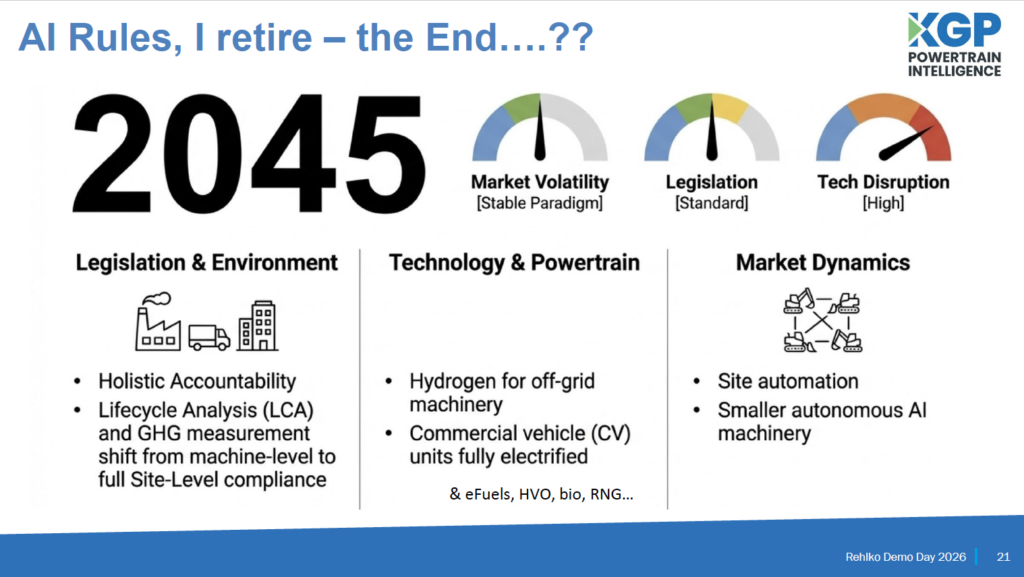
Diesel, in other words, was presented as remaining the dominant fuel mix through the forecast period – with decarbonization expected to come first from machine efficiency gains (engines, transmissions, hydraulics and controls, estimated to be capable of removing roughly a quarter of fossil diesel use on their own), then from drop-in biofuels like HVO, and only later – realistically not before 2035–2040 — from e-fuels and hydrogen at scale. The crossover point at which zero-emission machines would be expected to outnumber internal-combustion ones was described as having been pushed back to 2045–2047, from an earlier working assumption of 2032, largely because of policy reversal in the US and a watering-down of legislative ambition in Europe, even as China continues to move faster on its own path.
The regulatory outlook named California as the likely first mover on the next tightening of standards (Tier 5), with Europe’s Stage 6 expected around 2032–2033 and China’s Stage 5 notable as the first standard globally to include CO2 limits alongside traditional pollutants. The 37–56 kW power band was flagged specifically as the next likely innovation zone, on the reasoning that the current NOx ceiling for engines in that range is artificially generous and likely to be tightened toward the same threshold applied to smaller units – a detail that lands directly on the segment Rehlko’s own KDI and KSD platforms are built to serve.
Looking further out, the presentation anticipated continued OEM consolidation, growing use of automation and AI for lifecycle analysis in construction and agriculture, a below-56kW segment that keeps growing even as several markets shift from new-machine sales toward repair-and-maintenance economics, and a genset market where data centers move from 2 MW toward 5 MW units even as small standby generators continue to dominate by volume.
Complete the range and win on power density
Abhiroop Garg, Rehlko’s product manager for diesel engines, used his session on the KDI1903 TCR HP to lay out a strategy of deliberate portfolio completion. He walked the room through Rehlko’s full diesel range: air-cooled single- and multi-cylinder engines, water-cooled mechanically controlled diesels, electronically controlled diesels, and finally the KDI family spanning 1.9 to 3.4 litres and 31 to 112 kW and pointed to a specific gap that had opened up in the middle of that range: the existing KDI1903 TCR, a lower-output 1903 without charge-air cooling, and then a jump straight to the 2504, leaving competitors room to address that middle output band more effectively than Rehlko could.
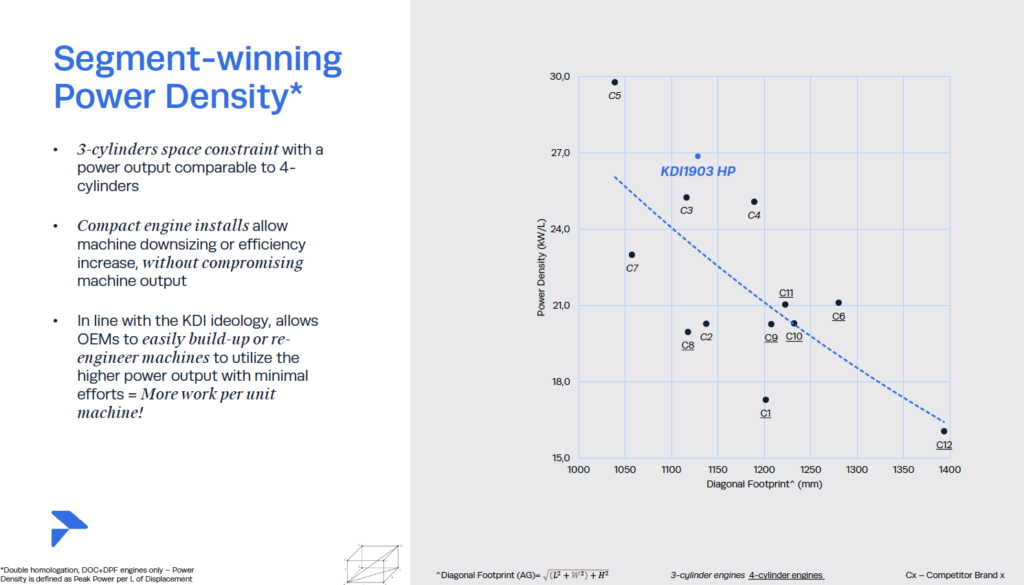
The KDI1903 TCR HP is the strategic fix. It runs from 38 to 50 kW (51–67 hp), with torque of 220 Nm at 1,000 rpm rising to a peak of 250 Nm at 1,500 rpm — a 16% increase over the standard 1903’s 42 kW ceiling, as Garg confirmed directly when asked from the floor. But the more important strategic argument was about how Rehlko wants to win going forward: on power density, defined as kilowatts of output per litre of displacement, rather than on horsepower or price alone.
Benchmarked against a “diagonal footprint” metric, the straight-line distance between the lowest and highest points of the engine inside the machine canopy, the KDI 1903 High Power was positioned as beating not just rival three-cylinder engines but some four-cylinder competitors too.
Behind that positioning sits a second, quieter strategic pillar: continuity. More than ten years of KDI production and over 350,000 units already in the field were used to argue that the High Power variant is an extension of proven architecture, not a risky new departure – meaning no retraining for operators, no disruption to existing service relationships around engine regeneration behavior, and access to the same service, warranty and consumables network already supporting the rest of the KDI family.
Filling the gap this way, Garg argued, lets Rehlko offer OEMs a single, continuous engine ecosystem from 30 kW up to 112 kW – reducing engineering fragmentation, giving OEMs one supplier relationship to manage across a wider span of machine classes, and lowering the re-education and total-ownership costs that come with switching platforms mid-range.
The application strategy that followed was equally deliberate. Construction (loaders, dumpers, mini excavators) and industrial use (wood crushers, compressors, variable-demand pumps, welders) were positioned as the strongest fits, on the logic that both segments reward the engine’s combination of overall output and low-end torque – the latter especially relevant for absorbing sudden bucket loads or ground impact during excavation, or torque spikes as trunk diameter increases in wood-crushing applications. Material handling – handlers and forklifts – was described as a good but less ideal fit, with the payoff coming from faster point-to-point travel and improved lifting cycles, plus the fleet-management and telematics access that comes from running an electronically controlled engine.
Bring electronics to a segment that never asked so much for them
If the KDI story was about completing a range, the KSD platform is Rehlko’s bet on getting ahead of a segment before the market forces the issue. Under-19 kW diesel engines have traditionally been mechanically governed, cost-sensitive, and resistant to electronic control. Garg’s second session framed KSD as a deliberate move to bring full electronic architecture into that category anyway – on the reasoning that OEMs need the productivity gains now, and will need the data-readiness once the rest of the market catches up.
Three variants were built around that logic. The naturally aspirated (NA) version is the cost-efficient, easiest-to-upgrade entry point. The turbocharged (TC) variant adds torque and responsiveness without crossing the emissions threshold that would force aftertreatment. The turbocharged-with-aftercooler (TCA) is the range-topper, positioned specifically as the way for OEMs to recover power and torque lost during the industry-wide transition from Stage IIIB to Stage V – a shift that forced widespread machine downsizing and re-engineering across the category.
Because regulation caps all three variants at the same 18.4–18.9 kW output – a category boundary rather than a technical limit, since the engine uses indirect injection and deliberately avoids aftertreatment – torque becomes the entire differentiation strategy: 90 Nm at 1,800 rpm for the NA (with 78 Nm low-end torque at 1,000 rpm), 105 Nm at 1,500 rpm for the TC, and 120 Nm at 1,400 rpm for the TCA, a figure the presentation compared directly to torque levels typically seen in 1.7–1.9 litre engines rated up to 30 kW.
Benchmarked against competitors on peak torque and diagonal footprint, the NA variant was said to cover roughly 70% of the market field on peak torque and more than 90% on compactness, while the TC and TCA cover the full field on torque – described as the highest-performing engines in the category on a torque-per-footprint basis.
The total-cost-of-ownership argument was the most granular strategic pillar of the whole presentation. Using a European labour benchmark of roughly €60 an hour and a standard two-hour service visit (about €120 per intervention, deliberately excluding downtime losses, which the presentation said would make the advantage even larger in rental fleets), KSD’s 500-hour standard service interval – extendable to 1,000 hours, with hydraulic lash adjusters and Poly-V belts rated for 2,000 hours – was set against competitor engines said to often require servicing every 250 to 300 hours. The claimed result: a KSD TC-equipped machine can run up to 9% lower total cost of ownership per 500 hours than key competitor engines, with the advantage compounding the more hours a machine works annually.
Configurability rounds out the platform’s commercial logic. About 60% of the engine can reportedly be adapted to OEM specification – fan position, intake and exhaust manifolds, alternators, agricultural sumps, higher-capacity oil systems, fueling circuits, flywheels – while the block and core internals stay fixed, supporting both new-machine integration and repowering of existing applications.
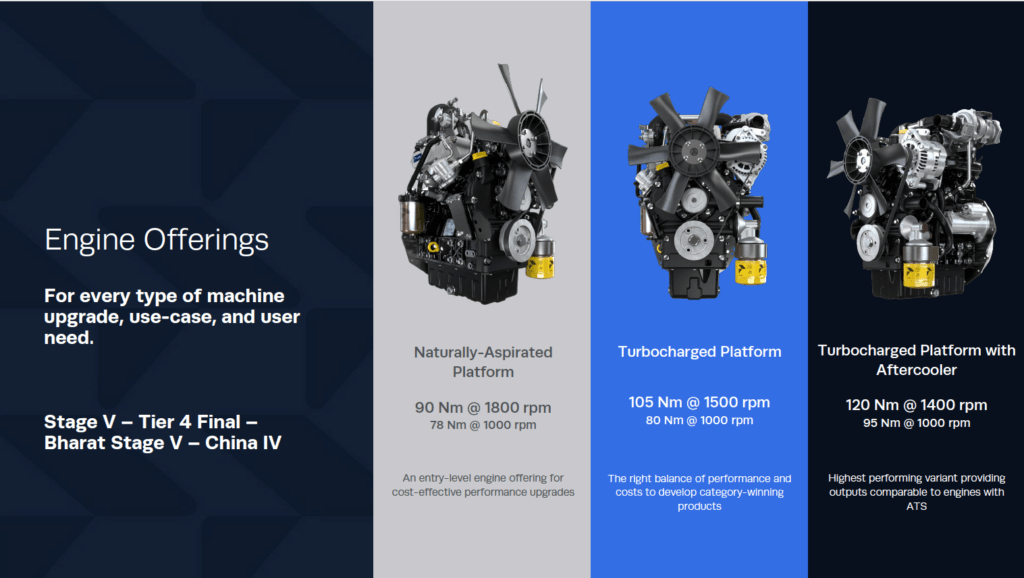
Global certification across Stage V, Tier 4 Final, and India and China Stage 5 emissions regimes from a single engine SKU was presented as a further strategic simplification, letting OEMs build from one common product base and ship into multiple markets without re-engineering for each region’s emissions rules.
Application-wise, KSD was pitched across construction, industrial, power generation and agriculture – with construction and industrial emphasizing total cost of ownership and adaptability, power generation emphasizing low-end torque and quiet operation over service intervals up to 1,000 hours, and agriculture built around an engine that reaches full power at 2,200 rpm and holds it to 3,000 rpm, letting machines avoid running at maximum rpm to achieve full output.
Together, the KDI and KSD strategies pull in the same direction from opposite ends of the range: KDI completes the top of the lineup by winning on power density and torque within a compact footprint, while KSD gets ahead of the bottom of the lineup by bringing electronic control– and the total-cost-of-ownership and telematics benefits that come with it – into a category competitors have left mechanical. Both lean on the same underlying asset: a single, continuous service and support network that turns every new variant into an easier sell for OEMs already inside the Rehlko ecosystem.
Six OEMs, one strategy in practice
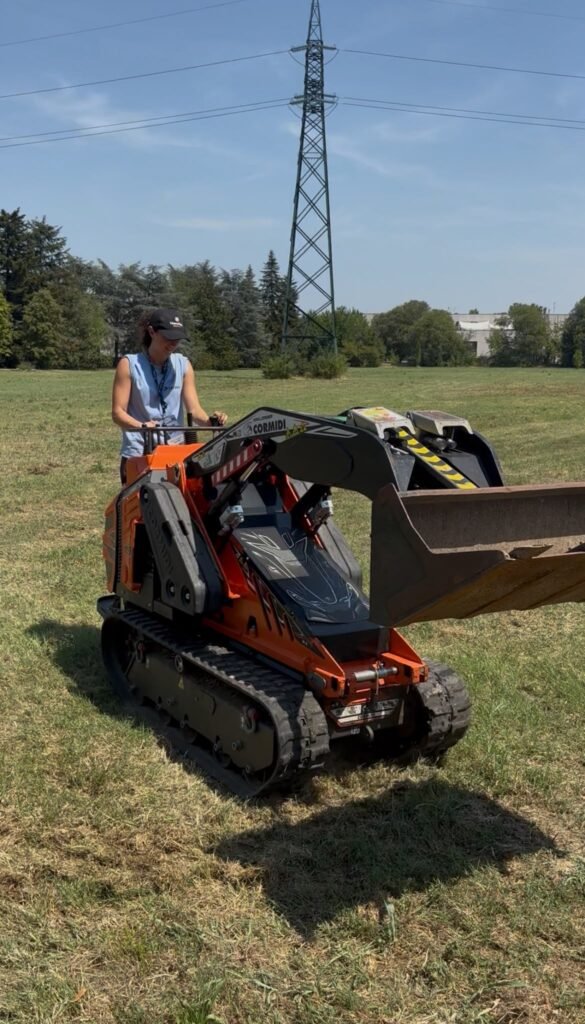
The nine machines on Rehlko’s demo area gave that strategy a physical form. Cormidi’s CMF1500, a tracked multifunction carrier running a KSD 1403NA, pairs a 1,500 kg load capacity with a “Quick Attach” system that lets one operator reconfigure the machine in under five minutes without tools, for use across construction sites and agricultural applications.
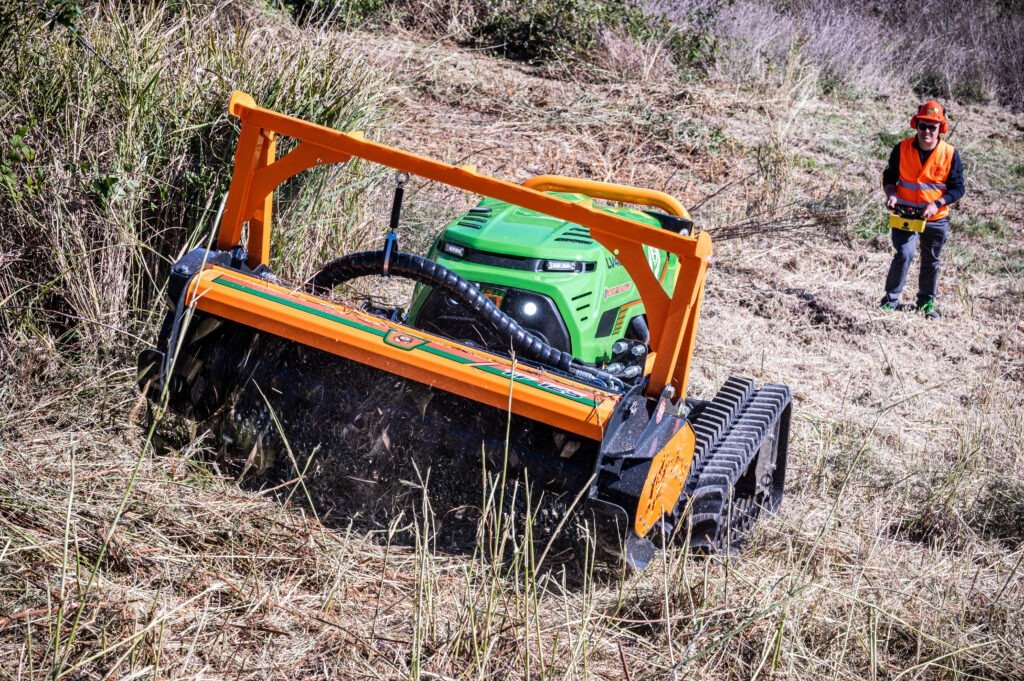
MDB’s radio-controlled Green Climber LV400X, powered by a KSD 1403TC, is built for extreme-altitude and harsh-environment terrain work, part of a range that – alongside MDB’s Special Machines line of tracked forklifts and skid steer loaders — has just expanded its own use of KSD engines, drawing specifically on the platform’s electronic configuration, turbocharging and high power-to-weight ratio for reduced maintenance and long-term operating costs.
Palfinger showed two truck-mounted forklifts built around the same platform logic: the FLM 25, powered by a KSD 1403NA, with a 2,500 kg lifting capacity on a dead weight under 2,000 kg; and the BM 214, powered by a KSD 1403TC turbo diesel, part of what Palfinger describes as the only range of truck-mounted forklifts with full radio remote control.
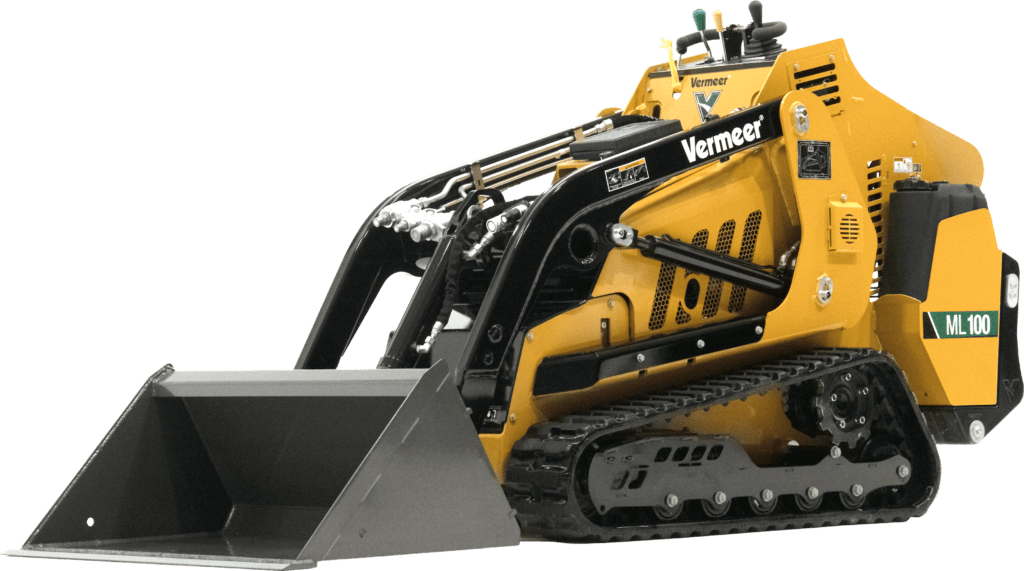
Vermeer‘s contribution spanned three machines and two engine families: the ML100 mini loader (24.7 hp KSD 1403TC), the SC552 stump cutter (56 hp KDI 1903TCR), and the RTX250 pedestrian trencher, powered by a 25 hp Rehlko ECH740 EFI gasoline engine – the only gasoline application among the nine.
“Every machine in the Vermeer landscape and tree care lineup is designed around the work in front of the operator, and that intention extends to the engine choice. Rehlko power across the ML100, SC552 and RTX250 gives contractors the productivity, reliability and serviceability they expect on the jobsite”
said Job Versteeg, applications specialist at Vermeer EMEA.
Weidemann’s 2090T telescopic wheel loader ran the engine at the center of the day’s news: the 50 kW KDI 1903TCR HP, paired with Weidemann’s electronically controlled ecDrive transmission and a Dynamic Loading Assistance package that automates repetitive loading tasks.
Wacker Neuson’s WL750 wheel loader, by contrast, ran the established KDI 1903TCR at 42 kW and 225 Nm – and the company laid out its own engineering rationale for standardizing on the KDI series over its predecessor engine configuration: suitability for transverse installation, a fit within Wacker Neuson’s modular design concept across model lines, a compact footprint, and – compared with the previous generation – higher torque alongside lower fuel consumption and reduced noise. That single detail, an OEM explaining in its own words why it chose to standardize on a Rehlko platform across a modular model range, is the KDI and KSD strategy working exactly as designed: engineer the range so completely, and support it so consistently, that switching to a competitor becomes the harder engineering decision, not the easier one.
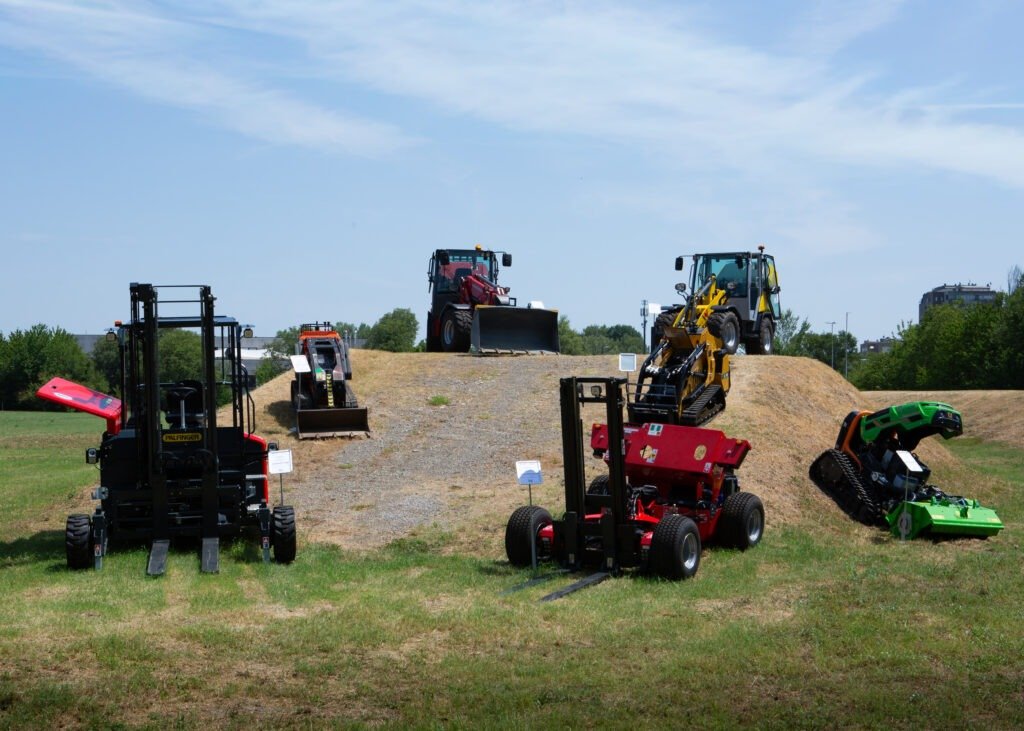
Rehlko’s strategy, as laid out across its own presentations, rests on three pillars: complete the power range so there is no gap for competitors to exploit (KDI 1903TCR HP), get electronic control into segments before the market demands it so total-cost-of-ownership and telematics become a durable advantage (KSD), and use a single, continuous service and support network across both moves so that every new engine variant is also, quietly, a reason for existing OEM partners to stay put. Six OEMs building nine different machines around that same engine ecosystem, in the same demo field, is the clearest evidence Rehlko has that the strategy is working.
Read the full article here