

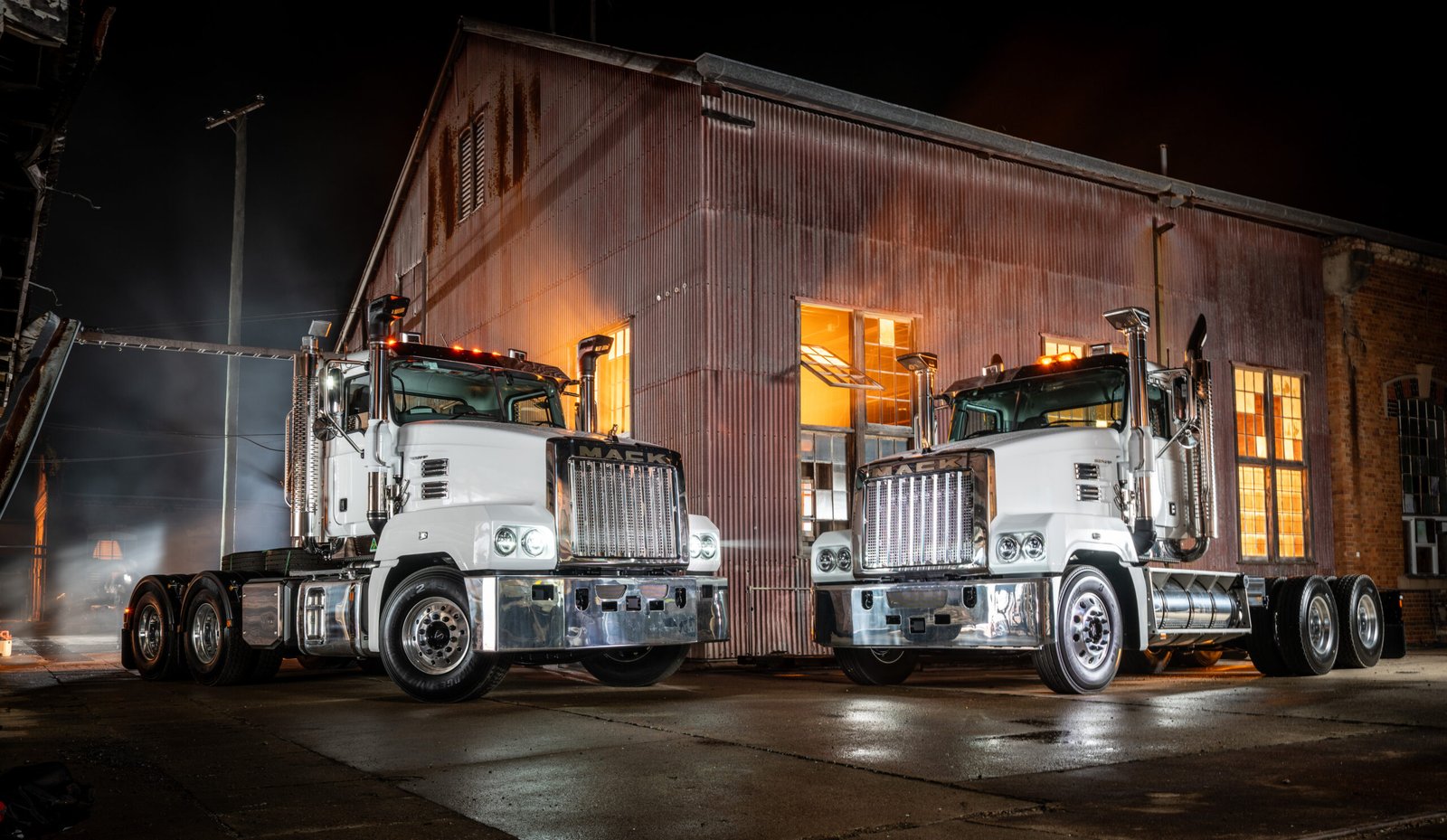
A locally engineered facelift gives the Trident and Super-Liner a retro front end and quad seven-inch LEDs, on trucks that have been built in Queensland since 1963
A facelift is usually the least interesting thing a truck manufacturer announces. This one is worth a look for what sits behind it: the work was done in Australia, for Australian conditions, on models built in a Queensland factory that has been turning out Macks since 1963.
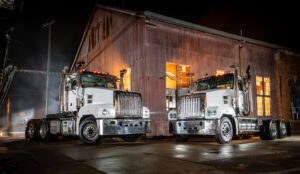
The Trident and Super-Liner both get a new squared-off front end that references the brand’s older trucks, along with quad seven-inch LED headlights. The lights are the functional half of the change, improving night visibility from the driver’s seat, which on outback routes is not a cosmetic consideration.
What is underneath
The axle-forward Trident runs the 13-litre MP8 at 535 hp and 1,920 lb-ft, with a choice of 12, 13 or 14-speed mDrive transmissions.
The Super-Liner is the heavy haul machine, carrying the 17-litre MP11 from 600 to 700 hp, rising to a class-leading 780 hp and 2,800 lb-ft of torque. Those are road train numbers. Australia runs some of the heaviest legal combinations in the world, and the torque figure is what matters when a triple is being pulled away from a standstill on a gradient in the heat.
Why a local project
“This new look for Trident and Super-Liner really nails what Mack Trucks in Australia represents. We’re a brand that has helped build this country into what it is today, from construction and infrastructure projects in our cities to the legendary road trains that are the lifeblood of our outback communities.”
Said Tony O’Connell, Vice President of Mack Trucks Australia.
The wider point
Global manufacturers have spent two decades consolidating platforms, and the models that survive with genuine local engineering content are becoming rare. Mack has been in Australia since 1919 and building there since 1963, and a locally driven design change on a locally built truck is a signal about how the group weighs that market.
For vocational operators, the practical reading is smaller and simpler: the same driveline, better lights, and a truck that looks like the ones their fathers drove. In a segment where drivers are hard to find and harder to keep, that last part is nothing.
Read the full article here