



On the Mulino Caputo jobsite in Molise, contractor M.B.C. is matching each Potain and Grove crane to a different phase of the build
In Ripamolisani, a small town in Molise in southern Italy, a new €30 million milling complex for Mulino Caputo is taking shape. The interesting part is not the size of any single machine but the way the lifting plan changes as the project grows: a compact self-erecting crane for the opening phase, a large topless tower crane for the heavy structural work, and an all-terrain crane to put the big one up.
The contractor is Gruppo Mitri Costruzioni (M.B.C.), and all three machines come from the Manitowoc family.
Starting small
The first crane on site was a Potain Evy 30-23 self-erecting crane. With a 30 m jib and a maximum capacity of 4 t, it is designed for fast set-up and easy transport rather than heavy lifting.
That was what the early phase needed. Its compact dimensions and rapid assembly allowed M.B.C. to get the jobsite running quickly and make the most of the available space at a point when the site was still being organised.
Bringing in the heavy lifter
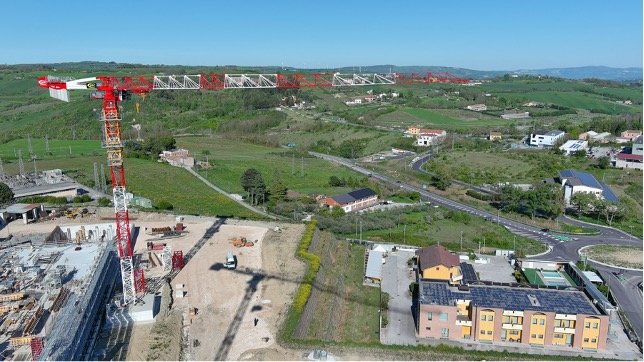
As construction moved into its structural phases, M.B.C. brought in a Potain MDT 259 J12 topless tower crane. The MDT 259 J12 offers a maximum capacity of 12 t and a jib of up to 65 m. In Ripamolisani, it was erected with a 60 m jib at a hook height of 70 m.
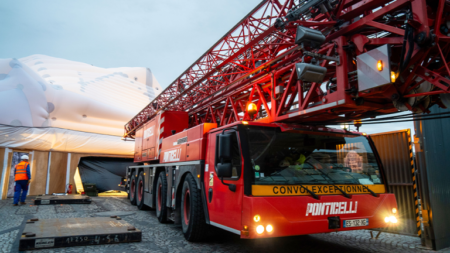
To assemble it, the contractor used a Grove GMK5150L-1 all-terrain crane, chosen for its lifting performance, compact footprint and manoeuvrability. The Grove offers a 60 m main boom and a maximum capacity of 150 t.
Once in service, the MDT 259 J12 went straight to work moving structural components weighing up to 12 t and supporting the installation of key process equipment for the mill.
Why the combination matters
For contractors, the lesson is about matching capacity to the phase of the job rather than sizing the crane fleet for the heaviest lift from day one. A self-erector keeps early costs and set-up time down. A topless tower crane handles the heavy, repetitive structural lifts. A mobile crane makes the transition possible without extra site infrastructure.
“The coordinated use of Potain and the Grove cranes on the new Mulino Caputo facility reflects a growing trend on large construction sites for highly specialized lifting technology to improve productivity and operational sustainability,”
Said Devis Mitri, general manager of M.B.C.
M.B.C. has also relied on Manitowoc’s team in Italy for local service and technical assistance throughout the job, with the aim of maximising uptime.
What is being built
When complete, the industrial complex will include high-capacity storage silos, advanced milling systems, raw material processing lines and dedicated packaging and logistics facilities. The project will significantly increase milling capacity and is meant to support the continued growth of Italy’s agri-food sector.
Completion is scheduled for 2030, which means the cranes on site still have several years of lifting ahead of them.
Read the full article here