


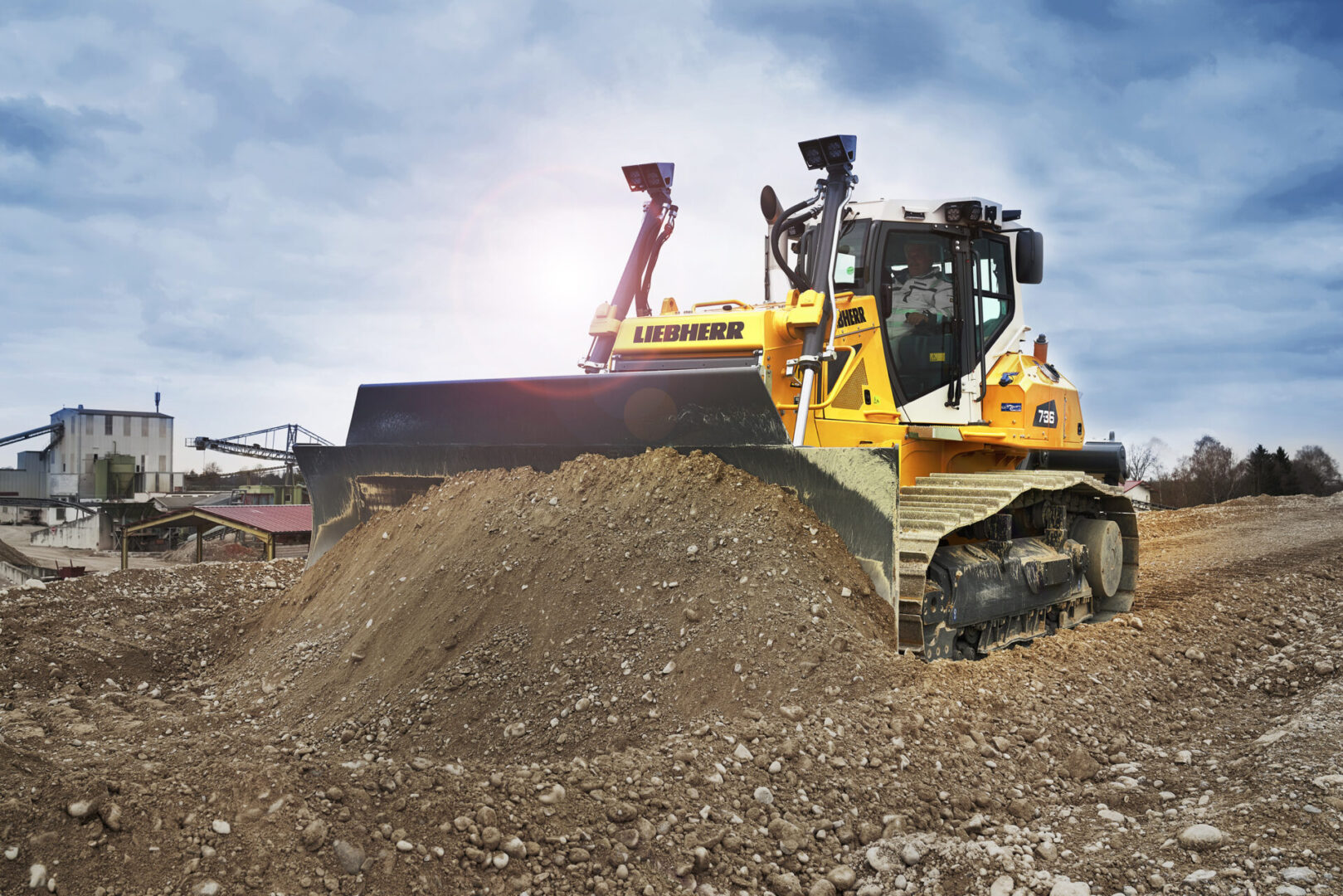
Liebherr has developed a trio of integrated operator assistance systems for its Generation 8 dozers to improve precision and productivity.
The integrated assistance systems include Free Grade, Definition Grade and 3D Grade. All three systems are fully embedded in the machine architecture and follow a clearly structured, scalable concept.
Depending on project requirements, operators can select the appropriate level of support, from standard blade stabilization to creating precise 2D surfaces to full 3D surfaces with GNSS-based machine control.
Free Grade
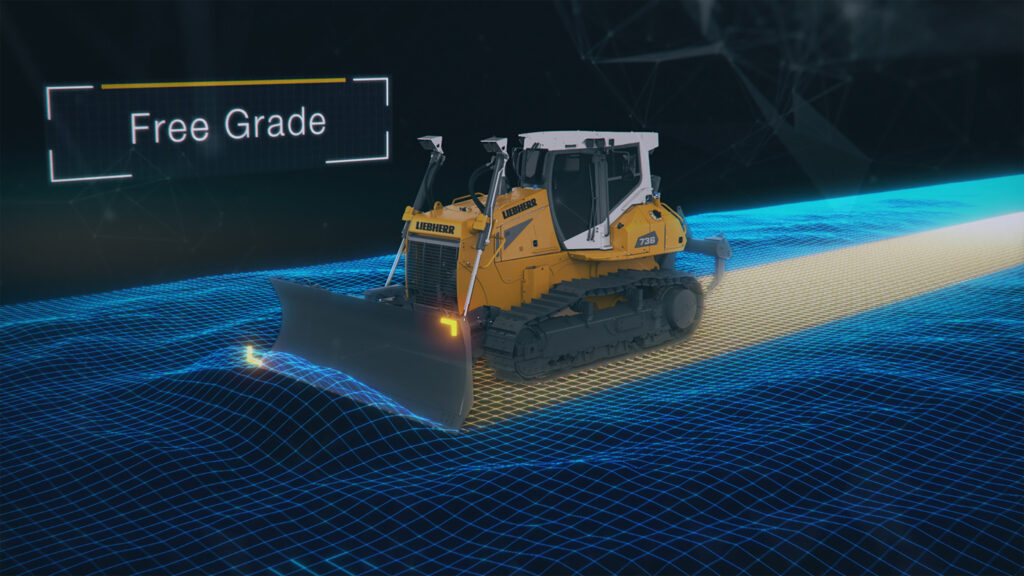
Free Grade is standard on all Generation 8 crawler dozers. The system provides active blade stabilization in longitudinal and lateral directions, assisting to operator to achieve a consistent high surface quality.
By automatically compensating for unevenness and stabilizing blade movements, Free Grade supports fine grading on flat terrain as well as on slopes and embankments. The reduction of manual correction movements increases efficiency and ensures uniform grading results over long distances. At the same time, the operator benefits from intuitive visualization of blade and machine position via the integrated display.
Definition Grade
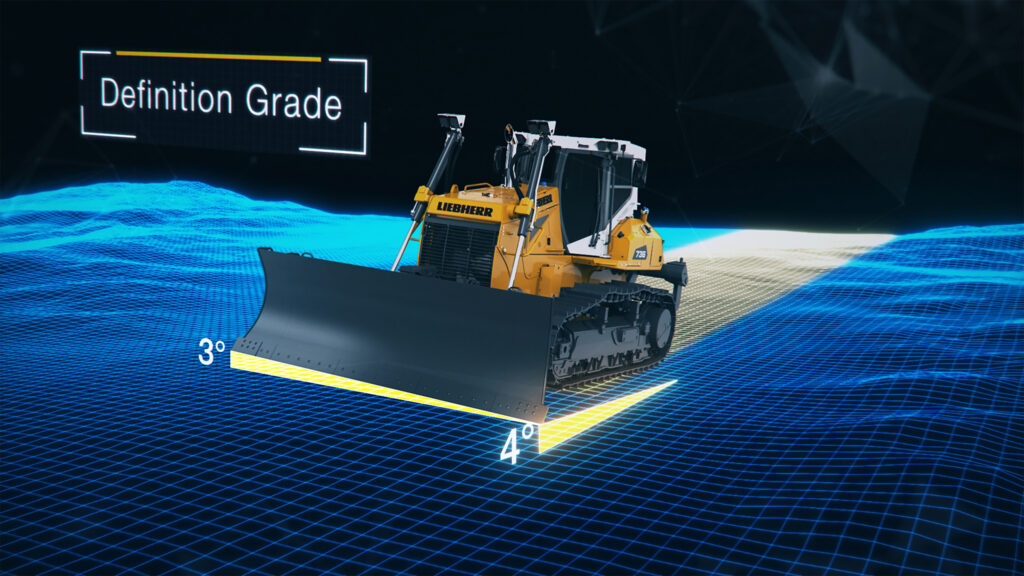
Liebherr expands the functionality of Free Grade with Definition Grade, which adds automatic blade control for two-dimensional grading tasks.
Target slopes and reference surfaces can be defined directly via the machine display. As well, the integrated sensor system automatically maintains the specified blade position in both directions.
Definition Grade is a cost-effective solution as it is able to operate without external components such as laser transmitters or GNSS base stations.
The system contributes to higher productivity, reduces surveying effort and consistently precise grading results.
3D Grade
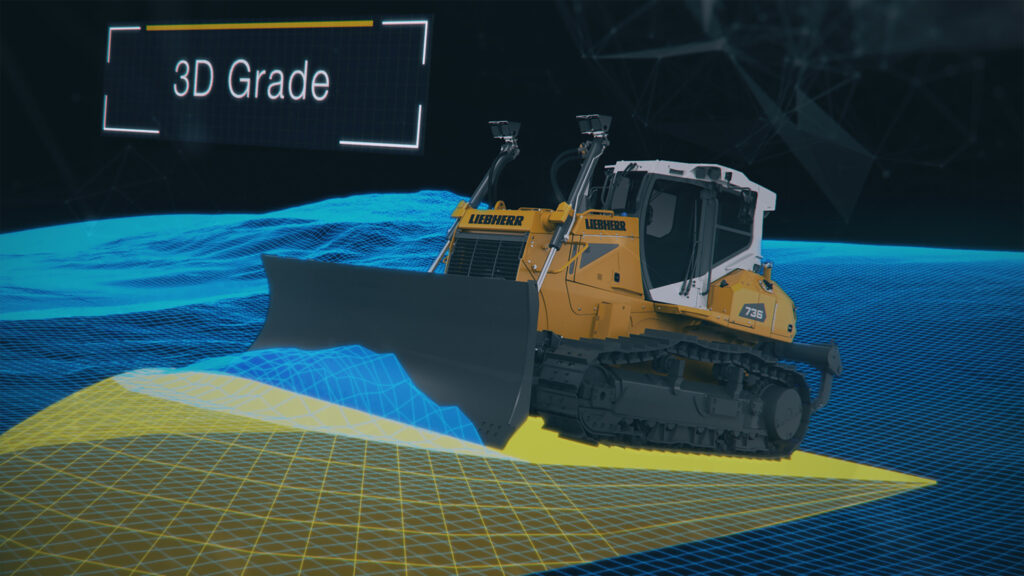
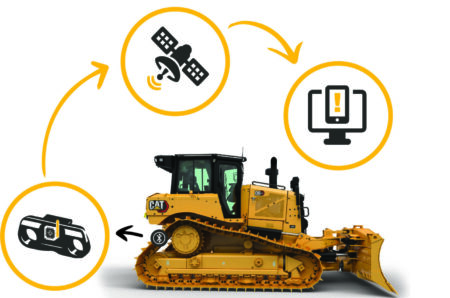
For demanding projects involving complex geometries, Liebherr also offers a 3D Grade system for Generation 8 crawler dozers. The ex-factory integration of external GNSS-based machine control systems enables automatic blade control according to digital terrain models.
The system continuously compares the dozer’s current blade position with the stored project data and automatically adjusts the blade to the target profile. This ensures precise implementation of three-dimensional surfaces in large-scale infrastructure projects, commercial site development and road construction.
The factory-prepared integration guarantees optimal coordination between hardware and software and supports seamless digital workflows from planning to execution.
Liebherr’s digital concept
The operator assistance systems are part of Liebherr’s wide-ranging digital concept. During development, modern simulation and virtual prototyping methods are used to optimize performance, efficiency, visibility, noise emissions and vibration behaviour.
Digital solutions also support customers in procurement and service. Complementary digital service solutions provide access to machine data, maintenance planning and technical support. With the Generation 8 crawler dozers, Liebherr demonstrates how digital technologies and practical application expertise can be combined into a coordinated overall system. The result is increased efficiency, maximum precision and sustainable value creation for customers worldwide.
Read the full article here