


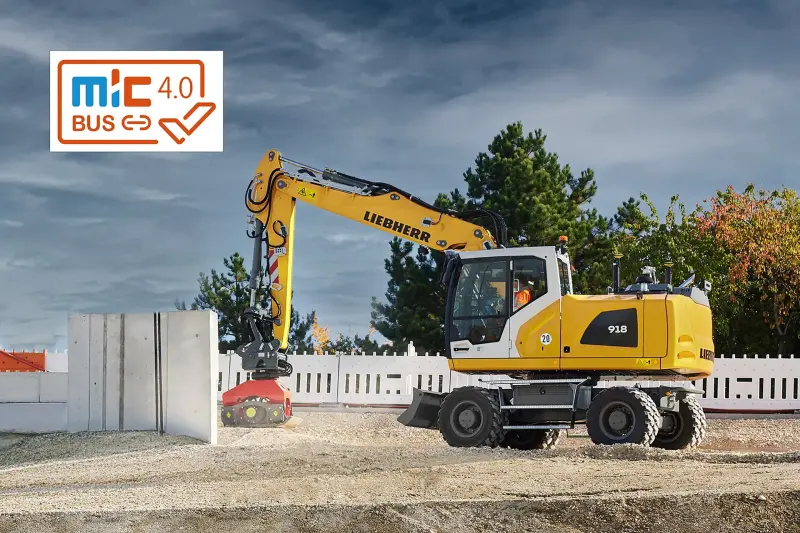
By adopting the cross-manufacturer MiC 4.0 BUS on its Generation 8 wheeled excavators, Liebherr aims to cut the set-up time, paperwork and risk that come with complex tools such as tiltrotators.
For many contractors, the real cost of a tiltrotator is not the tool itself. It is the time and effort needed to make it work properly on the carrier: configuring hydraulics, adapting the machine, and checking that nothing compromises the machine’s approvals. Liebherr wants to take much of that burden away. The company is integrating the MiC 4.0 BUS, a communication standard shared across manufacturers, into its Generation 8 wheeled excavators.
What the standard does
MiC 4.0 BUS is an interface for the automatic exchange of data between a carrier machine and its attachment. When a MiC 4.0-ready tool is coupled, it transmits information such as attachment type, serial number and operating parameters, including oil pressure and flow rate, directly to the excavator. The operator does not need to enter anything.
In practical terms, that turns an attachment change into something closer to plug and play. Fewer manual settings mean less room for error, and the right hydraulic parameters are applied from the start.
Less integration work, fewer compliance headaches
Until now, connecting complex attachments such as tiltrotators to a wheeled excavator has often meant considerable effort and long periods of machine downtime. The modifications sometimes needed on the carrier could also affect existing approvals and conformity assessments, including CE marking.
That is the point Liebherr highlights most clearly. With a standardised interface, integrating a new attachment requires less work on the machine itself, which reduces both the time involved and the risks that come with modifying a certified carrier. For rental companies and contractors running mixed attachment fleets, that is a direct saving.
From interface to fleet data
The second benefit is information. Through the MiC 4.0 BUS, data on attachment usage, operating hours and maintenance status will in future be viewable in the MyLiebherr Maintenance & Performance customer portal.
For fleet managers, attachments have long been a blind spot. High-value tools move between machines and sites, and their actual usage is often tracked by hand, if at all. Bringing tool data into the same portal as machine data supports proactive maintenance planning and better availability of the attachments that keep machines productive.
Why cross-manufacturer matters
The most significant aspect may be the one that reaches beyond Liebherr. Because MiC 4.0 is not tied to a single brand, MiC 4.0-ready attachments can be swapped more easily between MiC 4.0-ready carriers, even from different manufacturers.
Liebherr is not alone in this direction. Other OEMs have already started to equip their machines for the standard, among them Wacker Neuson on its EW135 wheeled excavator. Each additional major manufacturer that signs up increases the value of the standard for attachment makers and for the fleets that buy from them.
What comes next
The fleet transparency features are described as coming “in future”, so the next step to watch is when attachment data actually appears in the MyLiebherr portal, and how quickly attachment manufacturers bring MiC 4.0-ready tools to the market.
Read the full article here