

The Wisent Thin Line and Scorpion Thin Line are configured for the work most contractors do most often, and the changes are aimed at ground pressure, visibility and fuel burn
Thinning is not the glamorous end of forest work. It is the repetitive, precision-heavy job of taking selected stems out of a growing stand without damaging what stays, on ground that is often soft and in spaces that are always tight. It is also, for a great many contractors, the majority of the working year.
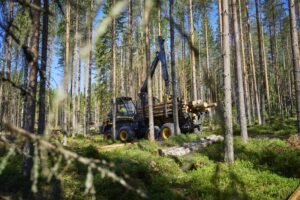
Ponsse has responded by building two machines specifically for it rather than asking operators to adapt general-purpose ones. The PONSSE Wisent Thin Line forwarder and PONSSE Scorpion Thin Line harvester go on sale immediately, with production starting at the Vieremä factory later this year.
What changes on each machine
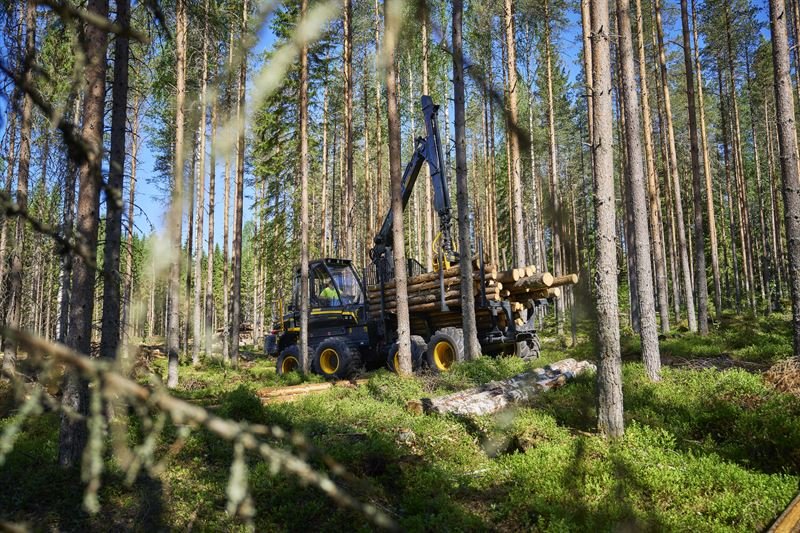
The Wisent Thin Line is a 10-tonne load capacity forwarder with a load space solution reworked for thinning sites. The more consequential change is weight: lower overall mass and reduced ground pressure, which widens the window of ground conditions the machine can work in without leaving damage behind. On soft terrain that is the difference between working and waiting, and waiting is expensive. The lights have also been upgraded, a change Ponsse credits directly to customer feedback.
The Scorpion Thin Line builds on the standard Scorpion harvester, whose reputation rests on visibility of the working area, stability and crane reach and control. In the Thin Line version the machine settings are optimised specifically for thinning to get the best possible fuel efficiency. The PONSSE H5 and the new H6 harvester head are both available for it.
Both machines also get an upgraded audio system and a new colour scheme, which sounds trivial until you consider that an operator spends nine or ten hours a day in that cab.
Why configure rather than build new
“Thinning operations require agility, visibility and the ability to work effectively at sites with limited space,” said Marko Mattila, Chief, Sales, Service and Marketing Officer at Ponsse. “We decided to optimise two of our popular machine models precisely for these requirements. The new versions of the Scorpion and Wisent provide our customers with tailor-made solutions for thinning work.”
The approach is worth noting for what it avoids. Building a dedicated thinning platform from scratch means a new parts inventory, new operator training and a new service programme. Optimising two machines already in the field means contractors keep the familiarity and the dealers keep the parts, while the buyer gets a machine set up for the job rather than compromised across several.
“Thinning is a key part of forest management and a daily task for many of our customers,” Mattila added. “In thinning operations, the quality of the work is of great importance, affected in particular by the operator’s professional skills, but the right machine selection also plays a role. With these new Scorpion and Wisent versions, harvesting professionals have even more versatile options at their disposal.”
That is an unusually honest framing from a manufacturer. Mattila puts operator skill first and machine selection second, which is the right order and not the one most product launches use.
What it means for contractors
Fuel efficiency and ground pressure are the two lines where a thinning contractor’s margin actually lives. Fuel is a direct cost on every hour. Ground damage is an indirect one that shows up as restricted working windows, remediation obligations and, in some markets, lost certification. A machine tuned for both, on a platform whose service network already exists, is a straightforward proposition.
What Ponsse has not published is pricing, output figures against the standard models, or how much lighter the Wisent Thin Line actually is. Sales are open now. Production starts at Vieremä later this year.
Read the full article here