


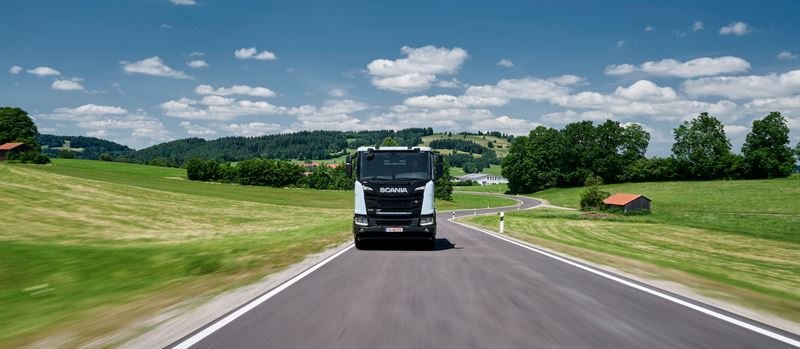
The Angers plant will add a new building and reworked assembly lines for battery-electric heavy trucks while keeping combustion output to match uneven market demand.
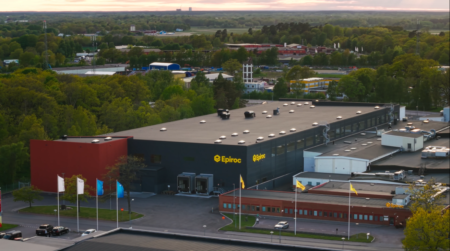
Scania is moving to harden its European manufacturing base for the next stage of heavy-truck electrification, with a €70 million investment in its Angers, France production site. The project will extend the existing factory with a new building and transform assembly lines to support the production of battery-electric heavy trucks, reinforcing Scania’s ability to supply a market that is growing, but still highly uneven across countries and duty cycles. The site employs ~1,500 people and produces 20,000–30,000 trucks a year.
Electrification in heavy transport is shifting from pilot deployments to procurement decisions that require confidence on lead times, service readiness and total operating economics. Flexibility is the key: the site will be capable of assembling both internal combustion and electric trucks, allowing the OEM to scale electric output without overcommitting capacity in a market where infrastructure and policy are still catching up.
Angers has been part of Scania’s industrial system for more than three decades, and Scania positions the plant as a proven contributor within its production network. For France, the investment lands in a context where national authorities are openly framing truck electrification as both a decarbonisation lever and a reindustrialisation opportunity.
The French government says the Angers site currently employs around 1,500 people and produces 20,000 to 30,000 heavy trucks per year. It adds that the shift into electric-truck assembly could create “several hundred” jobs, depending on how the market evolves.
In statements included in Scania’s release, Petrus Sundvall, President of Scania Production Angers, linked the upgrade directly to volatility in demand and regulation.
“We are preparing for the future, but we must remain able to adapt to changing volumes and market dynamics,”
he said, pointing to dual-capability production as the practical answer for the transition period.
Scania CEO Christian Levin underlined a point fleets repeat in every electric-truck tender: the ecosystem is the constraint. “The transition to electrified transport is not only about vehicles,” he said, stressing that charging infrastructure, renewable electricity and predictable policy frameworks will be critical to accelerate adoption.
France, in particular, is trying to close the gap with Northern Europe on heavy-duty electrification. In its Choose France communication, the government noted that electric trucks represent a small share of French heavy-truck sales compared with the Netherlands and Germany—and it has recently increased support for the sector. One headline measure is a purchase incentive that can reach up to €100,000 for the heaviest electric trucks (up from €60,000), designed to reduce the upfront price barrier that still dominates many fleet business cases.
Infrastructure is the other pillar. The French government has also set an objective of deploying 8,000 charging points dedicated to heavy trucks over the next 10 years, an ambition meant to give hauliers and contractors confidence that electric trucks won’t be stranded by inadequate corridor coverage.
Scania is building the capacity to supply electric trucks at higher volume, while keeping production resilience as customer demand evolves.
Read the full article here