


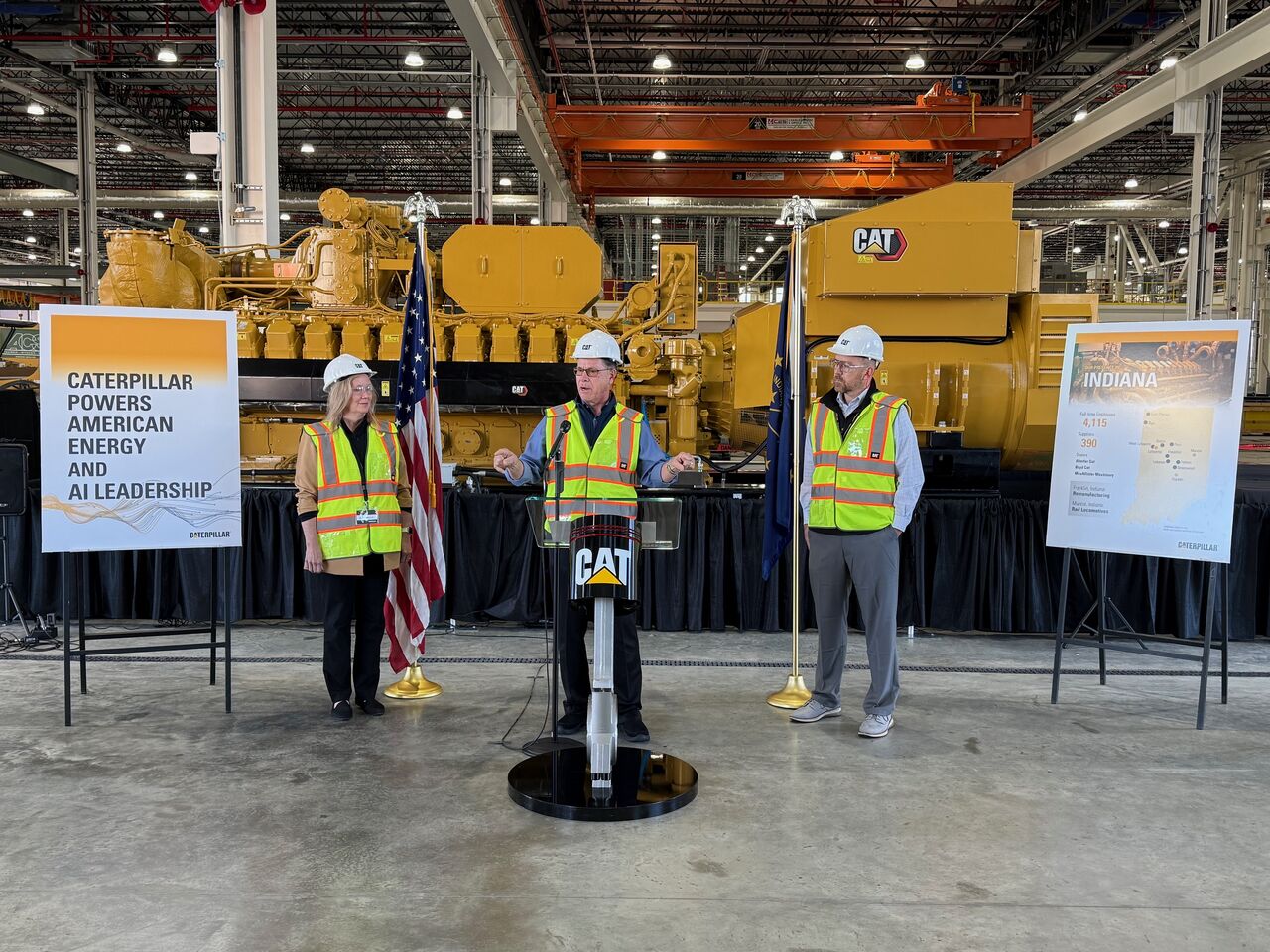
Caterpillar announced that Indiana will be among the first states to receive funding from its five-year, $100 million workforce pledge, and has committed up to $5 million to training and upskilling efforts across the state. Caterpillar is expanding its large-engine facility in Lafayette, Indiana with a capital program worth 725 million dollars and launching up to 5 million dollars in workforce training across the state. The company framed the move as one of its biggest manufacturing investments and linked it to rising U.S. power needs from data centers and other critical infrastructure.
The Lafayette buildout is aimed at boosting production and testing capacity for large engines that support grid stability and standby or prime power. Jason Kaiser, who leads Caterpillar’s Energy and Transportation group, said engines from the plant will help keep operations running during outages and meet the surge in electricity demand tied to AI and data centers. The company’s message is simple enough: more engines, faster delivery, and a bigger role in U.S. power security.
Alongside the factory spend, Caterpillar kicked off a five-year, 100 million dollar national workforce pledge by naming Indiana among the first recipients. The state will receive up to $ 5 million for training and upskilling programs geared toward advanced manufacturing. The company employs about 51,000 people in the United States, including more than 4,100 at 12 facilities across Indiana. State leaders welcomed the plan as a vote of confidence in Indiana’s manufacturing ecosystem.
The policy backdrop is shifting in Caterpillar’s favor. In April, the White House created a reciprocal tariff framework through Executive Order 14257, establishing a broad mechanism to raise import barriers in pursuit of onshoring. On July 31, a follow-on order further modified those reciprocal tariff rates and began a new round of negotiations with trading partners. The day before, the administration suspended the long-standing duty-free “de minimis” rule for low-value imports; U.S. Customs and Border Protection laid out implementation steps in early September, and the change took effect on August 29. Together, these measures lift the cost of importing many components and finished goods and push more sourcing and final assembly into the U.S. market.
Additional tariff actions are emerging in adjacent sectors. A separate proclamation slated new duties on medium and heavy trucks and certain parts beginning November 1, which could ripple through commercial-vehicle and heavy-duty component supply chains that overlap with off-highway suppliers. Details are still being parsed by trade counsel and logistics teams.
Demand fundamentals help explain the timing. The International Energy Agency projects that electricity consumption from data centers will more than double by 2030, with AI as the main driver. In the United States, the EIA expects power use to hit record highs in 2025 and 2026. That combination favors engine and genset makers able to deliver reliable power quickly while the grid and new generation catch up.
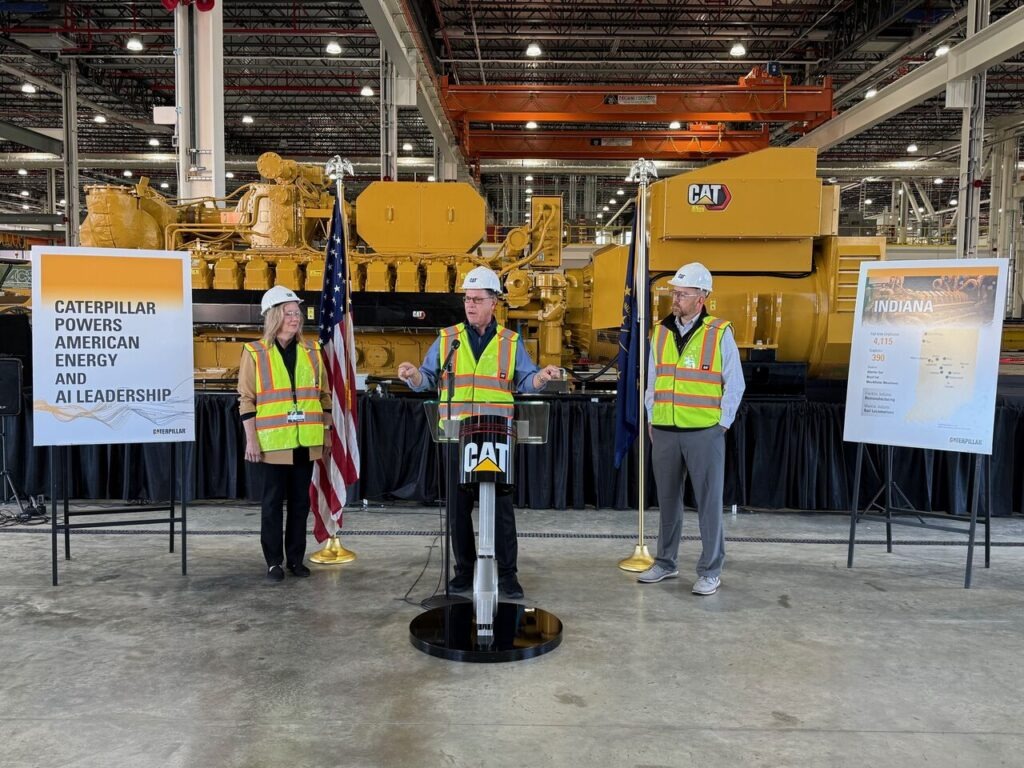
For Indiana, the near-term story is workforce. Watch for concrete targets on trainee numbers, the credentials on offer, and which community colleges or technical schools come on board. For Caterpillar, the strategic test is supply chain localization without losing export competitiveness. The company is a net exporter, so any escalation in partner-country responses to U.S. tariffs will matter for overseas orders and for imported subcomponents that are hard to substitute.
If Caterpillar executes on the plan, Lafayette becomes a bigger hub for engines that keep data centers and critical infrastructure powered when the grid wobbles. If the tariff and de minimis changes stick, more of the supporting value chain will be encouraged to set up nearby. That is the onshoring story, written in steel, castings, and skilled jobs.
Read the full article here