


Presented at MRO 2026, Obstacle Detection Assist combines sensors, alerts and automatic stopping on three Haulotte models to protect aircraft and other high-value assets
In an aircraft hangar, a small misjudgement with an aerial work platform can be very expensive. Ground damage already costs the aviation industry around USD 5 billion a year, according to IATA figures quoted by Haulotte, and that bill could approach USD 10 billion by 2035 without additional preventive measures. Haulotte’s response is Obstacle Detection Assist (ODA), a factory-installed option presented at MRO 2026, the show for aviation maintenance professionals.
Built with the people who use it
ODA was not designed in isolation. The project started from discussions with a major European rental company and a leading aircraft maintenance organisation, and the system was developed with aviation maintenance specialists. It was then tested for several months in real operating conditions, with the field trials used in particular to fine-tune stopping distances.
The system is OEM-certified and integrated into the machine from the design stage, in line with Haulotte’s Drive Confidence approach.
How it works
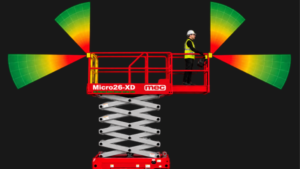
ODA focuses on the upper structure of the machine, where collision risk is highest when the platform approaches a fuselage, wing or engine. Several sensors on that structure inform the operator about the proximity of obstacles, especially beneath the platform during delicate approaches where visibility is limited.
Depending on the model, the system combines ultrasonic sensors, a laser sensor, a dedicated operator interface and an open-gate sensor. It warns with audible and visual alerts and automatically stops any movement that could lead to a collision.
The option is available on three machines: the STAR 10, the SIGMA 16 PRO and the HA20 E PRO.
What it means for rental companies and MRO operators
For maintenance organisations, the value case is simple. Aircraft are worth tens or even hundreds of millions of euros, and unplanned downtime disrupts maintenance schedules and fleet availability. A system that prevents a single contact incident can easily justify itself.
For rental companies serving hangars, museums and specialised industrial sites, a factory-certified option also matters. It avoids the questions that come with aftermarket add-ons and gives customers a machine whose safety features are part of the original certification.
“In aviation, every maintenance operation requires precision, control and anticipation,”
Said Laurent Muguet, Product Marketing Manager at Haulotte.
He describes ODA as a way to give operators a better understanding of their working environment, designed around the specific kinematics of each model rather than added afterwards.
Beyond the hangar
Haulotte positions ODA for aviation maintenance, museums and specific industrial applications, all settings where the object being worked on is often worth far more than the machine. With pedestrian detection and obstacle detection both moving into factory options, the direction for the MEWP sector is clear: platforms that do not just lift people, but actively help them avoid costly mistakes.
Read the full article here