


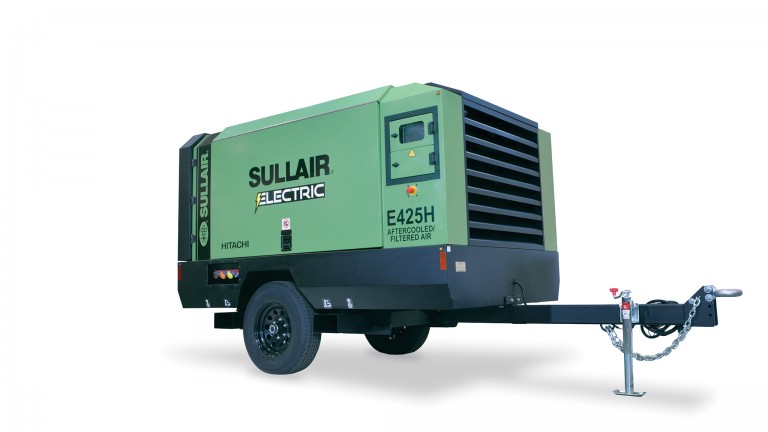
The swing-out cooler design of the E425H gives technicians easy access during maintenance.
Power stability and startup challenges
Power stability is one of the primary concerns when integrating electric compressors into industrial and construction settings where voltage fluctuations and power surges are common. To address this challenge, the E425H utilizes a solid-state starter, which reduces inrush current and ensures a gradual and controlled start-up. This boosts the reliability of power connections to prevent unnecessary wear on electrical components, distinguishing it from traditional variable speed drives, which can be vulnerable to unstable power conditions in field applications.
Unlike traditional stationary compressors, which often take five to ten hours to install and configure, the E425H is designed for rapid deployment. With set-up times as short as 15 to 30 minutes, this efficiency is made possible through camlock connections, which offer a secure and standardized method for quickly linking the compressor to the site’s electrical system.
Another key design consideration is the two-inch air supply connection, which has been positioned away from the operator to enhance safety during installation. This adjustment reduces exposure to potential hazards and improves accessibility for maintenance and adjustments in the field.
The rental advantage
The rental industry is a key sector that can benefit from the E425H’s electric advantage. Lower maintenance costs and increased machine uptime translate directly into higher profitability. Unlike diesel compressors that require frequent refuelling and oil changes, the E425H’s electric motor significantly reduces servicing needs, keeping machines available for rent more often.
The standard Sullair AirLinx feature is particularly beneficial for rental companies. This tool enables better fleet management, prevents unexpected failures, and ensures optimal machine utilization. “Rental houses can track machine location, monitor air pressure, and schedule maintenance remotely,” says Cole.
Perhaps the most compelling advantage for rental businesses is the E425H’s broad application range. The versatility of this machine ensures high utilization rates, making it a sound investment for rental fleets across many industries. “Rental businesses will see a strong return on investment with the E425H due to lower fuel costs, longer run cycles, and reduced maintenance,” says Ohlinger.
Plans for more electric models
With increasing regulatory pressure on emissions and the global push for more sustainable solutions, the market is shifting toward electric-powered equipment. Hitachi Global Air Power is embracing this transformation, laying the groundwork for an expanded portfolio of electric compressors with the launch of the E425H. Plans for larger models like the E1600 and oil-free electric compressors are already in the pipeline.
“We have certain sustainability goals, including being carbon neutral throughout our value chain by 2050. Everything we’re designing and building is for maximum efficiency and also for second and third lives where possible. So it’s part of our engineering and innovation centre to build highly efficient, next-generation products to meet those goals and, more importantly, to help our customers meet those goals. We called it the new era of innovation with E1035, and it’s just a new way of thinking and a new way of being customer forward and uber-focused on those sustainability goals that we all have.”
“Diesel compressors will still play a role, but the shift toward electric is inevitable,” says Cole. “The E425H is just the beginning of a broader move toward cleaner, quieter, and more efficient air compression solutions.”
A smart investment
Combining sustainability, advanced technology, and reduced operating costs, the Sullair E425H offers a compelling alternative to diesel-powered units without sacrificing performance. A smart investment for contractors, rental companies, and industrial operators, the E425H represents one of the latest developments in portable air compression technology as many industries shift toward increased electrification.
Read the full article here